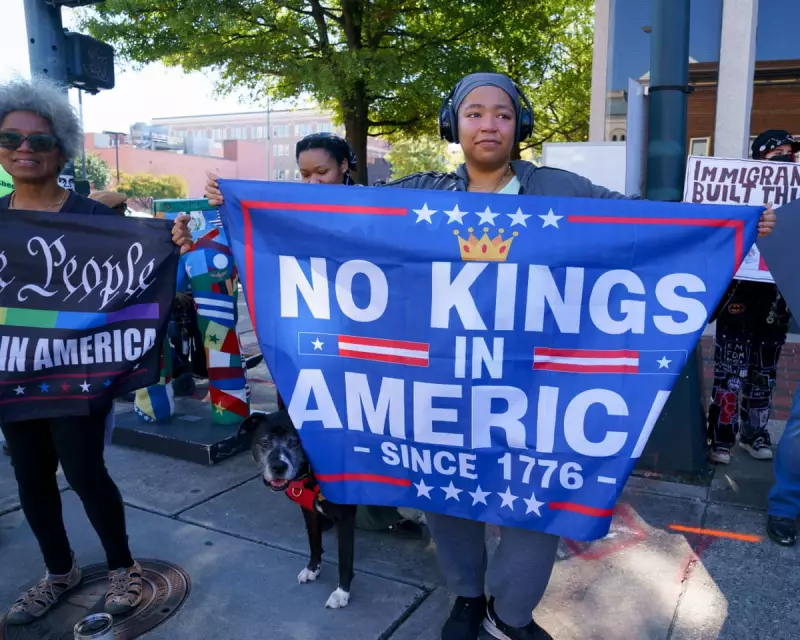
A year has passed since Donald Trump's election victory, and across the United States, a powerful resistance movement continues to challenge his administration through diverse forms of protest and civil disobedience.
The Many Faces of Resistance
From a young woman confronting ICE agents in a parking lot to federal workers staging walkouts, opposition to the Trump administration has taken numerous forms. An estimated 7 million people participated in the No Kings protest on 18 October, marking the biggest day of protest in US history. The movement spans geographical and demographic boundaries, with activists appearing in small towns and traditionally conservative areas as well as major cities.
Judges have repeatedly ruled against the administration in response to numerous lawsuits filed by human rights groups, states, and cities. Senator Bernie Sanders spoke for 25 hours straight in protest, while another senator travelled to El Salvador to investigate the disappearance of a constituent. Weekly protests at Tesla salesrooms earlier this year successfully damaged the brand's reputation and depressed global sales.

Institutional and Grassroots Opposition
The resistance extends beyond street protests to include institutional challenges. Federal workers have resisted through both official channels and whistleblowing, including Centers for Disease Control staff who staged walkouts in late August. Democratic state attorneys general have filed multiple lawsuits, while Illinois and California governors have publicly condemned Trump's policies.
Seven major universities refused to sign contracts with the administration that would compromise academic freedom. Airports rejected Homeland Security Secretary Kristi Noem's propaganda video during the congressional shutdown. The Catholic Church has shown support through Pope Leo XIV speaking up for immigrants and congregations displaying cardboard silhouettes representing members afraid to attend services.
Solidarity and Community Action
Community organising has formed the backbone of resistance efforts, particularly in support of immigrants and refugees. Chicago activists have built rapid-response teams monitoring federal agents, distributing whistles in public spaces and protesting outside agents' hotels. Similar neighbourhood watch efforts have emerged in Los Angeles, Washington DC, and other cities.
More than 200 Chicago-area clergy signed a letter titled "Jesus is Being Tear Gassed at Broadview." Many cities have reaffirmed their status as sanctuary cities with policies of non-cooperation with ICE. Boycotts against companies like Tesla, Target, and Disney have proven effective, with Indivisible recently launching a campaign against Spotify for running ICE recruitment ads.
The resistance movement has grown significantly since the inauguration, with organisations like Indivisible expanding their chapters and membership. 50501 was founded shortly after the inauguration to coordinate activism, joining numerous other local and national resistance groups that have emerged throughout the year.
As Marine Colonel Doug Krugman explained in his Washington Post resignation letter: "Instead of trying to work within the Constitution, or to amend it, President Trump is testing how far he can ignore it." This sentiment reflects the broader concern driving the diverse resistance efforts that continue to shape America's political landscape one year after Trump's election victory.