

American Resistance Movements Adopt More Confrontational Tactics Against Trump's Second Administration
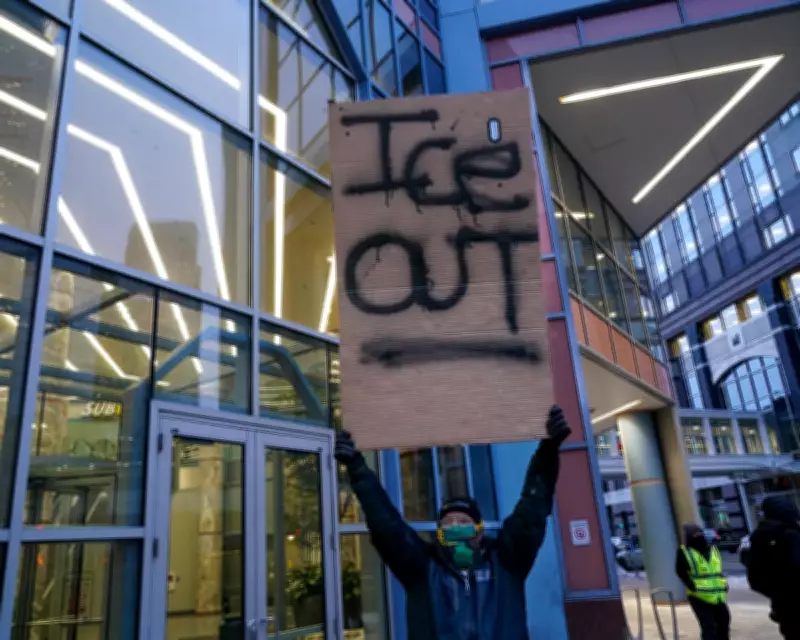
American protest movements are undergoing a significant tactical shift as resistance to Donald Trump's second presidential term becomes increasingly confrontational. Where activists during Trump's first administration focused primarily on lobbying and electoral politics, the current wave of resistance is embracing nonviolent civil disobedience on a substantial scale.
From Ballot Box to Street Protest
During Trump's initial term, resistance efforts concentrated heavily on converting street-level outrage into electoral action. This strategy proved effective, contributing to Democratic gains in the 2018 midterm elections and Joe Biden's victory in the 2020 presidential race, which saw the highest voter turnout in over a century. However, the approach has fundamentally changed with Trump's return to power.
The shift became particularly evident following tragic events in Minneapolis, where federal agents killed Alex Pretti on January 24th while he was assisting another civilian. This incident occurred just weeks after ICE agent Renee Good was killed, sparking widespread demonstrations across the United States protesting what activists describe as the Trump administration's ultra-violent immigration enforcement tactics.

Minnesota as Protest Epicentre
Minneapolis has emerged as a focal point for sustained protest activity. The city's general strike on January 23rd mobilized tens of thousands of Minnesotans to participate in an economic blackout and street marches. This local action inspired nationwide solidarity, most notably through the Free America Walkout that involved more than 900 coordinated actions across all fifty states on the anniversary of Trump's second inauguration.
According to research conducted as part of a long-term study of American protest movements, Resistance 2.0 represents a distinct evolution from previous activism. The project examines participant demographics, motivations, and the tactical approaches being deployed against the second Trump administration's policies.
Survey Reveals Support for Confrontation
Working with organizers of the Free America Walkout, researchers surveyed 7,452 registered participants from across the United States, representing approximately fifteen percent of total participants. The findings provide compelling evidence that confrontational tactics are gaining mainstream acceptance within resistance movements.
An overwhelming ninety-nine percent of respondents expressed support for organizations engaging in nonviolent civil disobedience, including sit-ins and blockades. Furthermore, seventy-nine percent agreed they "support social movements taking more confrontational action against the Trump administration," while sixty-five percent indicated they "would participate in more confrontational action against the Trump administration if [they] had the opportunity."
Historical Precedents for Tactical Evolution
This expansion of what social movement scholars term the "repertoire of contention" finds precedent in successful American protest movements throughout history. The women's suffrage movement of the early 1900s shifted toward more confrontational tactics when activists realized conventional approaches were insufficient, eventually occupying public spaces and burning effigies of President Woodrow Wilson before achieving voting rights in 1920.
Similarly, civil rights activists in the 1960s adopted more disruptive strategies after recognizing their limited access to conventional political power structures. Their embrace of sit-ins and non-permitted marches contributed significantly to landmark legislation including the Civil Rights Act of 1964 and Voting Rights Act of 1965.
Violence as Unintended Catalyst
Civil rights leaders understood that even nonviolent civil disobedience would likely provoke violent responses from law enforcement and counter-movements. Rather than retreating, activists deliberately organized actions in segregated areas where brutal responses were anticipated, understanding that such violence could generate public sympathy and expand movement support.

Recent weeks in Minneapolis have witnessed similar patterns, with peaceful protesters facing violent responses. While tragic, these events have generated substantial public attention and support for protestors, potentially serving as catalysts for movement growth and evolution.
Hope Through Tactical Diversity
The tactical diversification of Resistance 2.0 represents a hopeful development for American democracy. Activists are discovering their collective power to challenge what they perceive as burgeoning autocracy, while simultaneously building solidarity networks with neighbours and communities.
This evolution in thinking about how citizens can resist government violence and anti-democratic suppression marks significant progress. It demonstrates that ordinary Americans are mobilizing collaboratively to protect democratic institutions, recognizing that neither charismatic leadership nor established political parties alone can effect necessary change.
The current moment presents a crucial window of opportunity for social transformation. Achieving meaningful change will require widespread participation in justice and equity actions that may push individuals beyond their comfort zones. Ultimately, preserving American democracy demands collective effort and tactical innovation from citizens determined to safeguard their political system.





