

Venezuelan authorities have launched a significant crackdown on the press, detaining at least 14 journalists and media workers in the capital, Caracas. This move comes just three days after a dramatic pre-dawn raid by United States forces resulted in the capture of the country's leader, Nicolás Maduro, and his wife.
Detentions and Confiscations in the Capital
According to the National Union of Press Workers (SNTP), the detentions occurred on Monday. Thirteen of those held were members of international media organisations. The union reported that twelve of the detained individuals were later released, with one journalist being deported. However, two reporters remained in the custody of state intelligence services as of the latest update.
The crackdown was multifaceted. Five journalists were detained while covering the opening session of Venezuela's National Assembly, where they were prohibited from recording, live-streaming, or photographing the proceedings. Others were taken by military intelligence officers to a National Guard command post inside the Assembly building.

Communication devices were a prime target for authorities. The SNTP stated that phones were confiscated and subjected to intensive searches. Officers examined contacts, message conversations, voice notes, Instagram accounts, emails, and stored documents. "This type of action not only threatens the privacy and the security of sources but also is a pattern of criminalisation of journalism," the union declared in a post on the social media platform X.
Border Incidents and a Wider Pattern of Intimidation
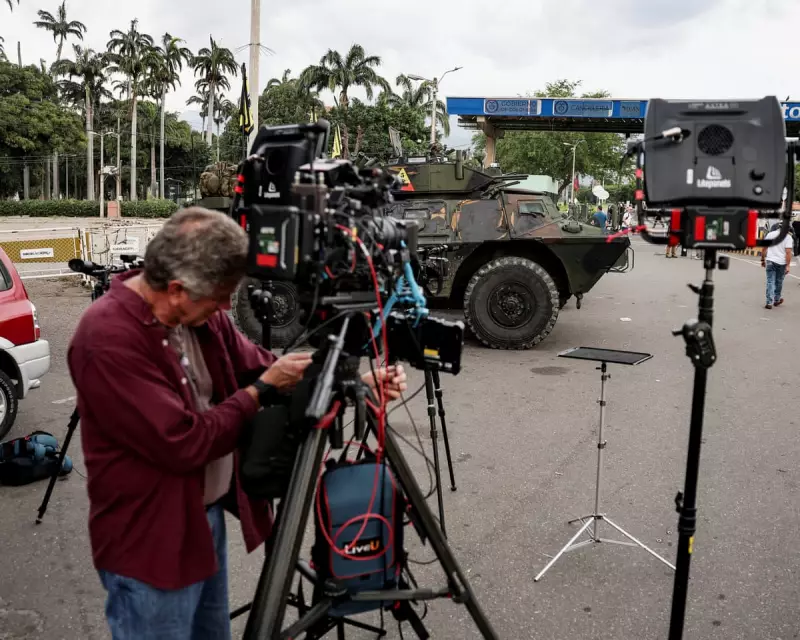
The suppression of media activity was not confined to Caracas. On the volatile border with Colombia, Univision journalist Juan Carlos Vélez and his television crew were briefly detained by the Venezuelan National Guard. Vélez, a Colombian national, stated that guardsmen seized their camera equipment and erased video footage. Two other Colombian news teams experienced similar brief detentions at the frontier.
This incident follows another on Sunday, where a journalist working for The Guardian had her notes confiscated and was ordered to leave Venezuelan territory. These actions underscore the severe restrictions on independent reporting within the country, where authorities have also systematically declined visas for foreign journalists seeking entry.
A Long-Standing Campaign Against Critical Voices
The recent detentions fit into a broader, alarming pattern. The National Association of Journalists in Venezuela recorded the arrest of 21 Venezuelan reporters in just the first eleven months of 2025. Most face serious charges such as "terrorism," "conspiracy," "incitement to hatred," and "dissemination of false information."
International press freedom advocates have condemned the use of these legal mechanisms. Reporters Without Borders states that such charges are routinely deployed to persecute critical news coverage, reporting on protests, and crime journalism. The organisation has highlighted that short- and medium-term forced disappearances have become an established tactic in Venezuela to facilitate the crackdown on a free press.
The SNTP identified one of the released journalists as Daniel Álvarez, a reporter for the Venezuelan television station Televen. The identities of the detained international journalists were not disclosed by the union, citing security concerns. The fate of the two journalists still being held by intelligence services remains a focal point for media freedom groups watching the situation unfold.






