

A new report has revealed a sharp and alarming increase in violence targeting journalists in the United States since Donald Trump returned to the presidency. The data indicates a climate of heightened hostility where reporters covering civil unrest, particularly protests against immigration policies, face significant physical risk.
A Dramatic and Disturbing Uptick in Violence
According to the non-profit Freedom of the Press Foundation, the US press has endured approximately as many assaults in the single year of 2025 as it did in the previous three years combined. The organisation's incident tracker recorded 170 assaults against journalists before 16 December 2025. This figure starkly contrasts with the total of 175 assaults documented across the entire period from 2022 to 2024.
The foundation states that it only logs incidents verified by first-person accounts or multiple news sources. A significant majority of these attacks occurred while journalists were covering demonstrations against the Trump administration's efforts to deport undocumented immigrants. Law enforcement officers allegedly responsible for many of the assaults have used batons, fired projectiles, and employed other forceful measures against clearly identified members of the press.

Rhetoric, Polarisation, and the Role of Leadership
Press freedom advocates and academic researchers point to a toxic confluence of factors driving the surge. While journalists inherently face greater danger when covering significant civil unrest, a sustained campaign of anti-media rhetoric from the highest levels of government is seen as exacerbating the threat.
President Trump has repeatedly lambasted the mainstream media, baselessly accused outlets of lying, and publicly insulted individual journalists, famously labelling the press the "enemy of the people." Lars Willnat, a professor at Syracuse University, notes that such rhetoric signals to supporters that journalists are legitimate targets. "That shift matters because violence becomes easier to justify once journalists are seen as political combatants rather than neutral observers," Willnat explained.
Stephanie Sugars, a senior reporter with the Freedom of the Press Foundation who authored the report, cautions that drawing a direct line of causation is complex. "Trump does not have personal control over every police department," she said. However, she emphasised that the "policies and rhetoric of both him and his administration … reflect that hostility towards the press as well and could be seen as condoning other aggressions."
Personal Accounts: Journalists on the Front Line
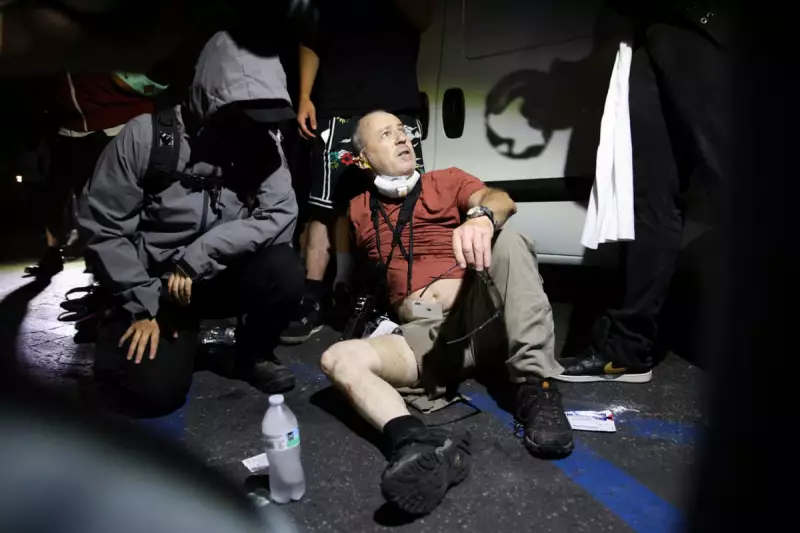
The statistics are embodied by harrowing personal stories. Nick Stern, a Los Angeles-based photographer, suffered serious injuries in two separate incidents in 2025. In June, while covering an anti-ICE protest in Compton, California, he was allegedly struck by an explosive device fired by an officer despite being 40 feet from a barricade and clearly wearing press credentials. The casing entered his thigh, requiring emergency surgery and a four-day hospital stay.
"It was completely unjustified," Stern stated. After recovering, he returned to cover another protest in August outside a Los Angeles detention centre, where an officer struck him in the face with a baton after he presented his press ID. Stern has filed lawsuits related to both attacks.
In Chicago, journalist Raven Geary was covering a September protest outside the Broadview detention facility when an ICE officer fired a pepper ball that struck her face. Geary, who was wearing a press pass, believes officers were fully aware they were targeting journalists. "They definitely knew that they were shooting at journalists," she said.
This incident was part of a broader pattern during "Operation Midway Blitz," where the foundation reported 34 assaults on journalists over six weeks outside the Broadview facility. In response, Geary, fellow reporters, and protesters filed a class-action lawsuit alleging violations of their First and Fourth Amendment rights. In October, a federal judge issued a temporary restraining order prohibiting defendants from using force against anyone they should reasonably know is a journalist, unless there is probable cause for a crime.

Despite the risks and his own injuries, Nick Stern, 61, continues his work. "We’ll look back at this as a time when the US went through such turmoil," he said. "It needs to be documented." The foundation's tracker, launched in 2017 following attacks on journalists during the Ferguson protests, consistently finds that protests remain the most dangerous environments for the press in America, regardless of the administration in power.





