The deadly shooting at Sydney's Bondi Beach has reignited a fierce national debate about Australia's firearm regulations, despite them being among the world's toughest. Prime Minister Anthony Albanese has announced his government is actively considering tightening gun laws in the wake of the attack, which left 15 people dead.
Licence Holder Among Attackers
One of the two gunmen involved in Sunday's assault, which police have identified as a father and son, had held a valid firearms licence for a decade. The individual, who obtained his licence in 2015, legally owned six registered weapons. While police have not officially detailed the firearms used, analysis of footage suggests one attacker used a rifle and the other a semi-automatic shotgun.
What Are Australia's Current Gun Laws?
Australian firearm legislation is notably strict, particularly in contrast to the United States. To obtain a licence, an applicant must demonstrate a 'genuine reason', which does not include self-defence. The New South Wales government lists acceptable reasons as:

- Business or employment purposes
- Animal welfare (e.g., pest control)
- Recreational hunting
- Sport or target shooting
This framework was largely established by the landmark National Firearms Agreement, introduced after the 1996 Port Arthur massacre, which saw 35 people killed.
Government Pledges to Strengthen Legislation
Following a cabinet meeting on Monday, 15 December 2025, Mr Albanese stated his administration agreed to pursue stronger laws and develop a national firearms register. Potential reforms could address the number of weapons a single licence permits, the duration of licences, and the types of legal firearms and modifications.
"People's circumstances can change. People can be radicalised over a period of time. Licences should not be in perpetuity," the Prime Minister told reporters. He emphasised the government's readiness to take "whatever action is necessary."
New South Wales Premier Chris Minns echoed this sentiment, questioning why individuals not involved in agriculture would need access to high-powered weapons that endanger the public and police.
A History of Tight Control and Its Impact
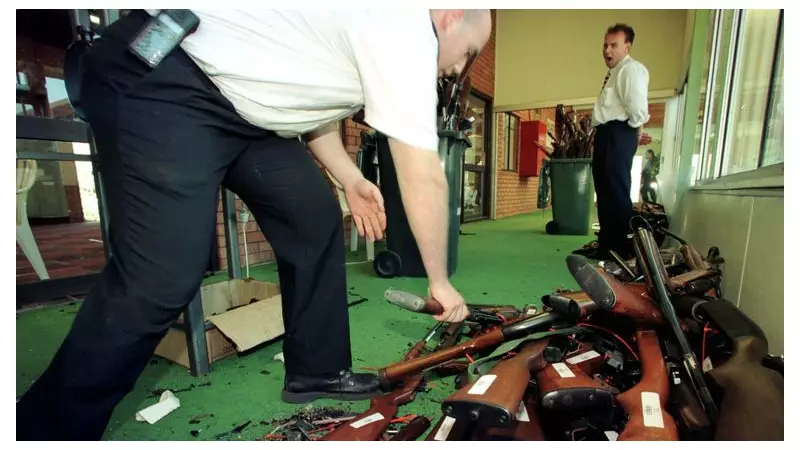
The 1996 Port Arthur tragedy was a watershed moment. Then-Prime Minister John Howard swiftly enacted the new national agreement, which banned rapid-fire rifles and shotguns for most citizens. A subsequent government buyback scheme collected and destroyed over 600,000 firearms.
The policy's effect was significant. By 2009, data showed Australia's gun murder rate was 0.1 per 100,000 people, compared to 3.2 per 100,000 in the US. In the nearly three decades since the agreement, Australia has experienced few mass shootings, with the most recent prior to Bondi being an ambush in Wieambilla in December 2022 that killed two police officers and a civilian.
The Bondi Beach attack now presents a profound test for Australia's long-held consensus on gun control, pushing lawmakers to examine whether existing measures remain sufficient in a changing world.