Democrats Embrace Universal Childcare as Core Policy Shift
In a significant political evolution, the Democratic Party is increasingly rallying behind universal childcare as a central policy goal, marking a departure from its traditional means-tested approaches. This shift is gaining momentum across the United States, with candidates from various states integrating the issue into their platforms as a potential winning strategy.
From Peripheral Issue to Political Priority
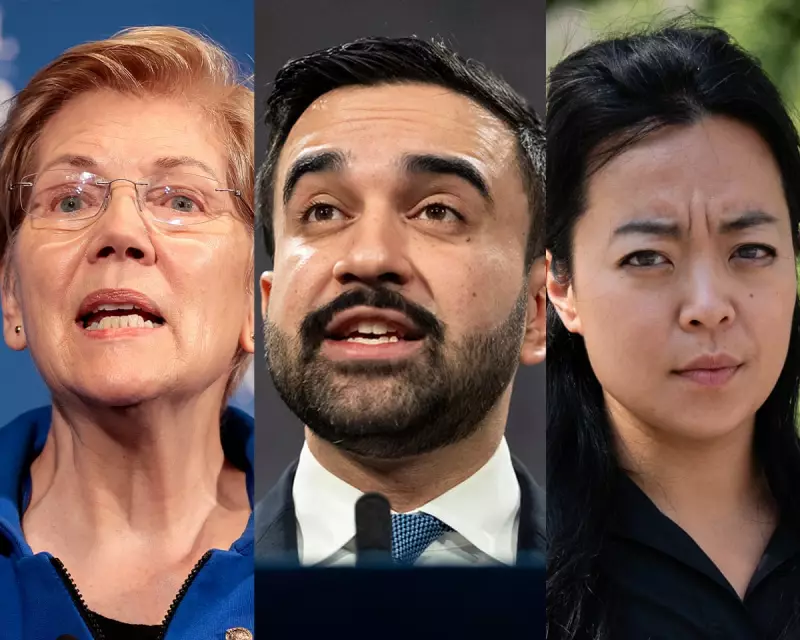
When Francesca Hong campaigned for the Wisconsin State Assembly in 2020, childcare was not a primary focus. Now, as a Democratic representative, restaurateur, mother, and gubernatorial candidate, she has declared that signing a universal childcare bill would be among her first actions if elected. "We're in a childcare catastrophe. We haven't invested enough in this infrastructure," Hong emphasised in an interview. "Universal childcare meets the moment of the crisis we're in, with the speed and scale to spread across the state."
Hong is far from isolated in this stance. In recent months, numerous Democratic candidates have championed universal childcare, including:

- Jason Esteves, gubernatorial candidate in Georgia
- Jordan Wood, congressional candidate in Maine
- Janeese Lewis George, mayoral candidate in Washington DC
This growing consensus spans nearly all factions of the Democratic Party. Veteran strategist James Carville recently advocated for making universal childcare a public good, while David Plouffe, former campaign manager for Barack Obama, suggested it should feature in the party's 2028 platform. Democratic socialists like Bernie Sanders have long supported such approaches.
Historical Context and Policy Evolution
Understanding this shift requires examining childcare's complex political history. In 1971, a Democratically controlled Congress passed the bipartisan Comprehensive Child Development Act, which proposed childcare as a right for all children. President Richard Nixon's vehement veto, citing concerns about undermining family-centred approaches, created lasting political scars.
By 1975, opposition had intensified dramatically, with critics spreading misinformation about the legislation. This backlash influenced Democratic politicians for decades, shifting liberal approaches towards welfare-style aid for low-income families and employer incentives for the middle class throughout the late 20th and early 21st centuries.
The dominant Democratic proposal for nine years has been the Child Care For Working Families Act, co-sponsored by 43 Senate Democrats. While expanding government support, it maintained income caps, reflecting the party's cautious historical stance.
Catalysts for Change
Several factors have driven the recent embrace of universal childcare:
- Political Leadership: Senator Elizabeth Warren's 2019 presidential campaign childcare plan, offering free care for families under 200% of the federal poverty line with broader benefits, marked a turning point.
- State-Level Action: Governors like New Mexico's Michelle Lujan Grisham prioritised pathways to universal childcare, while New York and San Francisco implemented expanded programmes.
- Grassroots Organising: Advocacy from historically disenfranchised groups, including Latino parents and childcare educators, built momentum over years.
- Pandemic Impact: The COVID-19 crisis highlighted childcare's essential role, doubling media mentions and shifting coverage from scandals to policy discussions.
Democratic pollster Celinda Lake observed that post-pandemic, "small businesses care about it, employers care about it, grandparents care about it, and even parents with older children care about it, because people realize that you can't have a functioning economy without a childcare system."

Emerging Consensus and Remaining Questions
The movement gained further traction in fall 2025, when Lujan Grisham's universal childcare policy received widespread praise and Zohran Mamdani centred his New York mayoral campaign on the issue. Childcare is now, according to Lake, "front and center in the affordability agenda." Warren echoed this, stating, "It's about time Democrats realize that you can't have affordability without universal childcare."
Advocates increasingly frame childcare as a universal public service, similar to education or infrastructure. Jason Esteves, Georgia gubernatorial candidate, noted it addresses issues "not just for a certain group of working families, it's for folks across the board."
However, significant questions persist regarding implementation:
- Definition: What precisely constitutes universal childcare? New Mexico's policy, for instance, excludes most families where parents aren't working or in school.
- Structure: Debates continue about including home-based providers and achieving universal coverage swiftly.
- Funding: Divisions remain between moderate and progressive wings about financing and whether care should be entirely free.
Despite these challenges, shared principles are emerging, including free care for most families, investment in the childcare workforce, and inclusive approaches recognising various family care arrangements. New Mexico's policy, for example, provides grandparents $750 monthly for primary childcare.
A Mainstream Position with Bipartisan Potential
Universal childcare has undeniably become a mainstream Democratic position, potentially ending the era of childcare being confined to welfare frameworks. As Julie Kashen of the Century Foundation concluded, "Ultimately, having universal childcare as the goal is something that not only serves the families directly who will benefit from it, but it really serves everyone."
While this evolution suggests childcare may avoid the extreme polarisation of other issues—given bipartisan bills in Congress and cross-partisan impacts of scarcity—it represents a profound shift in Democratic policy thinking, with candidates nationwide betting it will resonate with voters seeking affordable, accessible care solutions.