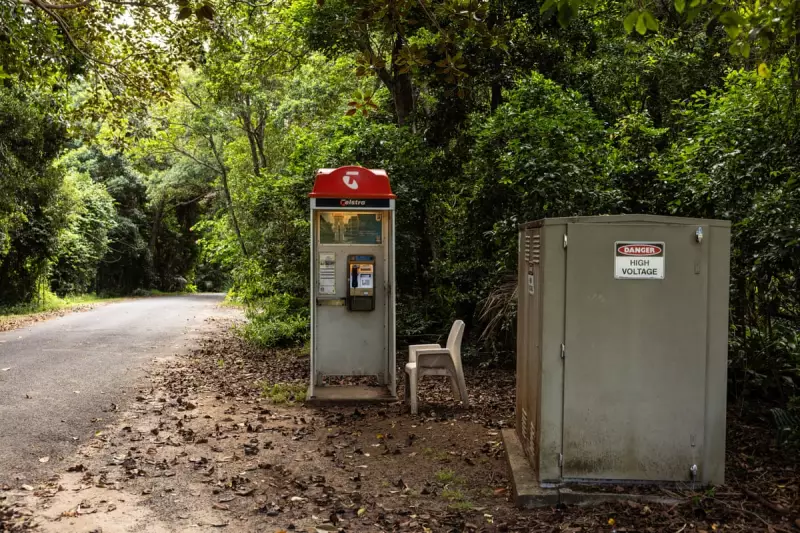
In an era where every service seems to carry a price tag, a simple, cost-free act can illuminate the profound value of public infrastructure. Watching a child delight in making a free call to Santa from a public payphone is more than a festive novelty; it's a reminder of the essential safety net such amenities provide for society's most vulnerable.
The Unseen Lifeline of Public Communication
In 2021, Telstra, Australia's privatised national telecommunications company, made a significant decision: all local and national calls from its public payphones would be free. This move, which also extended to seasonal calls to the North Pole, was seen by some as a quaint nod to a dying technology in a nation obsessed with mobile devices.
However, this perspective overlooks a critical truth. Telecommunication devices are a fundamental public good, enabling social connection, access to services, and providing safety. For refugees fleeing conflict, a phone is a lifeline to family and aid. Recognising this, when Telstra was privatised, it was legally bound by a universal service obligation to maintain this network.

While mobiles are everywhere, public phones remain essential for people experiencing homelessness, or for those whose personal devices are being weaponised in situations of domestic abuse and coercive control. They also serve as a crucial backup for anyone who has ever lost their phone, had the battery die, or has children without their own devices in an emergency.
The Economic Sense of Free Access
Interestingly, Telstra's shift to free calls was driven not just by social responsibility but by stark economics. It was costing the company around $6 million to process the $5 million in coins collected from its payphones. Removing the fee eliminated this inefficient cost centre, making the policy financially sensible as well as socially beneficial.
This principle—that the cost of providing a universal service can be marginal compared to the immense social benefits—applies to numerous public goods. Cities worldwide are discovering that making public transport free or very low-cost often makes economic sense. The expense of collecting and policing fares can consume most of the revenue.
When Richmond, Virginia, introduced free buses, services ran more smoothly without fare-collection delays, and costs for policing fare evasion dropped. In Queensland, Australia, a flat 50-cent fare across public transport has proven wildly popular and has even seen a significant reduction in fare evasion.
Beyond Transport: A Broader Philosophy of Public Good
The logic extends far beyond phones and trains. Libraries in San Diego and elsewhere scrapped late fines because the $1 million spent collecting $675,000 in fees was counterproductive, often deterring borrowers rather than encouraging returns. Wales made all medical prescriptions free, prioritising equity and access while also cutting the administrative costs of a means-tested system—a policy later adopted by Scotland and Northern Ireland.
Similarly, providing free smoke alarms has proven cheaper and more effective than awareness campaigns alone. These examples show that the goal isn't always to be revenue-neutral. The core purpose is to enhance social equity, safety, and community wellbeing.
This summer, Australians will access free beaches, museums, and public barbecues. These are not monetised transactions but shared public goods that foster community. The free payphone, much like the free library book or the affordable bus ticket, represents an investment in a connected, equitable, and safer society. It allows everyone, from a child calling Santa to someone fleeing danger, to reach out and connect—without a price tag.