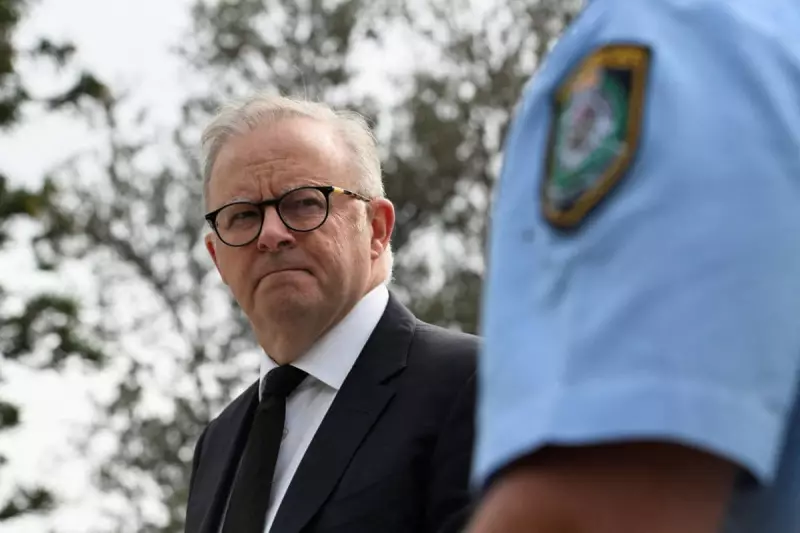
Prime Minister Anthony Albanese has announced a major new national gun buyback scheme, described as the largest such initiative since the 1996 Port Arthur massacre. The move is a direct response to the recent terror attack at Bondi Beach in Sydney.
Funding and Details of the Buyback Scheme
The significant costs of the programme, which is expected to result in the destruction of hundreds of thousands of weapons, will be shared between the federal government and state and territory governments. Mr Albanese confirmed the financial arrangement on Friday. State authorities will be responsible for collecting surrendered firearms, while the Australian Federal Police will oversee their destruction.
In a related announcement, the Prime Minister declared Sunday as a national day of reflection to honour the 15 victims of the Bondi attack. He also confirmed intelligence findings that the attacker had used a regular online video game feed linked to the Islamic State terror group.

Tightening Laws and Political Debate
The buyback coincides with plans by state governments to tighten national gun laws through the national cabinet. Proposed reforms include issuing gun licences only to Australian citizens, implementing more rigorous background checks, limiting licence durations, and capping the number of firearms an individual can own.
Albanese emphasised the urgency of reform, citing the case of one of the attackers. "We know that one of these terrorists held a firearm licence and had six guns in spite of living in the middle of Sydney’s suburbs. There’s no reason why someone in that situation needed that many guns," he stated.
The government is also accelerating the implementation of a long-awaited national firearms register, first recommended after Port Arthur, though it is not expected to be operational until 2027 at the earliest.
Opposition and the Scale of the Challenge
The Prime Minister called for bipartisanship, but the plan faces opposition. Members of the Coalition, minor parties including One Nation, and Labor backbencher and Olympic shooter Dan Repacholi have argued the changes are unnecessary. Repacholi urged that new rules must not penalise responsible owners, focusing instead on information sharing and enforcing existing powers.
The scale of the task is considerable. There are now more than 4 million legally owned guns in Australia, a rise of over 25% since the landmark reforms enacted by the Howard government after Port Arthur, which claimed 35 lives. The subsequent buyback and amnesty in the late 1990s saw approximately 650,000 weapons destroyed.
The new voluntary scheme will allow owners whose collections exceed proposed new limits to surrender firearms. Opposition Leader Sussan Ley said the Coalition would examine proposals sensibly but accused the government of using the issue to deflect from debates on antisemitism.