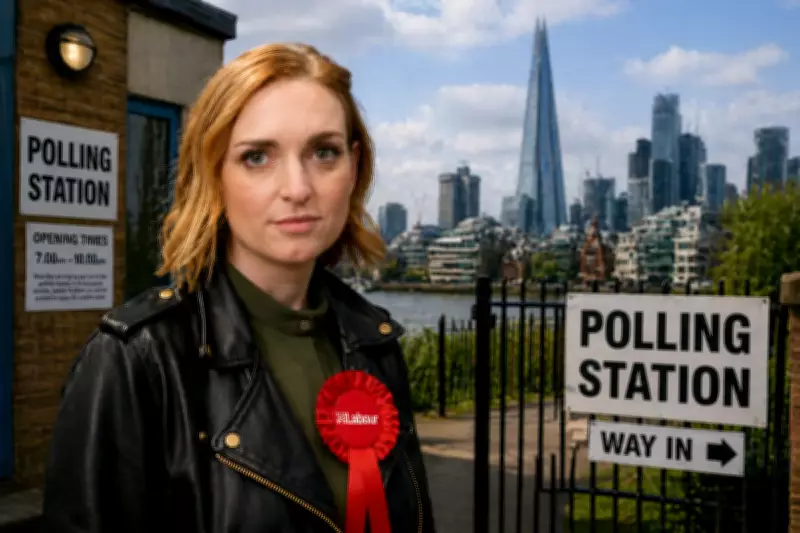
Thursday 30 April 2026 5:50 am. Alys Denby, a self-described Conservative, has announced she will vote Labour in the upcoming local elections. She describes this decision as shameful but necessary to prevent the Green Party from taking control of her council.
A Conservative in South London
Denby, who lives in Southwark, notes that being a Tory in south east London has long felt like a lost cause. She believes London is the engine of the national economy and that there are voters who want politicians to believe in freedom, personal responsibility, and capitalism. However, she feels that the upcoming local elections do not offer such choices.
Polls suggest Labour will hold Southwark, but neighbouring Lewisham and Lambeth could fall to the Greens. Angela Rayner was sent to Rye Lane to campaign, as current projections show Labour winning 34 per cent and the Greens 31 per cent. Denby is not prepared to take that risk.

Critique of Southwark Council
Denby acknowledges that Southwark is not especially well run, though her councillor was responsive when she asked for help removing antisemitic graffiti from a local playground. She criticizes the council for stalling approval of a shopping centre redevelopment that would provide around 800 new homes, following opposition from activists and left-wing comedians.
Why the Greens Are Worse
Denby argues that the Greens would be much worse. She cites the Southwark Green Party manifesto, which demands that property developers build at least 35 per cent genuinely affordable homes and fight for rent controls. She paraphrases economist Assar Lindbeck, saying this would be the fastest way to destroy London's housing market short of carpet bombing.
The Insanity of Rent Controls
Denby points out that developers have already given up on London, with only 4,170 new homes starting construction last year, a 72 per cent fall. The government has overruled Sadiq Khan's 35 per cent affordable housing target, but even the new 20 per cent quota is too high. She argues that making housing affordable by making it unviable to build is counterproductive. Rent controls have failed everywhere they have been tried, and with rental supply already plummeting due to new renters' rights legislation, they would be even more damaging.
Denby notes that Labour may not like landlords, but some recognize that rent controls are insane. The housing secretary dismissed Rachel Reeves' hints of a one-year freeze on private rents, noting that in Scotland it led to higher rents. Denby believes Reeves floated the idea due to political weakness, pandering to a left-wing faction hostile to profit. She was vetoed, which Denby sees as a prelude to her dismissal in a post-election reshuffle.
Green Party Personalities
Denby criticizes Green Party candidates, describing their biographies as resembling classifieds from the Socialist Worker. One boasts of pushing Southwark Council to declare a climate emergency; another is passionate about plants and modern folk music, with work including teaching, nature conservation, and housing co-operatives. Only one candidate is an entrepreneur. Denby questions the motives of those attracted to a party led by a former hypnotist and former Lib Dem, whose real name is David Paulden, not Zack Polanski. She calls him a charlatan and says his commune of extremists shouldn't be in charge of a hole punch, let alone bin collection.
The Dangers of Tactical Voting
Denby explains that voting Labour is what it takes to keep the Greens from power. She expects many others will do the same. Citing Merlin Strategy's Scarlett Maguire, she notes that messy multi-party politics means tactical voting will influence results at the next general election, making outcomes harder to predict and problems harder to fix.
Tactical voting turns elections from an expression of preference into an exercise in prevention. Instead of backing a party you support, you vote for the one most likely to stop someone else from winning. This scrambles the signals voters send. Politicians elected as the lesser of two evils are unlikely to deliver the change Britain needs. Elections should be battles of ideas, not risk assessments.
Denby concludes: if as a card-carrying Tory and free-market advocate she plans to vote for the enemy, what does that mean for the country? We'll find out on 8 May.