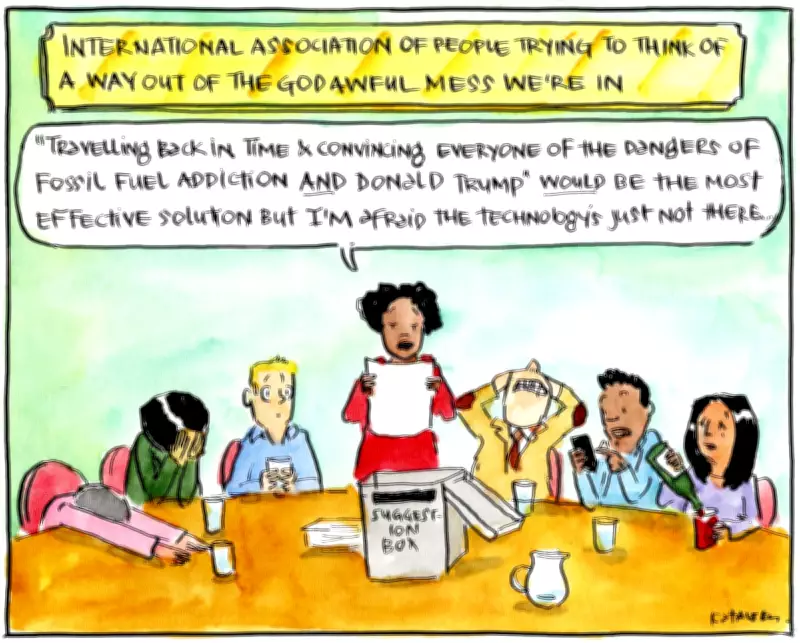
In an era marked by unprecedented global challenges, from climate change and economic inequality to geopolitical tensions and public health crises, the search for effective solutions has become more urgent than ever. Traditional approaches, often siloed within specific disciplines or sectors, are increasingly seen as inadequate to address the complex, interconnected nature of these issues. Experts worldwide are calling for a paradigm shift toward more innovative, holistic strategies that leverage diverse perspectives and technologies.
The Limitations of Conventional Methods
For decades, many of the world's problems have been tackled through conventional methods, such as top-down policy-making, isolated scientific research, or market-driven initiatives. While these approaches have yielded some successes, they often fail to account for the systemic and multifaceted dimensions of modern crises. For instance, climate change cannot be solved by environmental science alone; it requires integration with economics, social justice, and political will. Similarly, economic inequality demands solutions that blend financial reforms with educational access and healthcare improvements.
Embracing Interdisciplinary Collaboration
A growing consensus among thought leaders is that the best solutions emerge from interdisciplinary collaboration. This involves bringing together experts from fields as diverse as technology, sociology, ecology, and business to co-create innovative frameworks. By fostering dialogue across boundaries, new ideas can surface that might otherwise remain undiscovered. For example, digital platforms can facilitate real-time data sharing between scientists and policymakers, enabling more responsive and evidence-based decision-making.

Moreover, grassroots movements and community-led initiatives are proving to be powerful catalysts for change. Local solutions, when scaled and supported by global networks, can address specific needs while contributing to broader goals. This bottom-up approach ensures that interventions are culturally sensitive and sustainable in the long term.
The Role of Technology and Innovation
Technological advancements offer unprecedented opportunities to tackle global problems. Artificial intelligence, for instance, can optimize resource allocation in disaster response or predict environmental trends. Renewable energy technologies are making sustainable development more feasible, while biotechnology holds promise for addressing health crises. However, experts caution that technology alone is not a panacea; it must be guided by ethical considerations and inclusive design to avoid exacerbating existing inequalities.
Moving Forward: A Call to Action
To effectively address the world's current problems, a concerted effort is needed from all sectors of society. Governments, businesses, academia, and civil society must work together to implement flexible, adaptive strategies. This includes investing in education that fosters critical thinking and creativity, as well as creating policies that incentivize innovation and collaboration. By prioritizing long-term sustainability over short-term gains, humanity can build a more resilient and equitable future.
In conclusion, the best solution to the world's challenges lies not in a single silver bullet, but in a mosaic of approaches that are innovative, collaborative, and context-aware. As global citizens, embracing this complexity and working collectively may be the key to overcoming the obstacles that define our time.