Barking and Dagenham's Political Monochrome Faces a Rainbow of Challenges
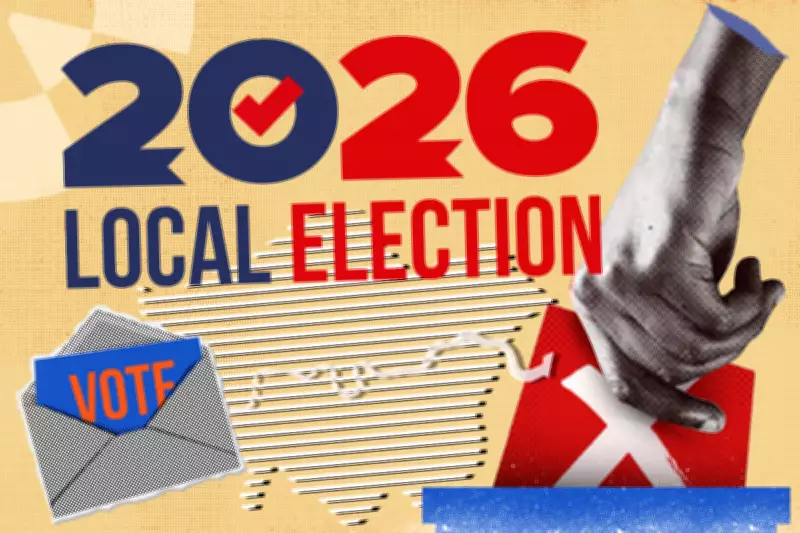
As London's 2026 local elections approach, the borough of Barking and Dagenham stands at a critical crossroads. For decades, this area has been painted a uniform Labour red, but that political monochrome is now facing splashes of green, blue, and purple from multiple challengers seeking to reshape the landscape.
The Once-Unanimous Red Stronghold
In the 2022 local elections, Barking and Dagenham achieved what few boroughs ever have: a complete political sweep. All 51 council seats in this borough of 232,747 residents went to Labour candidates, creating what appeared to be an impregnable red fortress. However, this overwhelming victory came with a significant caveat—a turnout of just 24.5 percent, the lowest participation rate across all of London.
Since that clean sweep, cracks have begun to appear in Labour's previously solid foundation. Three sitting councillors have dramatically defected from Labour to the Green Party, citing fundamental disagreements with the party's direction. Moin Quadri, Victoria Hornby, and Faruk Choudhury publicly expressed their discomfort with what they described as Labour's "refusal to take a principled stand on Gaza" and the party's "adoption of divisive anti-immigration rhetoric."

These defections weren't isolated incidents. The Conservative Party has also managed to attract a Labour councillor to their ranks, demonstrating that political allegiances in the borough are becoming increasingly fluid.
A Borough in Demographic Flux
Barking and Dagenham, immortalized in Ramz's 2018 hit song with the memorable hook 'I might link my ting from Barkin', represents one of London's most diverse communities. Approximately 16 percent of residents identify as black African, while 17 percent identify as Bangladeshi or Pakistani. White residents constitute about 46 percent of the population.
More significantly, the borough is experiencing explosive growth. The 2021 census revealed a population increase of 17.7 percent—the second-highest growth rate in the entire capital. This demographic transformation brings with it changing political priorities and potentially shifting voting patterns.
Financial Pressures and Political Vulnerabilities
Council finances have become a flashpoint in the pre-election period. Barking and Dagenham falls within Band D for council tax during the 2026/27 financial year, with residents paying £2,198. Labour council leader Dominic Twomey faces mounting criticism over his decision to raise council taxes by five percent to address funding gaps.
Twomey has openly expressed concerns about maintaining Labour's grip on power, warning party members against complacency regarding Reform UK's potential to capture the council. Recent polling suggests Labour could indeed lose control, adding urgency to his cautionary message.
The Multi-Party Assault on Labour's Dominance
Labour has controlled Barking and Dagenham since the borough's creation in the 1960s, but that historical dominance now faces challenges from multiple directions. The Green Party's growing presence, Conservative inroads, and Reform UK's determined campaign all threaten to disrupt the political status quo.
Reform UK has specifically targeted the area as part of its broader strategy to breach traditional Labour strongholds. One key battleground is Eastbrook and Rush Green in the borough's eastern section. However, Reform's campaign has already been marred by controversy. Lewis Holmes, initially a vocal critic of the incumbent council who was expected to represent Reform, has instead turned against the party and pledged to run as an independent under the 'Barking and Dagenham first' banner. Campaign groups have accused Holmes of promoting far-right content, adding another layer of complexity to an already contentious race.
Historical Context of Political Battles
Barking and Dagenham has long served as a battleground between radical and centrist political forces. In 2010, far-right British National Party leader Nick Griffin contested the parliamentary seat against former Labour MP Baroness Margaret Hodge, ultimately losing decisively. This historical context underscores how the borough has frequently been at the forefront of broader national political struggles.

As election day approaches, the once-solid red political canvas of Barking and Dagenham is being splattered with colors from across the party spectrum. Whether Labour can maintain its historical control or whether challengers will succeed in creating a more politically diverse council remains the central question facing this rapidly changing London borough.