UK's Chagos Islands Sovereignty Transfer to Mauritius: Key Details and Controversies
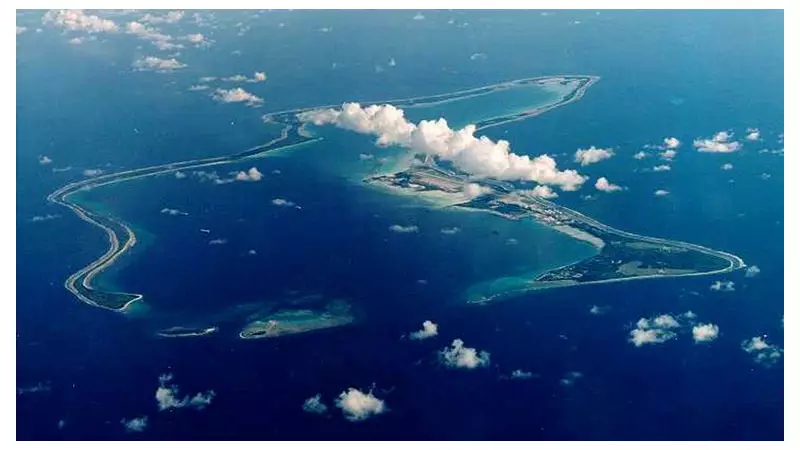
The UK government is standing firm on its decision to hand over sovereignty of the remote Chagos Islands to Mauritius, following a decades-long dispute. This move has drawn sharp criticism from former US President Donald Trump, who labelled it "an act of great stupidity." Despite this, the UK maintains that the deal is necessary to secure the future of the Diego Garcia military base, a critical asset for both UK and US operations.
What Does the Chagos Islands Deal Involve?
Under the agreement, signed by Sir Keir Starmer's Labour government in May 2025, the UK will formally transfer sovereignty of the Chagos Islands to Mauritius. Key elements of the deal include:
- A 99-year lease for the Diego Garcia base from the Mauritian government, with an option to extend by an additional 40 years.
- A ban on other powers using islands around Diego Garcia without UK agreement.
- Freedom for Mauritius to arrange resettlement of Chagossians on all islands except Diego Garcia.
- An estimated average annual cost of £101 million, with total costs potentially rising to £30 billion.
- Requirement for ratification by both the UK Parliament and the Mauritian parliament.
The UK government argues that without this deal, legal challenges from Mauritius could have jeopardised the base's operation, potentially allowing hostile nations to establish their own presence in the region.

Why Is the Diego Garcia Base So Crucial?
Diego Garcia serves as a pivotal military base for the UK and US, described as "vital to UK and US power projection in the Indian Ocean and beyond." Since 1971, it has been a joint facility, supporting operations across the Middle East, Indo-Pacific, and Africa. Recent activities include bombing strikes against Houthi targets in Yemen and humanitarian aid deployments to Gaza. Sir Keir Starmer has emphasised its role in defeating terrorists in Iraq and Afghanistan, underscoring its strategic importance.
Historical Context and Controversies
The Chagos Islands have been a point of contention since the UK claimed them in the early 19th century and retained them after Mauritius gained independence in 1968. In the 1970s, the UK expelled around 2,000 native Chagossians to make way for the US naval facility on Diego Garcia, an action widely condemned as a shameful chapter in Britain's colonial history. Chagossians have long fought for the right to return, adding to the deal's complexity.
International disputes escalated in 2010 when Mauritius challenged UK sovereignty, leading to International Court of Justice proceedings. The current deal aims to address past wrongs and support Chagossian welfare, but it has faced objections from some Chagossians who feel excluded from consultations.
Security Concerns and Political Reactions
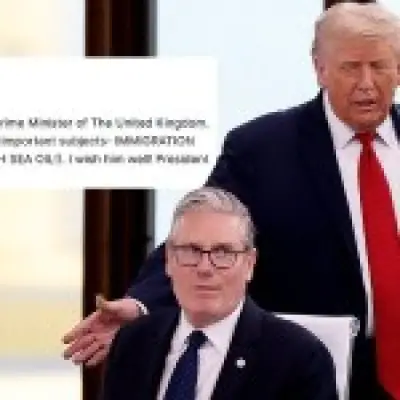
Critics, including Donald Trump and Conservative Party leader Kemi Badenoch, warn that the deal could weaken UK and NATO security. Concerns focus on the potential for a future Mauritian government to allow China, which has significant investments in Mauritius, to influence the base. US Secretary of State Marco Rubio has echoed these fears, highlighting potential threats to US security.
Despite opposition, the deal has received support from the US, Canada, Australia, New Zealand, and India. The UK House of Lords has raised objections regarding lease details and payment transparency, indicating ongoing parliamentary scrutiny.
As the UK and Mauritius move towards ratification, the Chagos Islands deal remains a focal point of debate, balancing historical justice with contemporary security imperatives.