The Australian parliament witnessed a striking visual metaphor for political division on Tuesday, as the Liberal and National parties sat separately during question time, resembling what one observer described as "divorced parents at a wedding." With the opposition now reduced to a similar size as the crossbench, Labor ministers struggled to contain their amusement at the Coalition's apparent disintegration.
A Crossbench-Sized Opposition
Independent MP Andrew Wilkie captured the surreal atmosphere with a pointed question to the government. "Seeing as the crossbench is now as big as the Liberal party and likely to soon exceed them with more defections, on what basis are the Liberals still regarded as the opposition?" he asked. While delivered with some levity, the question highlighted the unprecedented parliamentary mathematics facing the diminished opposition.
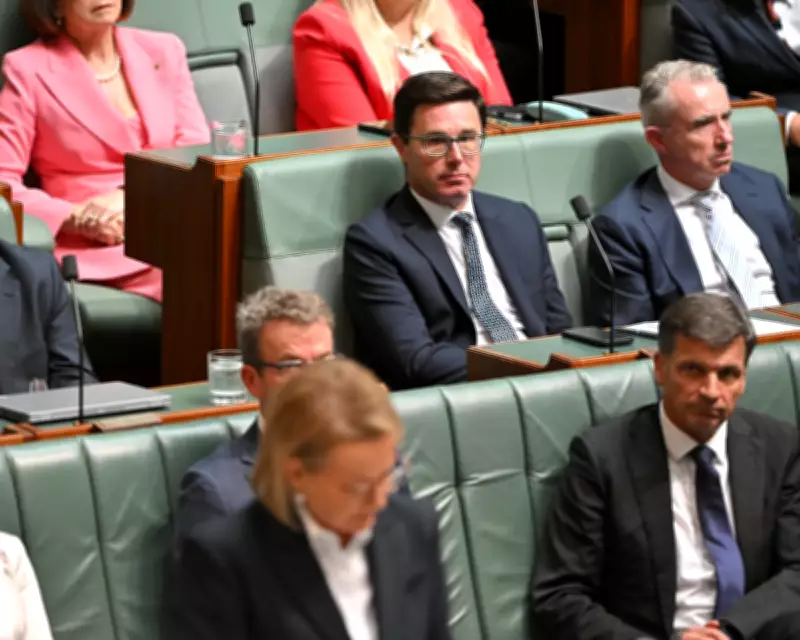
Manager of Opposition Business Sussan Ley led what has become the smallest-ever opposition party in the current Parliament House, with leadership aspirants Angus Taylor and Andrew Hastie positioned conspicuously behind her. The Nationals, having formally separated from the Coalition, found themselves relegated to the side of the chamber, physically removed from the main opposition benches.

Metaphors and Mockery
The political separation inspired a cascade of colourful comparisons from across the political spectrum. Prime Minister Anthony Albanese had previously likened the situation to the reality television show Married At First Sight, while Education Minister Jason Clare suggested it resembled the Beckham family breakdown. Greens sources reportedly compared it to the confrontational talk show Jerry Springer.
Even the traditional first-day ecumenical service at a Canberra church provided material for strained metaphors about duty and forgiveness. Liberal MP Scott Buchholz joked that his colleagues needed "divine intervention," while others spoke of praying for the Liberals and Nationals to end their "trial separation" and resume their troubled political marriage.
Procedural Consequences
The practical implications of the Coalition split became apparent during parliamentary proceedings. Manager of Government Business Tony Burke informed the chamber that the opposition would now receive the same allocation of questions as the newly-expanded crossbench, which has grown courtesy of David Littleproud and the Nationals moving to crossbench positions.
"We still have the traditional crossbench, but now we've got the cross, the very cross and the apoplectic," Burke remarked, gesturing toward the independents, Nationals, and Liberals respectively. He noted that procedural questions regarding committee memberships would remain unresolved until there was clarity about Coalition arrangements.
"We could restructure the committees, I just have no idea what the arrangements will be on that side in seven days' time," Burke told parliament, highlighting the uncertainty created by the opposition's disarray.
Missed Opportunities
While Labor ministers delivered a barrage of jokes during question time, Reserve Bank Governor Michelle Bullock announced the first interest rate rise since 2023. A more organised opposition might have seized this opportunity to hammer the government over its economic record, but instead Treasurer Jim Chalmers "skated through without a sweat," according to observers.
Chalmers instead turned his attention to poking fun at opposition counterpart Ted O'Brien for being named as his own assistant, while Health Minister Mark Butler aimed squarely at Angus Taylor, claiming he was "plotting against his leader from the frontbench." When Liberals protested this language, Burke quipped that Taylor "never claimed he was misrepresented."
Internal Tensions and External Criticism
Liberal MPs attempted to counterattack, arguing that the government's barely-concealed glee at the Coalition catastrophe was designed to divert attention from unpopular changes to freedom of information laws and years-long delays in responding to the late Peta Murphy's report on gambling. Both represented legitimate criticisms that an organised opposition might have effectively prosecuted.

Even recent One Nation defector Barnaby Joyce condemned the "total fiasco," urging his former colleagues to "get it together" – a remarkable moment that saw Joyce positioned as a calm voice of reason calling for sensible politics.
The View from the Chamber
The physical separation in parliament told its own story. Nationals MP Darren Chester looked up at the press gallery and curled his hands into the shape of binoculars, as if struggling to see so far up into the chamber. With fixed smiles that "may as well have been painted on," according to observers, Liberals and Nationals appeared to be living the dictionary definition of having to "grin and bear it" through the barrage of gags and derision from the government benches.
As astrologically-minded friends note that the end of 2025's 'year of the snake' represents prime time for "shedding" old baggage, the freshly separated Nationals have left Sussan Ley's troubles looking no lighter, though the benches behind her certainly appear more sparse.
Looking Ahead
With no Coalition reunion yet in sight, this divided arrangement could represent the parliamentary status quo for the immediate future: an opposition in visible disarray and a government facing insufficient scrutiny. While Andrew Wilkie won't be named opposition leader for the crossbench party anytime soon, insistent mutterings about a potential Angus Taylor leadership spill suggest further changes might not be far away.
The spectacle of Australia's traditional conservative parties sitting separately, rarely interacting, and facing relentless mockery from government ministers represents a significant moment in the nation's political landscape, with procedural and symbolic consequences that will likely reverberate through coming parliamentary sessions.