Global Leaders Face Critical Test at Davos Summit
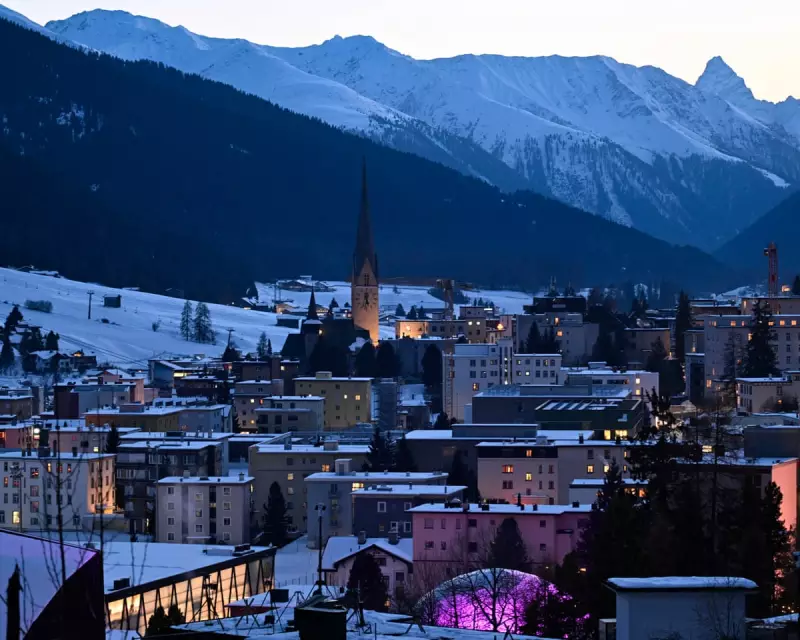
As hundreds of global CEOs, finance titans, and more than sixty prime ministers and presidents gather in Davos, Switzerland for the annual World Economic Forum, they face what former US Labor Secretary Robert Reich describes as a defining moment of moral and political courage. The 2026 meeting occurs against a backdrop of unprecedented challenges to the international order that has largely governed global affairs since the Second World War.
Trump's Systematic Dismantling of International Norms
Donald Trump's administration has embarked on what critics characterize as a comprehensive assault on established international frameworks. The former president has not only deployed what Reich terms "brownshirts" in American cities like Minneapolis but has systematically undermined key pillars of global governance. This includes threatening NATO alliances, withdrawing from crucial international agreements including the UN climate treaty, and violating the UN charter through actions like the invasion of Venezuela and abduction of Nicolás Maduro.
Perhaps most strikingly, Trump has upended established trade rules and made extraordinary territorial demands, including insisting that the United States annex Greenland. When Denmark refused this demand, Trump threatened tariff increases against multiple NATO allies including Denmark, Norway, Sweden, France, Germany, the United Kingdom, the Netherlands, and Finland – nations that had expressed solidarity with Denmark's position.

Personal Motivations Behind Global Policy
Revealing text messages to Norway's prime minister suggest Trump's motivations may be deeply personal rather than strategic. According to these communications, the former president linked his Greenland annexation push to his failure to receive the Nobel Peace Prize, writing: "Considering your Country decided not to give me the Nobel Peace Prize for having stopped 8 Wars PLUS, I no longer feel an obligation to think purely of Peace, although it will always be predominant, but can now think about what is good and proper for the United States of America."
Intimidation Tactics Against Corporate Leaders
Trump appears determined to silence potential critics at Davos through direct intimidation. He has threatened to sue JPMorgan Chase, America's largest bank, claiming the institution "incorrectly and inappropriately DEBANKED" him following the January 6th protests. Financial experts note there is no evidence supporting these claims, nor any substantiation of Trump's repeated assertions about a "rigged" 2020 election.
The timing of these legal threats appears calculated to pressure JPMorgan Chase CEO Jamie Dimon, who holds a prominent speaking role at Davos. Dimon recently offered mild criticism of Trump's criminal investigation into Federal Reserve Chair Jerome Powell, suggesting such actions could "increase inflation expectations and probably increase rates over time." This measured commentary reportedly infuriated Trump, prompting what Reich characterizes as "a shot across JPMorgan Chase's bow" aimed at silencing Dimon and other potential critics.
The High Stakes of Corporate Silence
The question facing Dimon represents a broader dilemma for corporate leaders: whether to prioritize principle over profit. With compensation reaching $770 million in 2025, Dimon faces significant personal financial considerations. Reich questions whether the CEO possesses sufficient integrity to "put the bank's profits and his own compensation at risk by speaking the truth – that Trump must be opposed by anyone still possessing power and integrity."
Historical precedent suggests caution. Reich notes that "Dimon has shown time and again that he has more loyalty to JPMorgan Chase than to the United States," suggesting his previous criticism of Trump may reflect "no more than concern for his bank's bottom line." However, with Dimon approaching retirement, this moment presents what Reich describes as "his opportunity to be on the right side of history."

Unprecedented US Delegation Presence
Adding to the pressure on Davos attendees, Trump is traveling to Switzerland with the largest US delegation ever to attend the World Economic Forum, including five cabinet secretaries and numerous senior officials. This substantial presence creates what Reich characterizes as an intimidating atmosphere for foreign leaders considering criticism of Trump's policies.
"Will any prime minister or head of state attending Davos dare repudiate Trump," Reich asks, "when the US president is showing no qualms about raising tariffs on, or otherwise punishing, countries that oppose him?" The likely answer, he suggests, is that any criticism will be "at most meekly and indirect."
A Defining Moment for Global Leadership
Reich argues that Davos attendees face a profound test of their stated commitment to global leadership. While the World Economic Forum's stated purpose involves addressing major international challenges, Reich notes that "its attenders have not exactly distinguished themselves in the past by their fealty to democracy, social justice or the rules of international law."
Many corporate leaders have directly benefited from Trump's tax cuts and regulatory rollbacks, creating potential conflicts of interest. Furthermore, Reich observes that "many occupy their positions precisely because of their reluctance to rock any big boats or cause any trouble."
Despite these complicating factors, Reich insists that "if there were ever a time for them to speak out, it is now. This is their opportunity. It is also their duty." He concludes with a powerful appeal: "The world needs to hear from leaders a clear and firm denunciation of the havoc Trump is wreaking on the US and international order."
The coming days will reveal whether global elites possess the courage to confront what Reich characterizes as "Trump's tyrannous assault on international laws and rules, and his contempt for every institution established to maintain peace." Their collective response – or silence – may determine whether this Davos meeting becomes what Reich hopes could be "a tipping point" in global resistance to democratic backsliding and international norm erosion.