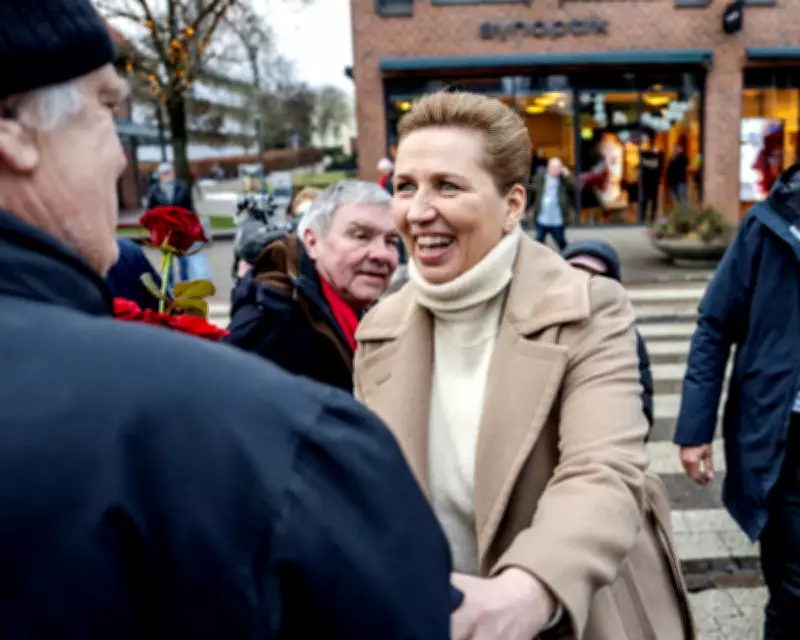
Denmark's Political Landscape Transformed Ahead of Election
As Denmark prepares for its general election, Prime Minister Mette Frederiksen's Social Democrats face a complex political reality. While traditional far-right parties like the Danish People's Party (DPP) show relatively low polling numbers at approximately 7.5%, their influence has permeated mainstream politics through Frederiksen's centrist coalition.
Normalization of Far-Right Rhetoric
Mayasa Mandia, a 23-year-old Muslim graduate living in Kokkedal, represents a growing sentiment among left-leaning voters. Despite planning to vote for leftwing parties hoping to form a "red bloc" coalition, she won't support Frederiksen's Social Democrats. Mandia observes that far-right commentary has become normalized in Danish society, citing university discussions about banning prayers as evidence.
"There are more important issues to talk about than the skin tone of someone or whether or not they wear a scarf on their head," Mandia asserts, highlighting her concern about anti-immigrant rhetoric becoming increasingly commonplace under Frederiksen's government.

Immigration Policies Reshaping European Politics
Frederiksen's hardline immigration approach, including her 2019 declaration to reduce asylum seeker numbers to zero, has attracted international attention. These policies have inspired similar strategies across Europe, notably in Sweden and the United Kingdom. Analysts suggest this approach has simultaneously stalled far-right growth while pulling rightwing rhetoric into mainstream political discourse.
Michala Clante Bendixen of Refugees Welcome Denmark explains the dynamic: "What we have seen is the Social Democrats copying the nationalist parties, especially the Danish People's party, and every time they try to meet them, the nationalist parties will just take it one step further."
Political Spectrum Shift Rightward
The overall effect has been a significant rightward shift across Denmark's political spectrum. Bendixen notes that "what used to be extreme ideas that were not taken seriously by the major parties are now mainstream ideas in Denmark." This transformation reflects in public opinion surveys showing Denmark's population becoming less tolerant compared to previous years.
Political science professor Rune Stubager from Aarhus University provides context: "Had the mainstream parties not moved, I would have expected the immigration-sceptic parties to grow like we've seen in other countries." Instead, mainstream adoption of restrictive immigration policies has contained far-right growth to specific electoral segments.
Election Dynamics and Voter Perspectives
Recent polling suggests neither the red nor blue political blocs may secure a majority without the Moderates party, potentially making Moderates leader Lars Løkke Rasmussen a decisive kingmaker. Meanwhile, voters express diverse perspectives on Frederiksen's leadership.
DPP candidate Mikkel Hartwich, campaigning near Kokkedal's Egedalsvænge housing estate, emphasizes traditional values: "We have to make sure that Denmark is still for the Danish guys and girls, and if you have to come to Denmark you have to contribute."
Contrastingly, pensioner Mohammad Iftikhar plans to vote for Social Democrats, appreciating Frederiksen's handling of international crises. However, his wife Hanne Iftikhar, a union worker, believes the prime minister has gone "a little too far" on immigration issues.
Broader Implications for European Politics
Denmark's political evolution represents a significant case study in European politics. While far-right parties haven't achieved the electoral breakthroughs seen elsewhere, their ideas have fundamentally reshaped mainstream political discourse through adoption by centrist parties. This co-option strategy has contained explicit far-right growth but at the cost of normalizing previously marginal viewpoints.
As voters head to the polls, they confront a transformed political landscape where traditional left-right distinctions have blurred on immigration issues, creating new alliances and divisions that will shape Denmark's future direction within Europe.