EU Summit Agenda Hijacked by Orbán's Ukraine Loan Veto and Middle East Tensions
EU leaders convened in Brussels this morning for what was originally scheduled as a strategic discussion on the bloc's competitiveness and economic outlook. However, as often happens in politics, unforeseen events have forced a dramatic shift in focus. The summit will now primarily address Hungary's ongoing diplomatic spat with Ukraine and escalating concerns about the Middle East conflict's impact on Europe.
Orbán Digs In on Ukraine Loan Blockade
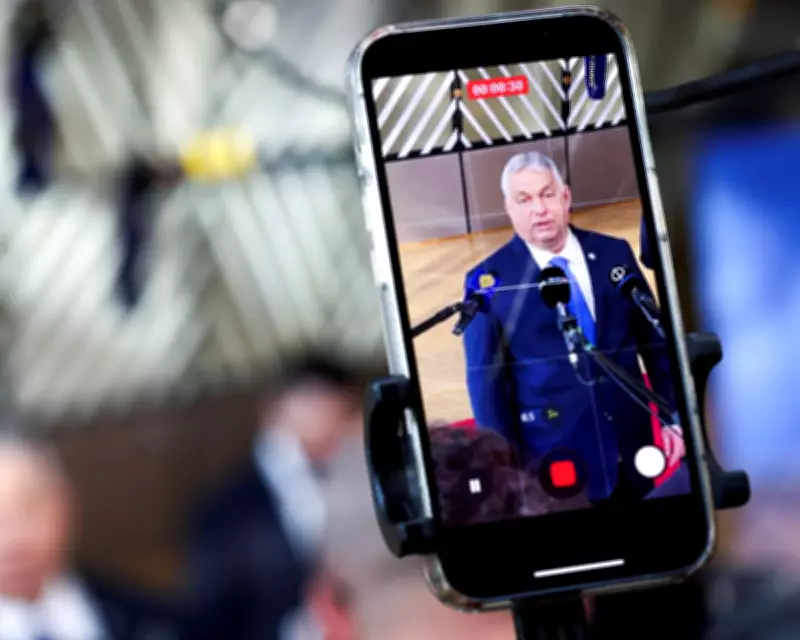
Hungarian Prime Minister Viktor Orbán arrived at the European Council building in Brussels under intense pressure to unblock the European Union's €90 billion loan package to Ukraine. With less than four weeks remaining before a crucial parliamentary election in Hungary, Orbán has been single-handedly blocking this financial assistance over a dispute concerning the Druzhba pipeline.
Upon his arrival, Orbán made his position unequivocally clear, showing no willingness to compromise. "We would like to get the oil which is ours from the Ukrainians and which is blocked by the Ukrainians," he stated firmly. "I will never support any kind of decision here which is in favour of Ukraine as long as the Hungarians are not able to get the oil which belongs to us."

When questioned about potential alternative solutions, Orbán responded with a definitive "No. Sorry, no other option." He emphasized that this was not merely political maneuvering but an existential matter for Hungary. "What we are speaking about is not politics. It's existential for Hungary to get the oil. Without getting that oil, all the households, Hungarian companies will go to bankruptcy. So you know, it's not a joke, not a political game. Zelenskyy should understand it that this is not a game. This is absolutely existential for the Hungarians."
European Leaders Express Frustration
Finland's Prime Minister Petteri Orpo delivered pointed criticism of Orbán's stance, suggesting the Hungarian leader was exploiting the Ukraine situation for domestic political gain ahead of the upcoming election. "He is using Ukraine as a weapon in his election campaign, and it's not good," Orpo remarked bluntly.
Orpo also warned about broader geopolitical implications, noting that "Russia is the only beneficiary of this chaos and rising energy prices" and urged fellow EU leaders to increase pressure on Moscow.
These comments follow recent statements from Belgium's Prime Minister Bart de Wever, who appeared to suggest that the European Union should consider improving its relationship with Russia to secure cheaper energy supplies—a position that adds another layer of complexity to the already tense discussions.
Middle East Concerns Compound Summit Tensions
Beyond the Hungary-Ukraine dispute, EU leaders must also confront growing anxieties about the Middle East conflict's repercussions for Europe. Of particular concern are potential impacts on energy prices and regional stability, with leaders recognizing that these issues cannot be separated from the broader European security landscape.
The convergence of these multiple crises—Hungary's loan blockade, pre-election politics, Middle East instability, and energy security concerns—promises to make this an exceptionally contentious and significant EU summit. As leaders navigate these complex interlocking challenges, the outcomes could have profound implications for European unity, Ukraine's financial stability, and the bloc's strategic autonomy in an increasingly volatile global environment.