EU Parliament Demands Action on Hungarian Election Integrity Concerns
European Parliament members have issued an urgent appeal to the European Commission, demanding immediate investigation into potential Russian interference and democratic violations ahead of Hungary's crucial parliamentary elections. With just three days remaining before voting that could end Prime Minister Viktor Orbán's 16-year rule, a cross-party group of MEPs has written directly to Commission President Ursula von der Leyen and Rule of Law Commissioner Michael McGrath.
Allegations of Foreign Manipulation and Voter Coercion
The MEPs' letter calls for comprehensive assessment "before and immediately after" Hungary's election day, specifically examining whether conditions for free and fair competition are being compromised. Their concerns center on multiple fronts: systematic disinformation campaigns, foreign manipulation efforts, misuse of state resources, intimidation targeting journalists, and unlawful interference with opposition activities.
These warnings come alongside revelations from independent media outlet VSquare, which reported that the Kremlin has dispatched a specialized team to manipulate Hungary's electoral process. According to their investigation, the operation is overseen by Sergei Kiriyenko, first deputy chief of staff to Russian President Vladimir Putin, who allegedly orchestrated similar interference campaigns in Moldova targeting pro-EU President Maia Sandu.

Journalist Intimidation and Security Breaches
The situation has escalated dramatically for investigative journalist Szabolcs Panyi, who authored the VSquare report exposing Russian involvement. Hungarian authorities have since accused Panyi of spying for Ukraine, with MEPs describing his treatment as "targeted in a state-led intimidation of unprecedented severity."
Additional concerns include "credible allegations" of unauthorized attempts to access opposition party IT systems, potentially involving state security forces. The MEPs also documented extensive reports of vote-buying and intimidation tactics by Orbán's ruling Fidesz party, warning of serious risks to voter autonomy and electoral integrity.
Diplomatic Tensions and Leaked Communications
Simultaneously, the European Commission has demanded urgent explanations from Budapest following leaked recordings of Hungarian Foreign Minister Péter Szijjártó's conversation with Russian counterpart Sergei Lavrov. In the recordings, Szijjártó appears to offer Lavrov confidential documents regarding Ukraine's EU accession process, stating "I will send it to you. It's not a problem."
European Commission chief spokesperson Paula Pinho described the recordings as revealing "the alarming possibility of a member state coordinating with Russia, thus actively working against the security and the interests of the EU." French Foreign Minister Jean-Noël Barrot condemned the actions as "a betrayal of the solidarity" essential between EU nations, while Polish Prime Minister Donald Tusk characterized the revelations as "really beyond shocking."
Political Context and Government Campaigns
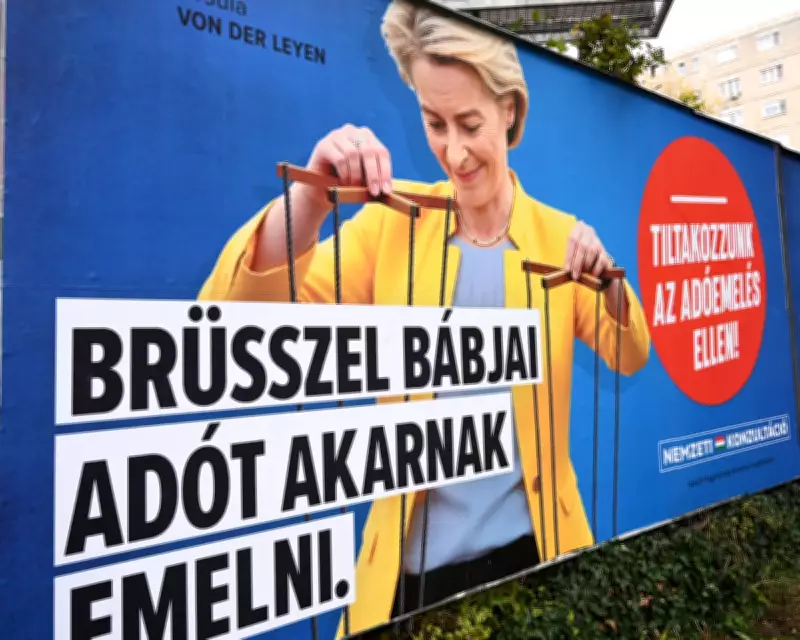
The electoral atmosphere has been further charged by Hungarian government billboards throughout Budapest depicting Commission President von der Leyen as a puppet master, accompanied by text reading "Brussels' puppets want to raise taxes." This forms part of broader anti-EU rhetoric consistently employed by Orbán and his ministers during the campaign period.
Dutch Green MEP Tineke Strik, who leads European Parliament work on Hungarian democratic standards, criticized the Commission's cautious approach, stating they have been "too hesitant" in addressing Budapest's actions due to fears of election interference accusations. "Orbán is using the EU anyhow in his attacks," Strik noted, referencing the government's aggressive campaign against European institutions.
Broader Implications for European Democracy
The MEPs' letter emphasizes fundamental principles, declaring "The union cannot credibly defend democracy externally while failing to react when the integrity of elections inside the union itself is placed under such serious strain." Strik reinforced this perspective, arguing that the Commission should prioritize protecting Hungarian citizens' interests despite political sensitivities.

"So far, they don't do it," Strik observed regarding Commission action. "I understand their reasons, but they reason too much on the basis of a normal democratic process. And that's the point that I make to them: we are not in a normal situation." As Hungary approaches its decisive elections, European institutions face mounting pressure to address these unprecedented challenges to democratic norms within their own borders.