Europe's Paralysis Over Trump's Iran War Undermines Its Global Identity
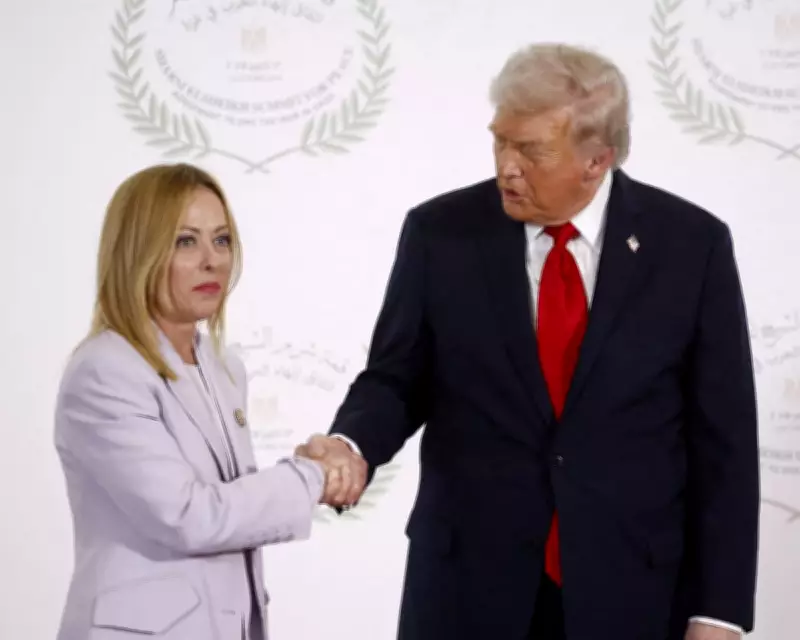
The photograph of Italian Prime Minister Giorgia Meloni with Donald Trump at the Sharm el-Sheikh summit in October 2025 captures more than a diplomatic meeting. It symbolizes Europe's current crisis of conscience and action regarding the US-Israeli war on Iran. While Europe appears less divided than during the 2003 Iraq war, this very paralysis is proving more damaging to its core identity and global standing.
The Iraq War Legacy: Division That Forged Identity
Rewind to 2003, and Europe stood profoundly divided over the US-led invasion of Iraq. France and Germany mounted passionate opposition, championing multilateralism and international law at the UN Security Council. Meanwhile, the UK, Italy, and Spain backed Washington's action. Donald Rumsfeld's infamous distinction between "old" and "new" Europe highlighted transatlantic and intra-European fault lines.
Yet that division sparked crucial reflection. Millions protested across European cities. Intellectuals like Jürgen Habermas and Jacques Derrida articulated visions of European identity rooted in law, multilateralism, and soft power. The crisis ultimately spurred agency, leading to the creation of the E3/EU+3 diplomatic grouping that successfully negotiated the 2015 Iranian nuclear agreement—Europe's most significant diplomatic achievement until Trump sabotaged it.

Today's Crisis: Paralysis Masquerading as Unity
Europe's response to the current Iran war presents a stark contrast. Superficially, there appears more unity, but this masks a dangerous paralysis. While Spanish Prime Minister Pedro Sánchez has condemned the war and refused use of Spanish bases, most European leaders have adopted ambiguous positions.
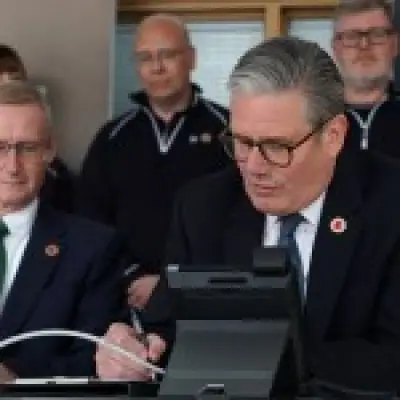
European leaders across the political spectrum—from Italy's far-right Giorgia Meloni to France's liberal Emmanuel Macron, Germany's Christian Democrat Friedrich Merz, and Britain's centre-left Keir Starmer—acknowledge the US-Israeli attacks violate international law. Yet none have followed with condemnation.
Some have been remarkably explicit in dismissing legal frameworks. Meloni told the Italian parliament she "neither condemned nor condoned" the illegal war. Merz declared international law "not a useful framework" for this situation. European Commission President Ursula von der Leyen went further, suggesting debates about the war's legality "partly miss the point" and Europe must "accept the world as it is."
The Hollowing Out of European Identity
This represents more than political pragmatism. Europe has long defined itself as a collective entity built on rights, law, and multilateralism—principles that guided both internal integration and external presentation. While never perfectly realized, these principles formed Europe's self-understanding and global role.
Today's leaders may believe they're being realistic, but they're actually undermining Europe's very foundation. When Europe abdicates its commitment to democratic rules and norms, it ceases to exist as a meaningful collective entity. European integration becomes hollowed from within.
The consequences extend beyond identity. Trump's call for European warships in the Strait of Hormuz demonstrates how abandoning principles makes Europe vulnerable to manipulation by predatory powers. Rather than emerging as an independent global player, Europe risks being pushed and pulled between Putin's Russia and Trump's America.
A More Dangerous Paralysis
The 2003 Iraq war shock galvanized Europe toward collective identity and action. Today's cowardice and legal abdication are eroding that identity without fostering unity. European leaders giving passionate speeches about independence while demonstrating subservience to Washington create a paradox that makes Europe less sovereign.
Cowed by Washington and drawn into a war whose consequences they and the Middle East will bear, European leaders undermine their own ability to act. This paralysis represents a deeper crisis than the divisions of 2003—one that threatens to unravel Europe's foundational principles and leave it adrift in an increasingly volatile world.