Nigel Farage's Political Boundaries: Testing Limits in UK Politics
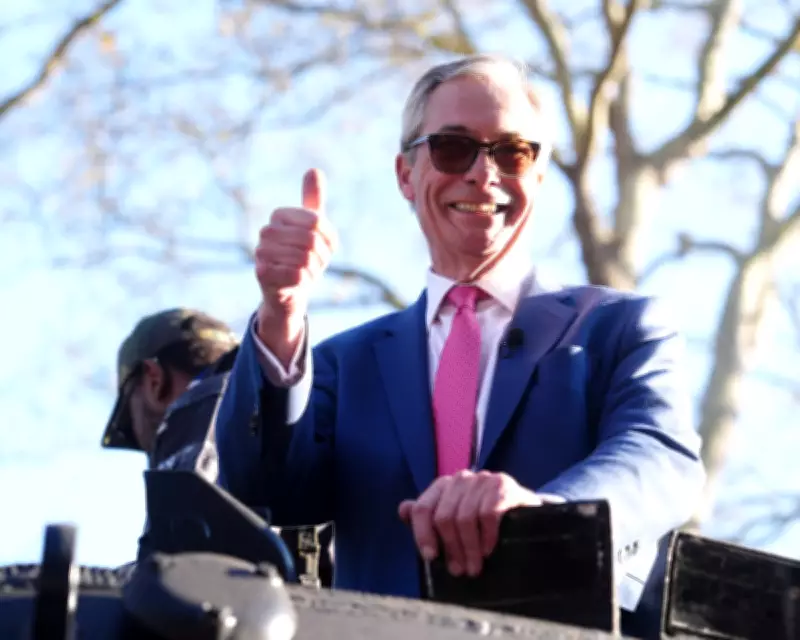
Nigel Farage, the leader of Reform UK, stands atop a tank at York Hall in London on April 2, 2026, symbolizing his aggressive push into the mainstream of British politics. As he dismisses an acolyte for shameful remarks, the question arises: how far is too far for this high priest of toxic politics? Martha Gill explores how Farage cynically expands the boundaries of acceptable discourse without alienating the voters he desperately needs, a perilous calibration that reveals much about his strategy and the nation's shifting tolerance.
Defining the Unacceptable: From Grenfell to Racism
Some lines remain firmly drawn in British politics. Attacks on Grenfell victims, for instance, are unequivocally beyond decency. Farage acted swiftly by sacking housing spokesperson Simon Dudley last week after Dudley callously remarked that everyone dies in the end. However, Farage's approach to other controversies is more hesitant. Initially dismissing accusations of racism during his school years as mere banter in the playground, he only issued a full denial in January, aligning with mainstream political norms.
When the Guardian uncovered that Farage had sold personalized messages on the Cameo website, including a pep talk to a Canadian neo-Nazi group, his first defense was to frame it as a disinterested response to market forces. He argued in an ITN interview that if a shop sells shoes to a murderer unwittingly, it is not the seller's fault. Subsequently, he paused his account, showcasing his trial-and-error method in navigating ethical dilemmas.

Shifting Boundaries on Immigration and Social Issues
Boundaries in politics have grown increasingly flexible under Farage's influence. In 2024, he condemned anti-gay comments among his campaigners, yet last month, he defended a Reform UK candidate caught making a homophobic joke. On immigration, the party has shifted dramatically from a mainstream pledge to stop small boats to advocating for mass deportations, even for individuals with indefinite leave to remain. This week introduced a new plan to block visas from countries seeking slavery reparations, marking a further slide into hardline positions.
Conversely, some lines remain uncrossable. After considering scrapping the pension triple-lock in February, Farage reversed course, recognizing it as a sacred cow in British politics. This back-and-forth reflects his attempt to balance the loyalty of true believers with the need to attract moderate voters, who constitute about 40% of the Reform-considering coalition, as noted in Liam Byrne's recent book.
Farage as a Cartographer of Political Tolerance
Farage's experimentation inadvertently positions him as an explorer mapping the new frontiers of political tolerance in Britain. The boundary is not always clear-cut; for instance, while attacking Grenfell victims is deemed unacceptable, similar hard stances on other tragic groups, like drowned asylum seekers, have gained traction on the right. Jacob Rees-Mogg made a comparable error in 2019 by suggesting Grenfell victims lacked common sense, highlighting the blurred lines in right-wing discourse.
British voters, particularly those Farage targets, often dislike those perceived as taking advantage but exhibit bursts of generosity toward specific groups. For example, Reform supporters advocate cutting welfare for scroungers yet staunchly defend pensions for boomers, explaining Farage's confusion over the triple-lock. Similarly, while crackdowns on asylum seekers are popular, Britons overwhelmingly supported Ukrainians, with even the Daily Mail leading campaigns for exceptions, forcing Farage to reverse anti-migrant policies selectively for genuine refugees.
The 2029 Election and Farage's Lasting Impact
The ultimate test of acceptability will come in the 2029 election. While Westminster debates Farage's chances, a more critical question is how he will reshape Britain regardless of victory. By probing the limits of acceptable discourse, Farage also sets them, leveraging his charisma and influence over right-wing tabloids and the Tory party. This creates a quantum politics effect, where observation alters reality; his decisions to row back or hold firm shape public perception and tolerance.

Tim Bale, a politics professor at Queen Mary, University of London, suggests Farage has ethical limits, such as opposing racism based on skin color, but warns of a nastier successor potentially emerging. To counter Farage, Bale recommends emphasizing his ties to Donald Trump and Maga, which lie beyond most Britons' tolerance. Byrne advocates for an alternative vision centered on fairness, urging opponents to assert confidently what the country will stand for, as sometimes stating it makes it true.
In an era of unregulated media and edgy right-wing groups, our moral limits show troubling flexibility. Following an imaginary herd, what outrageous positions might we condone by 2029? Farage's journey underscores the precarious balance in modern politics, where boundaries are both tested and defined by those willing to push them.