France's Municipal Elections Begin Amid Presidential Speculation
France has commenced voting in the first round of nationwide municipal elections, a critical political event viewed as a significant barometer for the upcoming 2027 presidential election. Citizens across 35,000 villages, towns, and cities are casting ballots to elect mayors and local councillors, with the outcomes expected to reveal crucial insights into party strategies and potential alliances in France's increasingly fragmented political landscape.
Local Issues with National Implications
While these elections primarily focus on local concerns such as security, housing, and refuse collection, the results will be meticulously analyzed for what they indicate about broader political dynamics. The two-round voting process, held on consecutive Sundays, particularly in major urban centers, will offer valuable signals about party positioning before the presidential race.
Emmanuel Macron's second term concludes next year, creating substantial uncertainty about potential candidates for the presidency of the European Union's second-largest economy. Following Macron's snap election call in 2024, parliament remains deeply divided without an absolute majority, split between left-wing factions, far-right groups, and centrist forces.

Far-Right Ambitions and Traditional Challenges
The anti-immigration National Rally (RN) emerges as a key contender in the presidential race, despite historically struggling to establish substantial local governance presence. The party lost councillors in the previous 2020 municipal elections and now seeks to maintain control of Perpignan, its largest governed city with 121,000 residents near the Spanish border.
RN targets include Toulon on the southern coast and Nîmes in the southeast, with significant victories in major cities potentially demonstrating growing momentum. The party serves as the primary opposition challenger in Marseille, France's second-largest city currently governed by a left-wing coalition since 2020.
Political Realignments and Strategic Alliances
In Nice, France's fifth-largest city, Éric Ciotti—who abandoned leadership of the traditional right's Les Républicains (LR) to align with RN in 2024—aims to capture the city from former right-wing ally Christian Estrosi. RN's performance in various cities may depend on whether left-wing parties form strategic alliances between voting rounds to block far-right advances.
Historically, France's major urban centers have been governed by center-left coalitions including Socialists or Les Républicains. Green-led coalitions achieved significant victories in 2020, securing cities like Lyon, though they now face pressure to maintain these gains.
Paris Mayoral Race and National Figures
The radical left-wing party La France Insoumise (LFI), led by Jean-Luc Mélenchon, seeks to establish stronger local presence before the presidential contest, targeting increased councillor representation particularly in the greater Paris region and mayoral positions in towns like Roubaix in northern France.
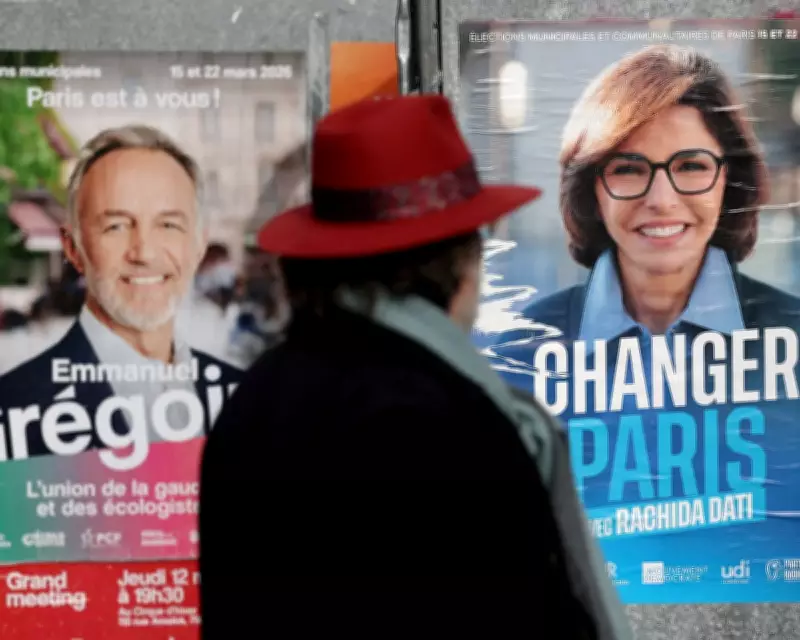
All eyes focus on Paris's mayoral battle, where right-wing candidate Rachida Dati—former culture minister under Macron and justice minister under Nicolas Sarkozy—attempts to wrest control from left-wing forces that have governed the capital for twenty-five years. Dati, the first woman of North African and Muslim heritage to hold major French government office, faces trial in September for alleged corruption and abuse of power, charges she vehemently denies.
Emmanuel Grégoire, deputy mayor and Paris Socialist MP, leads a left-wing coalition in what promises to be a tightly contested race potentially involving five candidates in the final round.
Presidential Aspirations and Independent Movements
Le Havre's northern port city election draws particular attention as former Prime Minister Édouard Philippe has linked his 2027 presidential ambitions to maintaining the mayoral position he has held since 2014, suggesting failure would jeopardize his candidacy.

Reflecting widespread voter frustration with political deadlock and parliamentary stagnation, numerous mayoral candidates have distanced themselves from established political parties. A substantial number of village mayors particularly are running as independents, signaling growing disillusionment with traditional political structures.
François Kraus, head of political studies at the IFOP polling institute, emphasizes that while municipal elections should not be viewed as "presidential primaries," they undoubtedly provide essential indicators of political trends and dynamics. "These municipal elections will no doubt offer a valuable barometer of the political climate," Kraus stated, highlighting their significance despite their local focus.
Voter turnout at midday Sunday reached 19.37%, marginally higher than comparable 2020 figures when pandemic concerns kept many voters home. The elections' ultimate outcomes will reveal much about France's political trajectory as the nation approaches a pivotal presidential transition.