French Political Parties Scramble for Alliances Ahead of Crucial Local Election Runoffs
Political parties across France are engaged in frantic negotiations to form strategic alliances before the decisive final round of local elections this Sunday. The upcoming runoffs for mayors and local councillors in major urban centers, including Paris, Marseille, and Lyon, are anticipated to be exceptionally tight contests. These municipal elections are widely regarded as a critical barometer of political strategy and coalition-building in the lead-up to next year's presidential election.
With Emmanuel Macron's two-term presidency concluding in spring 2027, uncertainty looms over who will next govern the European Union's second-largest economy. The outcomes of these local races could significantly influence the political landscape and set the stage for the forthcoming national leadership contest.
Paris: A Battle of Ideologies and Personalities
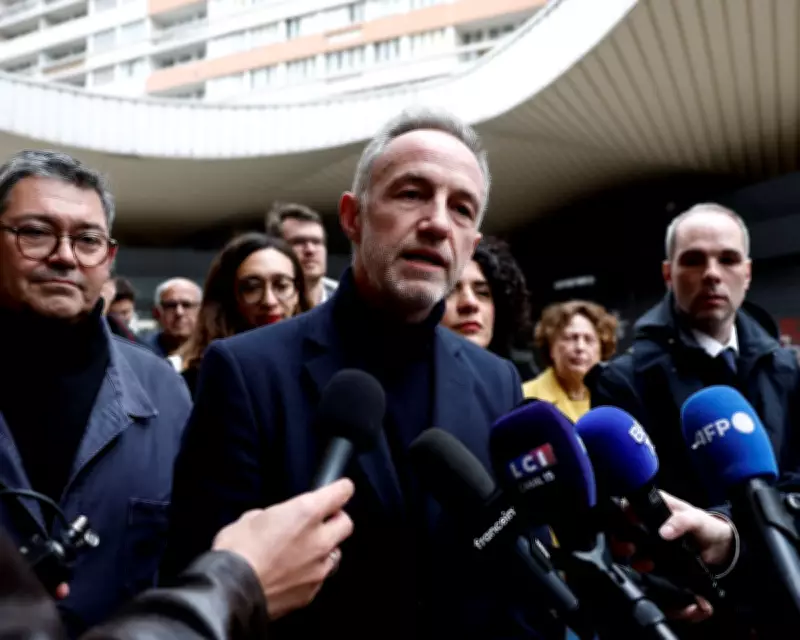
In the French capital, Socialist candidate Emmanuel Grégoire emerged as the frontrunner following the first round of voting. He holds a solid lead over his principal rival, former culture minister Rachida Dati of Les Républicains. Despite trailing, Dati remains optimistic about securing victory for the right, which would end the left's quarter-century dominance in Paris.

Dati dedicated Monday to negotiating a potential alliance with centrist candidate Pierre-Yves Bournazel, aiming to consolidate support and enhance her electoral prospects. This effort comes despite a notably acrimonious campaign period during which the two exchanged harsh criticisms. Bournazel previously characterized Dati as "inebriated with narcissism" in his book The Battle for Paris, while Dati labeled him the "physical incarnation of the stupidest right in the world." Nevertheless, by Monday evening, Bournazel confirmed to Agence France-Presse that they would join forces for the runoff.
Grégoire swiftly criticized this alliance, highlighting Dati's impending corruption trial scheduled for September. He accused her of representing the "Trumpisation" of political life and argued that the partnership with Bournazel "made no sense." Dati faces allegations of lobbying for the Renault-Nissan automotive group during her tenure as a European parliament member, charges she vehemently denies.
Rise of the Fringes in Paris
The electoral landscape in Paris also witnessed notable performances from fringe candidates. Sarah Knafo, a European parliament member for the far-right, anti-immigration Reconquest party, secured approximately 10% of the vote in affluent western districts, earning a place in the second round. This marks a historic achievement for the far right in Paris, a city where such movements have traditionally struggled to gain significant traction in local elections. Knafo is partnered with Éric Zemmour, the founder of Reconquest, who has prior convictions for inciting racial hatred.
On the radical left, Sophia Chikirou, candidate for Jean-Luc Mélenchon's La France Insoumise (LFI) party, also advanced to the runoff. She expressed readiness to collaborate with Grégoire to prevent a right-wing victory. However, Grégoire, who champions a "left union" encompassing Socialists and Greens, has explicitly ruled out any alliance with Chikirou's faction.
National Implications and Key Races Beyond Paris
Mélenchon's LFI, which has historically focused less on local governance, fielded an increased number of candidates this cycle and is poised to gain several local councillors. In Saint-Denis, the second-largest city in the Paris region, Bally Bagayoko of LFI won the mayoral race outright in the first round, defeating Socialist Mathieu Hanotin, a prominent figure during the 2024 Olympics. The party is also on track to capture Roubaix, a symbol of France's post-industrial north.
In Toulouse, an unexpected strong showing by LFI led to an alliance with the Socialist candidate, aiming to unseat right-wing incumbent mayor Jean-Luc Moudenc, who denounced it as "the alliance of shame." Similar left-wing coalitions have formed in Avignon in the southeast. However, centre-left figure Raphaël Glucksmann, a potential presidential contender for 2027, criticized these partnerships, noting that while LFI performed well in specific cities like Toulouse and Limoges, the centre-left achieved broader success nationwide.

Marseille and the Far-Right Challenge
In Marseille, France's second-largest city, the far-right National Rally (RN) made significant inroads. Its mayoral candidate, Franck Allisio, secured a strong first-round result, trailing closely behind incumbent Benoît Payan, who leads the Printemps Marseillais left coalition of Socialists and Greens. Capturing Marseille would represent a major breakthrough for the RN, which has historically faced difficulties gaining footholds in large urban centers. The runoff for Marseille's mayor is set to be one of the most closely watched contests this weekend.
Payan has rejected alliances with the LFI candidate who also advanced, emphasizing a commitment to "clarity" on the left to mobilize voters against the RN. He stated he is not interested in "compromises" or "arrangements," instead urging a unified front to keep the far right from power.
The RN saw 24 mayors elected in the first round, but several second-round runoffs, including in the southern city of Toulon, are expected to be challenging as other parties may coordinate to block its advances.
Nice and the Blurring of Traditional Lines
In Nice, France's fifth-largest city, RN ally Éric Ciotti is well-positioned for the final round, largely due to his extensive local experience on the French Riviera. Although not running directly on the RN ticket, a victory for Ciotti would be claimed by the party as evidence of a new alliance model between the traditional right and the far right. Ciotti resigned as leader of Les Républicains in 2024 to align with Marine Le Pen, signaling shifting political allegiances.
As France approaches Sunday's decisive votes, the frantic alliance-building underscores the high stakes of these local elections. The results will not only determine municipal leadership but also shape the strategic frameworks and coalition dynamics that will define the run-up to the 2027 presidential election, setting the tone for the nation's political future.