Gerry Adams was "directly responsible for and complicit" in the decisions made by the Provisional IRA to detonate bombs on the British mainland, the High Court has been told in a landmark legal case. The former Sinn Fein president, who denies any role in the IRA, is facing claims from three men seeking £1 in damages for his alleged involvement in bombings that occurred in 1973 and 1996.
Victims Bring Legal Action Against Adams
Three victims of IRA attacks are bringing legal action against Gerry Adams at the Royal Courts of Justice in London. John Clark, a survivor of the 1973 Old Bailey bombing in London, Jonathan Ganesh, a victim of the 1996 London Docklands bombing, and Barry Laycock, who was injured in the 1996 Arndale shopping centre bombing in Manchester, all allege that Mr Adams was a leading member of the Provisional IRA, including its Army Council, at the time of these incidents.
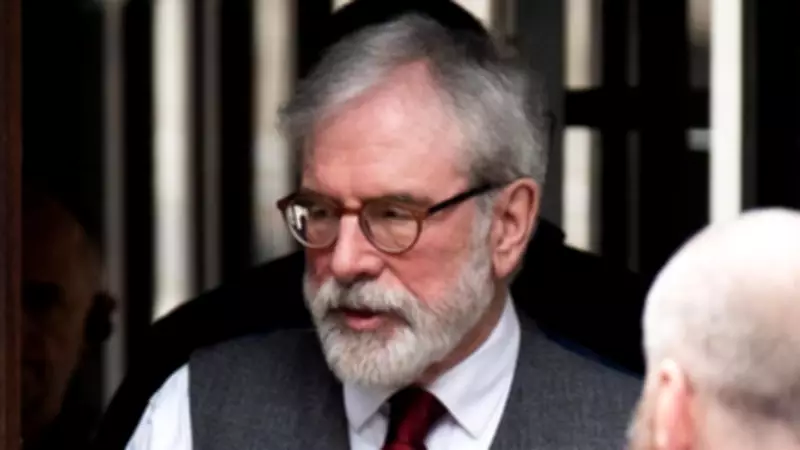
On Monday, March 9, 2026, Mr Adams arrived at the court wearing what appeared to be a bullet-proof vest and was driven into the car park, highlighting the high-profile nature of this trial. The claimants aim to demonstrate, on the balance of probabilities, that Mr Adams was as involved in the bombings as those who planted and detonated the explosives.

Opening Statements and Legal Arguments
Anne Studd KC, representing the three men, opened the case by stating that Mr Adams was "directly responsible for and complicit in those decisions made by that organisation to detonate bombs on the British mainland in 1973 and 1996." She emphasized that the lawsuit is for "vindicatory" purposes, focusing not on the injuries sustained but on establishing Mr Adams's alleged role in the IRA's actions.
In written submissions, Ms Studd argued that Mr Adams's distinction between being a member of the IRA and Sinn Fein is misleading. She said, "In reality, the evidence will demonstrate that this was not the clear either/or choice as the defendant would have you believe. For many individuals, we say, including Mr Adams, that was a distinction without a difference."
Adams's Defense and Peace Process Role
Lawyers for Gerry Adams have strongly contested the claims, noting his instrumental role in the peace process that led to the Good Friday Agreement in April 1998, which ended decades of conflict in Northern Ireland. Edward Craven KC, representing Mr Adams, stated in written submissions, "The defendant's alleged factual and legal responsibility for the claimants' injuries is strongly contested, as is the claimants' ability to bring these claims against the defendant several decades after the expiry of the applicable limitation period."
Mr Adams denies any involvement with the Provisional IRA and is opposing the legal action. The trial, presided over by Mr Justice Swift, is expected to conclude next week, with potential implications for historical accountability and legal precedents in cases related to the Troubles.
Broader Context and Implications
This case brings renewed attention to the legacy of the Troubles and the roles of key figures in the conflict. The claimants' pursuit of symbolic damages underscores a desire for acknowledgment and justice, rather than financial compensation. As the trial progresses, it may shed light on the complex relationships between political and militant activities during that era.
The outcome could influence future legal actions involving historical events and figures, particularly in contexts where evidence and timelines are contested. With the trial set to end soon, all eyes are on the High Court as it deliberates on these serious allegations against a prominent political figure.