Gerry Adams Appears in High Court as Civil Trial Over IRA Bombings Begins
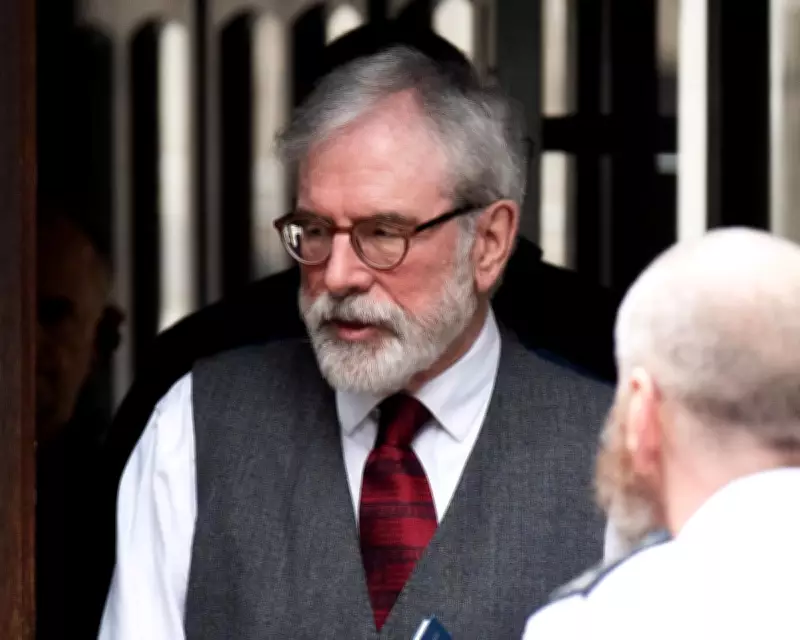
Gerry Adams, the 77-year-old former Sinn Féin leader, arrived at the Royal Courts of Justice in London on Monday, marking the start of a highly anticipated civil trial. He is scheduled to give evidence next week and has consistently denied any membership in the IRA throughout his political career.
Victims Seek Symbolic Damages in Landmark Case
Three victims of Troubles-era bombings on the UK mainland are suing Adams for symbolic vindicatory damages of £1 each. The claimants—John Clark, Jonathan Ganesh, and Barry Laycock—were injured in the 1973 Old Bailey bombing, as well as the 1996 London Docklands and Manchester bombings. They allege that Adams played an instrumental role in the Provisional IRA (PIRA), balancing armed struggle with political efforts through what they describe as a "two-strand attack" of ArmaLite and the ballot box.
Legal Arguments: Culpability and Evidence Under Scrutiny
In opening statements, Anne Studd KC, representing the claimants, argued in written submissions that Adams is "as culpable for the assaults giving rise to these claims as the individuals who planted and detonated the bombs." She emphasized that while Adams contributed to peace in Northern Ireland, he also contributed to the conflict. The case relies on evidence from former IRA volunteers, including Dolours Price, who was imprisoned for the Old Bailey bombing, and intelligence officials from the Troubles era.

Studd highlighted historical points, such as Adams' alleged admission of IRA involvement to a special branch officer in 1972 and his attendance at government meetings as a PIRA representative. She also cited a 1976 article Adams wrote under the pen name Brownie in Republican News, where he stated, "Rightly or wrongly, I'm an IRA volunteer."
Adams' Defense: Denials and Challenges to Claims
Edward Craven KC, Adams' lawyer, countered in written submissions that the claimants waited too long to bring the case and that it is bound to fail due to limitation grounds and lack of merit. He stressed that Adams "strenuously denies any involvement in the bombings" and that the burden of proof lies with the claimants, requiring "cogent and compelling evidence"—which he argues is absent.
Craven pointed out the absence of arrests by law enforcement authorities as evidence of insufficient suspicion. He also noted that many republicans, including Price, harbored hostility toward Adams due to opposition to the peace process. The defense argues that the case relies on "multiple and predominantly anonymous hearsay evidence" in a context of partisan conflict, making it unreliable for holding a senior political figure liable for events decades old.
Trial Continues Amid Historical and Legal Complexities
The trial delves into deep-seated historical grievances and competing narratives from the Northern Ireland conflict. Craven added that even if Adams were a member of the IRA army council—a claim he denies—it would not automatically render him liable for specific bombings. The proceedings are expected to explore the intricate balance between Adams' political legacy and the allegations of past violence.
As the trial progresses, it highlights ongoing tensions from the Troubles era and the challenges of seeking accountability through civil courts. Adams' testimony next week is anticipated to be a pivotal moment in the case, which continues to draw significant public and legal attention.