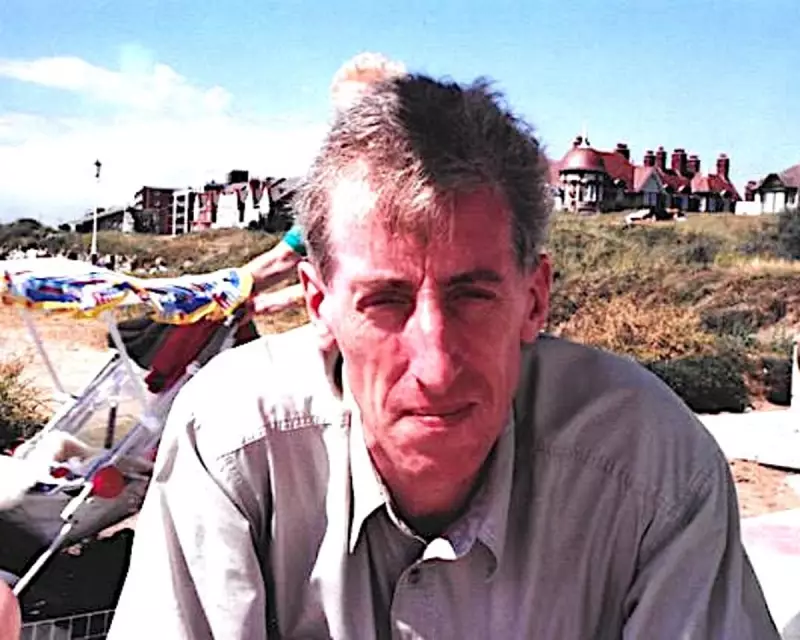
Gwyn Jones, who has passed away at the age of 75, was a man who wholeheartedly embraced revolutionary politics, dedicating his life to leftwing movements across Europe. He turned his back on a promising legal career to immerse himself in activism, always seeking change and inspiration from global uprisings.
A Life Devoted to Socialist Causes
Born in Llandudno, north Wales, Gwyn was the son of Berwyn Jones, a bank clerk, and his wife, Buddug. His early years were spent in Conwy before the family relocated to Ellesmere in Shropshire. Demonstrating academic prowess, he passed the 11-plus exam at just nine years old and began secondary education at Oswestry boys' high school, where he studied alongside pupils two years his senior.
After returning to Wales to complete his schooling at Ysgol Friars in Bangor, Gwyn moved to London in 1968 to study law at King's College London. It was here that his political awakening occurred, as he quickly became radicalised and joined the International Marxist Group (IMG), a small revolutionary party.

From Academia to Activism
Following his law degree, Gwyn embarked on an MA in industrial relations law at the University of Warwick in 1973. However, he soon abandoned his academic pursuits to work as a labourer in the building trade. During this time, he was active in the UCATT trade union, striving to build socialist politics among his fellow workers.
In the mid-1970s, after the death of Franco, Gwyn relocated to Spain, taking up a position as an English teacher at the Berlitz International School in València. He forged connections with trade unionists and students, advocating for a more leftwing transition from dictatorship. By 1978, he had moved to Turin, Italy, a hub of labour struggles, where he continued teaching English while campaigning with socialist groups and unions.
Revolutionary Endeavours Across Europe
Back in London during the 1980s, Gwyn became a member of the Socialist Workers Party and trained as a computer programmer, working for the Trafalgar House group. The revolutions sweeping eastern Europe in 1989 prompted him to resign from his job and fly to Bucharest, Romania. There, he joined street protests, even climbing atop a box in Palace Square to urge people, with the aid of a translator, to rely on their own power and resist attempts to hijack their revolution.
He spent subsequent years teaching English in Romania while engaging in political campaigning, funded by friends in the UK. Later, he adopted a similar approach in Hungary, travelling back and forth to fundraise among SWP members.
Later Years and Legacy
By 1997, Gwyn had returned full-time to the UK, working itinerantly in south-east London while still considering himself a full-time revolutionary. In his later years, after leaving the SWP, he became somewhat isolated, yet his enthusiasm for revolution and working-class politics remained undimmed.
Described as a sweet man and a flawed genius, Gwyn possessed an extraordinary ability to master any topic he chose to explore, with his understanding of history and Marxism being particularly remarkable. He is survived by his siblings, Ieuan and Lis.