Hammersmith Bridge: A Monument to Britain's Decision-Making Paralysis
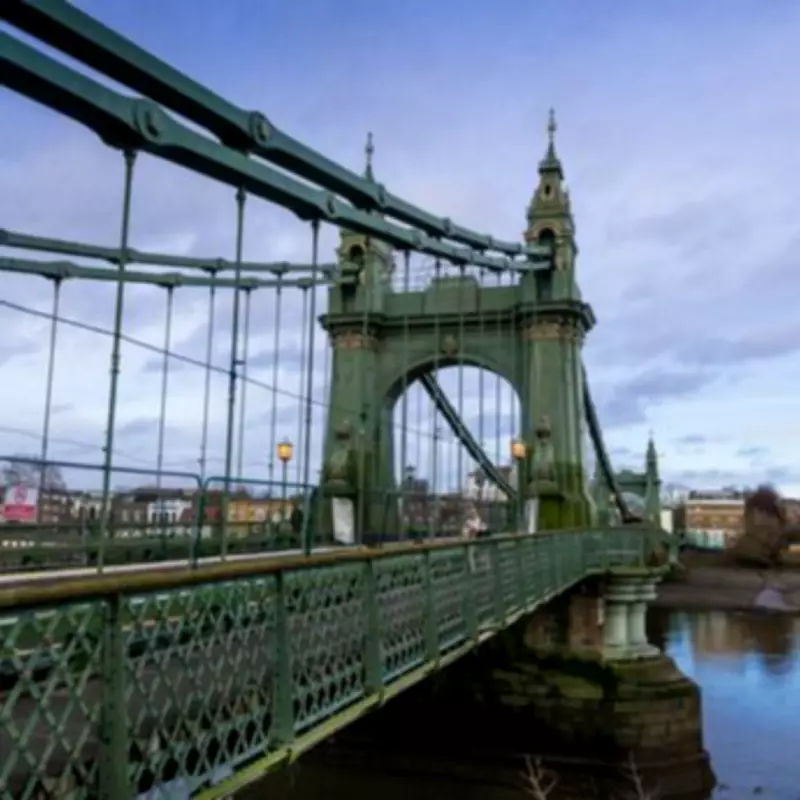
The elegant, historic Hammersmith Bridge, spanning the Thames between Hammersmith and Barnes, has become far more than a mere river crossing. It stands as a powerful symbol of Britain's contemporary struggles with governance, fragmented responsibility, and an alarming inability to execute essential infrastructure projects. For nearly seven years, this vital arterial link has been functionally broken, its closure to motor vehicles normalising dysfunction in one of the world's wealthiest capital cities.
The Anatomy of a Prolonged Closure
The immediate cause of the crisis is well-documented. In April 2019, critical micro-fractures were discovered in the 138-year-old bridge's cast-iron pedestals, forcing its immediate closure to all traffic. What followed was a period of stasis, punctuated only by temporary stabilisation works that finally allowed a partial reopening to pedestrians and cyclists in 2025. However, a fully funded, timetabled plan to restore vehicle access has consistently failed to materialise, leaving communities severed and bus routes cancelled indefinitely.
The deeper, more systemic cause reveals a familiar British pathology: catastrophic fragmentation of responsibility. Formal ownership rests with Hammersmith & Fulham Council, while Transport for London has historically funded repairs but now faces chronic financial distress. Ultimate fiscal authority lies with a central government preoccupied with its own challenges. This tripartite structure has proven disastrously ineffective.

The Costly Theatre of Indecision
A theoretical three-way funding settlement agreed in 2021 has dissolved into a slow-motion accounting dispute, characterised by endless debates over who has paid what, which costs should be counted, and which party will eventually concede. As this bureaucratic theatre plays out, cost estimates have ballooned into the hundreds of millions, with politicians now suggesting a full reopening might not occur until the 2030s—nearly two decades of paralysis for a single river crossing.
The vacuum of leadership initially spawned a bizarre burst of unproductive creativity. The Hammersmith Bridge Taskforce cycled through a carousel of options: an astronomically expensive "double-deck" structure, a partial bus-only reopening, a permanent car ban, or even preserving the bridge as a static monument. Each proposal has been analysed and re-analysed, yet no decisive action has been taken.
This indecision carries a profound economic toll. Disrupted transport networks constrain labour mobility, while entrepreneurs and investors factor in the uncertainty, questioning whether a nation that cannot solve a modest infrastructure problem can realistically pursue larger ambitions.A Victorian Blueprint for Modern Resolution
The solution may lie in reviving a distinctly Victorian approach to problem-solving. When the original Hammersmith Bridge failed in the 1880s, Parliament did not convene a dithering taskforce. Instead, it passed a bespoke Act in 1883, empowering a single body—the Metropolitan Board of Works—with clear responsibility and funding to construct a new bridge alongside a temporary crossing. The project was completed in just four years.
This model offers a clear blueprint for contemporary action. Transport Secretary Heidi Alexander could take ownership of the crisis, working cross-party to establish a single delivery authority with a statutory duty to restore the bridge. With £15.6bn allocated for urban infrastructure in England in last year's Budget, a tiny fraction would suffice to resolve this impasse immediately.
Equally important is abandoning the fantastically costly £300m "double-deck" Foster-Cowi plan. The original bridge cost the equivalent of £11.5m today, and practical plans exist for a temporary bridge that could restore partial connectivity within months at minimal expense, simultaneously making repairs to the original structure cheaper and faster.

Beyond Nostalgia: Reviving Common Sense
This is not mere nostalgia for a bygone era. It is a call to revive operational common sense. The Victorians built quickly, beautifully, and durably not because their world was simpler, but because they engineered clarity into decision-making processes. They streamlined authority and established unambiguous accountability.
Restoring Hammersmith Bridge would not narrow future options; it would make them possible. A repaired bridge could be enhanced to make walking and cycling safer and more attractive. However, the fundamental principle remains: fixing what is broken should be the default pursuit of any functional society.
Britain does not suffer from a shortage of ideas. It suffers from a chronic inability to reach conclusions and execute them. Hammersmith Bridge stands as a quiet, enduring lesson in what transpires when a nation over-invests in bureaucratic process and perpetually outsources decisive action. If Britain genuinely aspires to become a nation that builds again, it could start by simply crossing the river.
A Department for Transport spokesperson stated: "We recognise the disruption caused by the closure of the bridge and so far we have provided £17m of funding, including £4.7m in March 2025, to keep the bridge open for walking and cycling."