The Australian chapter of the Islamist organisation Hizb ut-Tahrir has declared it has no intention of dissolving before the federal government introduces contentious new hate speech legislation to parliament. This stance comes just a day after the far-right National Socialist Network (NSN) announced it would disband.
New Legislation Targets 'Hate Groups'
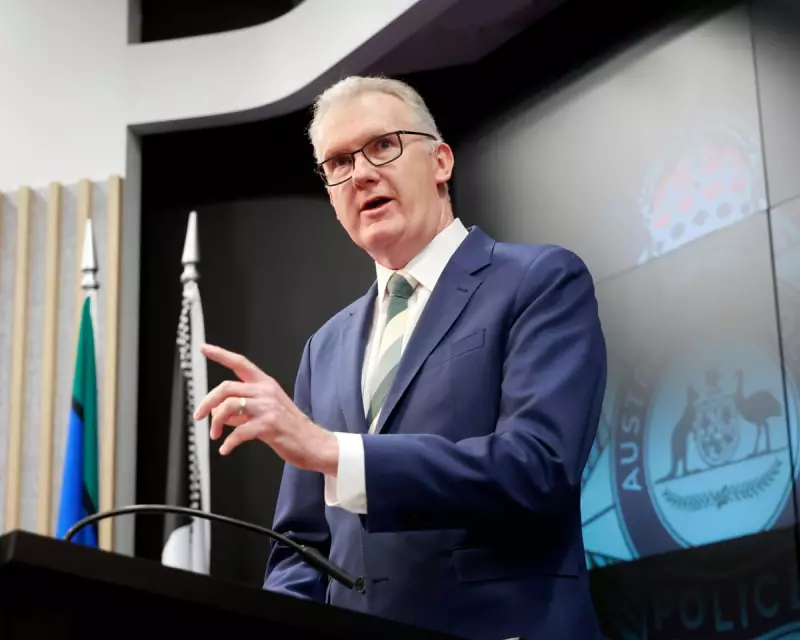
Both groups were singled out by Home Affairs Minister Tony Burke on Saturday as potential targets for proposed laws aimed at banning alleged "hate groups". The move follows concerns raised by ASIO Director-General Mike Burgess about their activities. The planned bill would create a new listing for hate groups with a lower threshold than the current terrorist organisation list.
Under the proposed laws, it would become a criminal offence to associate with, recruit for, train with, or provide support to a designated hate group. An individual found guilty of intentionally directing the activities of a listed group could face up to 15 years in prison.

Mike Burgess, who could recommend groups for listing to the minister, stated that both Hizb ut-Tahrir and the NSN "know how to stay on the right side of the law as the laws currently are" and do not meet the higher bar for a terrorist listing.
Hizb ut-Tahrir's Legal Challenge and Defence
Hizb ut-Tahrir, founded in Jordan in 1953 with the official aim of re-establishing an Islamic caliphate, is a proscribed terrorist organisation in the UK, Germany, and India. The UK ban, announced in January 2024, labelled it an "antisemitic organisation that actively promotes and encourages terrorism".
Minister Burke explained that no Australian government has previously been able to ban the group because it hasn't met the legal "violence threshold", which is precisely why the government is seeking to lower that standard.
In response, the group's lawyer, Zaid Hamdan El Madi, stated that if the legislation passes, his clients will "carefully review the final act, seek detailed legal advice, and, if necessary, challenge any listing through the courts". He argued that Hizb ut-Tahrir's views are political and based on an Islamic worldview, asserting the group has "never advocated hate or violence based on racial identity".
On Saturday, Hamdan El Madi sent a letter to Prime Minister Anthony Albanese, Minister Burke, and Attorney-General Michelle Rowland questioning the potential constitutionality of such a law. Rowland has defended the drafting, acknowledging potential legal challenges but affirming the government's confidence in the legislation.
Neo-Nazi Disbandment and Security Concerns
In a contrasting move, the National Socialist Network announced on Tuesday it would disband by Sunday, a day before the bill is introduced. The NSW leader of the NSN, Jack Eltis, told media the group has "no intention" to rebrand or circumvent the law, suggesting "national socialism will have to be pursued via parliamentarianism in future".
Tony Burke claimed that "the mere knowledge of the legislation" had already prompted the neo-Nazis to disband and influenced a separate, unrelated Islamic prayer hall in Sydney to announce its permanent closure.
When questioned during a parliamentary committee on Tuesday about the risk of banned groups going underground, ASIO's Mike Burgess acknowledged the possibility. "Yes there is a risk they go underground, but our job is to find the people who are hiding themselves in society, and we’re good at that," he stated, adding that ASIO would continue to monitor problematic individuals.
The developments set the stage for a significant legal and political clash over the boundaries of free speech, association, and national security in Australia, with the government's new legislative framework facing its first major tests even before it becomes law.