Hungary's Pivotal Election: Orbán Faces Challenge from Former Ally Péter Magyar
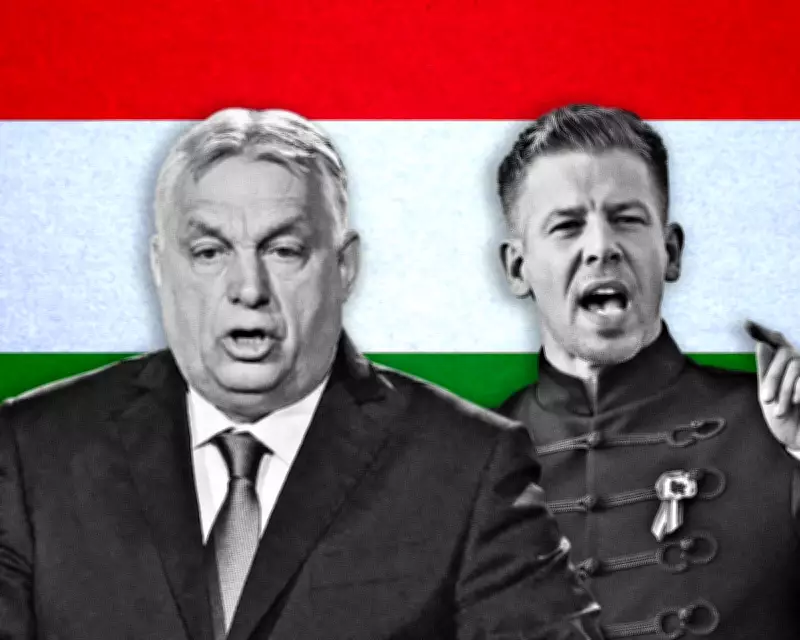
Hungarians are preparing to cast their votes on April 12 in what is widely regarded as Europe's most consequential election this year. At stake is the political future of Viktor Orbán, the country's illiberal prime minister and a global far-right icon, who could potentially be ousted from power after sixteen consecutive years. His primary challenger is Péter Magyar, a former loyalist who has broken ranks to lead a formidable opposition movement.
The Stakes and Orbán's Legacy
As the European Union's longest-serving leader, Orbán has fundamentally transformed Hungary since his 2010 election victory. He has championed what he terms an "illiberal democracy," positioning himself as Europe's defender of traditional Christian family values against what he perceives as the encroaching forces of western liberalism and multiculturalism. Over four successive terms, his governments have systematically eroded the rule of law, appointing judges loyal to his Fidesz party and effectively converting up to eighty percent of the nation's media into a propaganda apparatus.
Orbán has emerged as the EU's chief disruptor, frequently clashing with Brussels over critical policies. These conflicts span justice reforms, migration, LGBTQ+ rights, and, most recently, aid for Ukraine. Hungary, under Orbán's leadership, has consistently blocked EU sanctions against Russia, including a substantial €90 billion loan package. His government maintains a notably friendly stance towards Moscow, continuing to purchase Russian oil and gas and holding meetings with Vladimir Putin even after Russia's full-scale invasion of Ukraine. Recent allegations that Budapest shared confidential EU information with the Kremlin have further inflamed tensions within the bloc.

Orbán's political model has inspired other EU-obstructive leaders, such as Slovakia's Robert Fico and the Czech Republic's Andrej Babiš, while bolstering nationalist figures like France's Marine Le Pen and the Netherlands' Geert Wilders. Despite Hungary accounting for a mere 1.1% of the EU's GDP and 2% of its population, Orbán has magnified its international influence far beyond its economic and demographic weight.
Key Contenders and Their Platforms
Viktor Orbán, aged 62, has secured endorsements from prominent international figures including former U.S. President Donald Trump, Italy's Prime Minister Giorgia Meloni, and Germany's Alternative für Deutschland leader Alice Weidel. A former anti-communist youth leader during the Cold War, Orbán briefly studied at Oxford with funding from philanthropist George Soros, who later became his arch-enemy. His Fidesz party's supermajority in 2010 enabled a comprehensive rewrite of Hungary's constitution, passing laws that consolidated executive power, restricted NGO activities and media freedoms, and severely weakened judicial independence.
In the current campaign, Orbán has employed classic populist tactics, framing the election as a binary choice between war and peace. He portrays himself as the guardian of Hungary's "island of security and tranquility," while depicting challenger Péter Magyar as an agent of Brussels and Kyiv. However, polls indicate that voters are predominantly concerned with domestic issues such as healthcare and the stagnant economy, which has shown little growth over the past three years. Food prices have surged to near the EU average, while Hungarian wages remain the third lowest in the entire bloc.
Péter Magyar, aged 45, is a former Fidesz disciple and loyal member of Orbán's inner circle who dramatically entered the political spotlight two years ago. His emergence followed the resignation of his ex-wife, Judit Varga, as Orbán's justice minister, after it was revealed that Hungary's conservative president, Katalin Novák, had pardoned a man convicted in a sexual abuse case. Magyar, a trained lawyer and former diplomat, subsequently distanced himself from Fidesz, accusing the party of rampant corruption and propaganda. He founded the Tisza (Respect and Freedom) party, which secured an impressive thirty percent of the vote in Hungary's June 2024 European elections, finishing second only to Fidesz.

Magyar's platform promises a return to a pro-EU orientation for Hungary, ending dependence on Russian energy, restoring independent public media and judiciary, revitalizing the economy, halting large-scale corruption associated with the Orbán era, sanitizing public procurement processes, and unlocking billions in frozen EU funds.
Electoral Mechanics and Likely Outcomes
Since 2010, Orbán has implemented hundreds of changes to Hungary's electoral rules, nearly halving the number of parliamentary seats to 199 and creating 106 unevenly sized single-member constituencies. The remaining members of parliament are elected proportionally using party lists. This restructuring has resulted in a system favorable to Fidesz, where significantly fewer votes are required to win in pro-Fidesz districts. Additional measures have made it easier for predominantly pro-Fidesz Hungarians living in neighboring countries to vote, while policy sweeteners have been directed towards loyal voter blocs such as pensioners.
Consequently, despite Tisza holding an eight to twelve percentage point lead among decided voters in most polls, the party may need a six-point victory over Fidesz to secure a parliamentary majority. Polling averages currently place the opposition party at fifty percent of the national vote, with Fidesz at thirty-nine percent. However, approximately twenty-five percent of respondents remain undecided, and experts caution that national polling does not fully capture the complexities of Hungary's gerrymandered constituencies.
Demographic trends reveal a sharp divide: Fidesz maintains strong support among retirement-age voters, leading Tisza by as much as fifty percent to twenty percent in some surveys, while Tisza commands substantial leads among voters under forty and in urban areas. Pollsters anticipate record-breaking turnout, potentially exceeding eighty percent.
Potential Scenarios and Implications
Political observers broadly outline three possible outcomes from the election: a Péter Magyar majority that Viktor Orbán accepts, a Magyar majority that Orbán contests, or an Orbán majority. Each scenario carries significant consequences for Hungary and the European Union.
Hungary's elections, while free, are not considered fair due to the systemic advantages embedded in the electoral framework. An Orbán victory remains a distinct possibility. If he secures another term, he would likely intensify his policies, escalating conflicts with the EU and deepening domestic authoritarianism.
Should Orbán lose, particularly by a narrow margin, he might contest the election results. This would place the EU in an unprecedented position, potentially leading to the suspension of Budapest's voting rights despite likely opposition from Orbán's allies within the bloc.
A Magyar victory acknowledged by Orbán would undoubtedly ease EU-Hungary relations. However, Magyar is not a progressive figure, and significant shifts on contentious issues like immigration are unlikely. Domestically, unless Tisza achieves a supermajority of 133 parliamentary seats, its ability to govern effectively would be constrained. Orbán has engineered many laws to require a supermajority for amendment and has populated key state institutions with loyalists, creating substantial obstacles for any incoming administration.