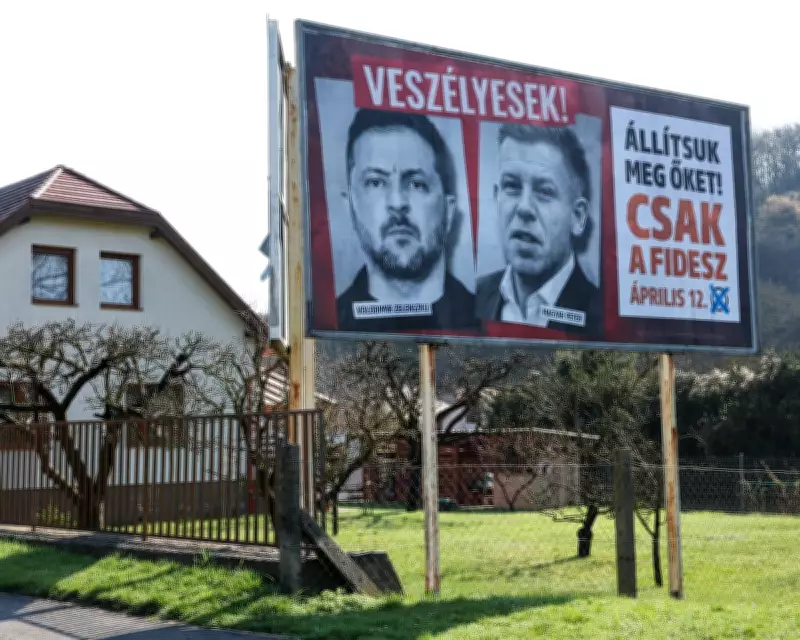
Hungary's Pivotal Election: A Battle for Direction Amidst Authoritarian Legacy
On Sunday, Hungarians will cast their votes in a closely contested election that could reshape the nation's trajectory for the next four years. Viktor Orbán, Europe's longest-serving prime minister with 16 years in power, faces a formidable challenge from Péter Magyar and his Tisza party. Orbán has transformed Hungary into an electoral autocracy, embedding his Fidesz party deeply within the state apparatus. Despite high expectations from EU officials for change under potential new leadership, Hungary's return to liberal democracy remains far from assured, even if Orbán is ousted.
The Rise of Péter Magyar and Electoral Uncertainties
Péter Magyar emerged as a trailblazer in Hungarian politics in 2024, following a scandal involving former president Katalin Novák and his ex-wife, justice minister Judit Varga. By addressing socioeconomic concerns, politicizing the deteriorating healthcare and education systems, and highlighting government corruption, Magyar has steadily gained popularity. However, while independent pollsters show Tisza ahead of Fidesz, the election outcome is uncertain due to unfair electoral practices. Orbán has tilted the playing field through gerrymandering, "winner compensation" benefits, and granting voting rights to Hungarian minorities abroad, who predominantly support Fidesz. Investigations have also uncovered systematic fraud, including chain voting and voter intimidation in poor regions.
Under these conditions, it is unclear if Tisza's votes will translate into a parliamentary majority, let alone the two-thirds supermajority needed to dismantle Orbán's regime. Over 16 years, Fidesz has entrenched its ideology and personnel through cardinal laws requiring a supermajority to change. Restoring electoral democracy would require replacing Fidesz loyalists in key positions, such as constitutional court judges, the prosecutor general, and media authority head. President Tamás Sulyok, a Fidesz loyalist serving until 2029, could further obstruct a Tisza government by vetoing legislation or referring it to the Fidesz-packed constitutional court.

Challenges Ahead: Lessons from Poland and Ideological Alignments
A potential Tisza government would face obstacles similar to those in Poland after the Law and Justice party (PiS) lost in 2023. Prime Minister Donald Tusk faced criticism for using unlawful means to restore democracy, and PiS-aligned President Karol Nawrocki has regularly vetoed essential legislation. In Hungary, Fidesz is even more entrenched after twice as long in power, making a return to the pre-Orbán status quo extremely challenging.
Even if Tisza achieves a majority and implements reforms, democrats should temper their expectations. Magyar, from a conservative family and a former Fidesz member for over two decades, is ideologically aligned with his former party. Analyses of Tisza's European Parliament voting patterns show alignment with Fidesz on issues like immigration and Ukraine. Tisza's party program rejects the EU's migrant pact and opposes Ukraine's accelerated EU accession. While Tisza may be more constructive with European partners, fundamental disagreements will persist.
A Rightwing Parliament and Limited Progressive Hopes
The new parliament is expected to comprise solely rightwing parties: Tisza, far-right Fidesz, and potentially the extreme-right Our Homeland Movement. Although Tisza's voter base includes liberal and leftwing supporters, progressives should not anticipate a swift transition to liberal democracy. Magyar has avoided clear stances on core issues like LGBTQ+ rights, possibly to avoid Fidesz exploitation, but this aligns with his political history and party's rightwing nature.
Given the challenges Magyar would face and his conservative ideology, restoring liberal democracy beyond undoing Orbánism seems unlikely. The best-case scenario is a return to electoral democracy under a Magyar government, but liberal democracy will probably remain out of reach for now. As Hungarians vote, the outcome hinges not just on Orbán's fate but on the enduring legacy of 16 years of creeping authoritarianism.