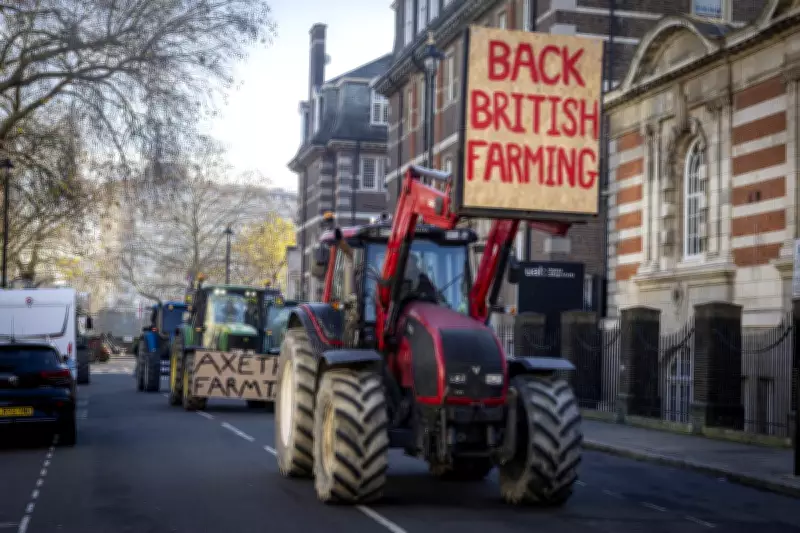
Labour's Inheritance Tax Reforms Face Legal Test as Farmers Argue Unlawful Consultation
The UK government is preparing to defend its controversial inheritance tax reforms targeting agricultural assets and family businesses in the High Court this week. The proposed changes to agricultural property relief (APR) and business property relief (BPR) represent one of the most significant shifts in UK inheritance tax policy in decades, sparking widespread protest from the farming community.
Government's Partial U-Turn and Continued Opposition
After facing sustained protests from farmers throughout 2025, the Labour government announced a partial reversal of its inheritance tax plans in December. The revised policy increased the threshold from £1 million to £2.5 million, effective from April 2026. Government officials estimated this adjustment would reduce the number of family estates subject to higher inheritance tax liabilities from approximately 2,000 under the original proposals to around 1,100.
However, this concession failed to satisfy all stakeholders, leading to the current legal challenge that questions the fundamental legality of the government's consultation process.
Legal Challenge Alleging Unlawful Consultation
The judicial review was initiated by farmers Thomas Martin and George Martin, representing the campaign group Farmers and Businesses for Fair Tax Relief, alongside professional services firm Alvarez & Marsal. The claimants argue that the government "acted unlawfully" by failing to adhere to its established 2011 'tax consultation framework.'
Legal representatives will present evidence suggesting the consultation process fell significantly short of established legal standards and violated public law duties owed to farmers and other affected parties. The lack of comprehensive consultation, according to the claimants, represents a fundamental breach of proper governmental procedure.
High-Profile Hearing with Constitutional Implications
The hearing is scheduled to commence on Tuesday at the Royal Courts of Justice and is expected to span two days. Unlike typical judicial review cases heard by a single judge, this significant matter will be presided over by two senior judges: Lady Justice Whipple and Mr Justice Fordham, who will jointly determine the outcome.
Adding to the case's constitutional significance, Lindsay Hoyle, the Speaker of the House of Commons, has been granted permission to intervene. This intervention underscores the broader constitutional issues at stake, particularly concerning parliamentary procedure and governmental consultation obligations.
Broader Implications for Tax Policy and Agricultural Sector
The case represents more than just a technical legal dispute about consultation procedures. At its core, it addresses fundamental questions about how major tax policy changes should be developed and implemented, especially when they affect vital sectors like agriculture and family businesses.
The outcome could establish important precedents for future tax reforms and consultation requirements, potentially reshaping how governments engage with stakeholders before implementing significant fiscal changes. For the agricultural community, the case represents a crucial test of their ability to influence policy that directly affects intergenerational wealth transfer and business continuity.
As the hearing approaches, stakeholders across the political, agricultural, and legal spectrums await a decision that could either validate the government's approach or force a reconsideration of how major tax reforms are developed and implemented in the United Kingdom.