Midwest Swing States Reconsider Trump as Iran Conflict Tests 'America First' Promise
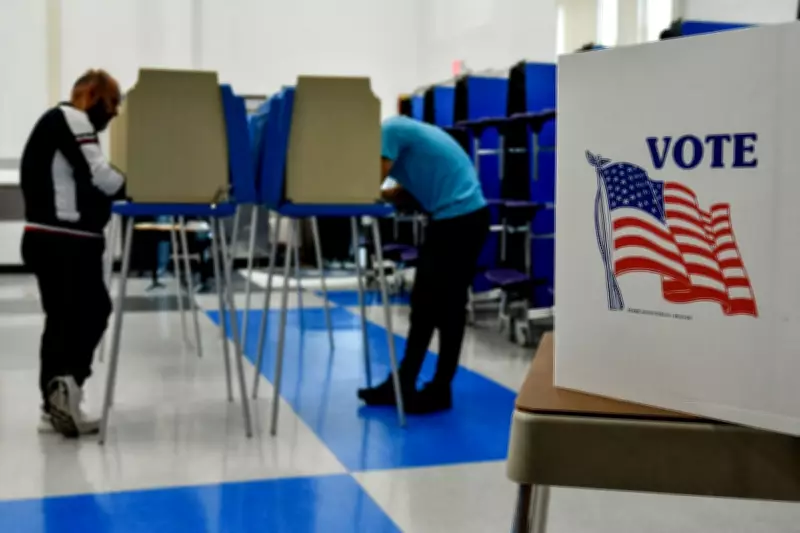
On November 5, 2024, voters cast their ballots for the US presidential and congressional elections at Dearborn High School in Michigan. This moment captured the political engagement of a region now grappling with the consequences of foreign policy decisions that contradict campaign promises.
The Broken Promise That Could Reshape Electoral Politics
Just weeks before the 2024 presidential election, candidate Donald Trump stood before a crowd in Hamtramck, Michigan—a diverse city with a significant Muslim population—and pledged to "get peace in the Middle East" once in office. This commitment resonated deeply with attendees who have family connections to the region.
Throughout his campaign, Trump repeatedly promised to extract America from "endless wars" and prioritize "America first" policies. This messaging proved particularly persuasive in upper Midwest swing states, where crucial voters helped secure his return to the White House.

However, within just over a year of taking office, the Trump administration has initiated multiple international military interventions. These include operations in Venezuela that resulted in more than 100 deaths during the overthrow and imprisonment of President Nicolás Maduro in January, along with airstrikes and attacks in Nigeria, Somalia, and Syria.
The Iran Conflict Sets a Dangerous Precedent
The decision to follow Israel into conflict with Iran has established a new and troubling precedent. This military engagement has disrupted the global economy in ways not witnessed for decades, creating ripple effects that reach directly into American communities.
Just north of Hamtramck lies Macomb County, a politically significant area that blends urban, suburban, and rural communities. This county voted for Barack Obama in 2008 and 2012 before swinging decisively to Trump in 2016, 2020, and 2024. As home to numerous "Reagan Democrats," Macomb County represents a critical swing county within the important battleground state of Michigan.
"We represent hard-working, middle-class Americans who were the 'forgotten class,' especially when we lost so many manufacturing jobs to other countries," explained Barbara VanSyckel, vice-chair of the Macomb County Republican Party.
VanSyckel acknowledges that residents are acutely aware of how the conflict affects energy prices. "I am hoping to see the gas prices go back to a lower level as yes, the electorate votes by what is affecting them at the time they cast their ballots," she stated. "The November elections are still months away, but if the gas prices stay high, it will likely affect voting for Republicans, which would affect the midterms and thus Trump's agenda."
The Blue Wall States: A Fragile Victory
Trump's 2024 election victory relied heavily on breaking through and winning over the "blue wall" states of Michigan, Wisconsin, and Pennsylvania. Understanding the political sentiments within these states' divided counties has remained a priority for both Republican and Democratic strategists for years.
Wisconsin's Door County, situated on a peninsula along Lake Michigan's western shores, had consistently voted for the eventual president in every election from 2000 until 2024. In that most recent election, Kamala Harris won the county by a mere 466 votes.
According to Stephanie Soucek, chair of the local Republican Party, opinions about the Iran war in Door County largely follow party lines. She believes the attacks on Iran serve American interests for multiple reasons.
"Iran has been a problem for several decades and they've been considered the number one state sponsor of terror, working through their proxies and undermining American interests," Soucek argues. "I'm not sure anything else has really worked."
However, Soucek notes that Door County residents express conditional support for the conflict. "I don't know anyone who wants this to be like Iraq, a long, drawn-out war. They want it to be as quick as possible. We don't want troops on the ground," she emphasizes. The conflict has already resulted in more than 140 American service members injured and seven killed.

The Independent Voter Dilemma
National surveys reveal that while most Americans oppose the attacks on Iran, Republicans remain steadfast in their support for Trump's actions. A Quinnipiac University poll released on March 9 found that 85% of Republicans support the war on Iran, with 88% believing the killing of Iran's former supreme leader, Ayatollah Ali Khamenei, was justified.
However, independent voters—a crucial electoral cohort—have clearly positioned themselves against the conflict. In the Quinnipiac sample, 60% of independents expressed opposition to US military action against Iran.
With 28% of Michigan voters and 32% of Wisconsin voters identifying as independents, Trump's failure to keep his promise about avoiding foreign conflicts could significantly impact upcoming primaries and midterm elections.
The war on Iran, costing an estimated $890 million daily, has angered many independent voters. "We definitely have seen in public polling that more and more voters are identifying as independents as they grow frustrated with politicians from both major parties failing to deliver for voters," observes Christy McGillivray of Voters Not Politicians, a Michigan-based advocacy organization.
"American voters have made it clear for years: they do not want any new wars. The administration's attacks on Iran are unpopular, and the administration has provided contradictory and incoherent justifications for this war."
The Conflict's Unfolding Reality
Nearly two weeks into the conflict, Iran's resilience and successful manipulation of the Strait of Hormuz to cripple the international economy has surprised many observers. On March 9, thousands of Iranians gathered in Tehran's streets for a rally marking Mojtaba Khamenei as the country's new supreme leader, despite bombing campaigns that have killed over 1,300 people—including approximately 175 elementary school-age girls in Minab.
Some conservatives question whether the attacks on Iran constitute an actual war. "I do not see the Iran situation as a war yet," says VanSyckel. "We have accomplished a lot in a short period of time, but the threat to Israel and the US had to have serious consequences in order for both countries to be safe from the Iranian regime."
As the conflict continues to evolve, its political ramifications extend far beyond the Middle East, potentially reshaping electoral dynamics in America's heartland and testing the durability of campaign promises in an increasingly volatile global landscape.