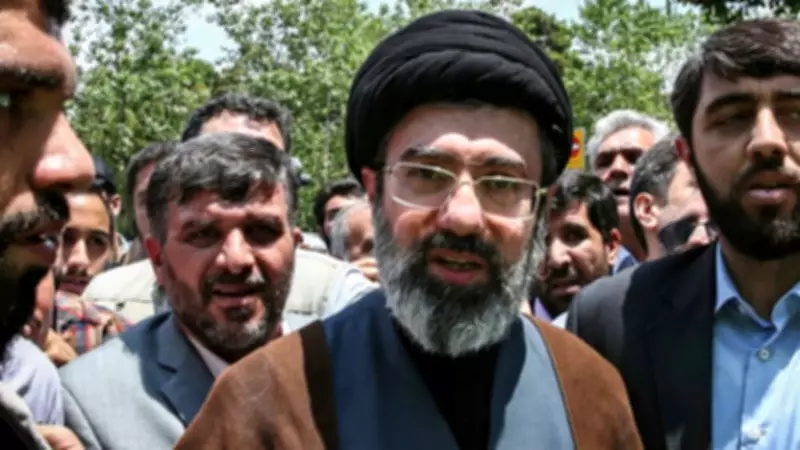
Iran's Leadership Transition: Mojtaba Khamenei Ascends to Supreme Leader Role
In a historic transition of power, Mojtaba Khamenei has been officially confirmed as the new supreme leader of Iran, marking only the third such leadership change in the country's modern history. The 56-year-old assumes this critical position following the death of his father, Ayatollah Ali Khamenei, who was killed in his Tehran compound during the opening day of the ongoing conflict.
A Dynastic Succession Amid Tragedy
The elder Khamenei had served as Iran's supreme leader for more than 37 years before his sudden death. While Mojtaba Khamenei was not present at the compound during the attack and thus survived, his mother, wife, and daughter were tragically killed in the same incident. This personal loss adds a profound layer of complexity to his ascension to the nation's highest office.
The selection process for Iran's supreme leader involves the assembly of experts, a body comprising 88 Islamic scholars who are specifically chosen for their demonstrated loyalty to the existing regime. Interestingly, a building where this assembly typically convenes was destroyed in an airstrike, though none of the members are believed to have been present at that location when the strike occurred.

The Enigmatic Figure of Mojtaba Khamenei
Unlike his father, who was widely recognized as an intellectual, a scholar of Persian poetry, and a compelling public speaker with substantial domestic following before assuming leadership, Mojtaba Khamenei has maintained a notably low public profile throughout his life. He has rarely delivered public addresses or led Friday prayers, leaving many Iranians unfamiliar with his persona and leadership style.
Despite his relative obscurity, Khamenei is known to be a hardline conservative with significant military credentials. He served in the Habib Battalion of Iran's Revolutionary Guard during the brutal Iran-Iraq War of the 1980s. This military background has enabled him to cultivate influential connections with individuals who now occupy senior positions within Iran's power structure.
Controversial Background and International Standing
Mojtaba Khamenei has been associated with the violent suppression of protests within Iran, and he currently faces sanctions from the United States. Reports suggest he has accumulated a substantial portfolio of valuable properties worldwide, including holdings in London, despite these international restrictions.
While he studied in the holy city of Qom, Khamenei has only achieved mid-ranking clerical status and has never held public office or been elected to any governmental position. His closeness to the Revolutionary Guard is particularly significant, as this powerful military organization likely played an instrumental role in facilitating his appointment as supreme leader.
Constitutional and Political Implications
The position of supreme leader represents the ultimate authority in Iran, with the leader serving as the guardian of the Islamic Republic. By transferring this role to the predecessor's son, the assembly of experts has effectively established a dynastic succession pattern that resembles a monarchy—a form of governance that historically has been unpopular among Iranians, who overthrew both the Qajar dynasty in 1925 and the Pahlavi monarchy in 1979.
This succession suggests that hardline elements within Iran's power structure retain considerable influence, which may complicate ongoing negotiations to end the current conflict. The consolidation of power within this conservative faction does not bode well for diplomatic resolutions or potential reforms within the Iranian political system.