

Iraq's Deep Rifts Exposed as Iran Conflict Forces a Precarious Balancing Act
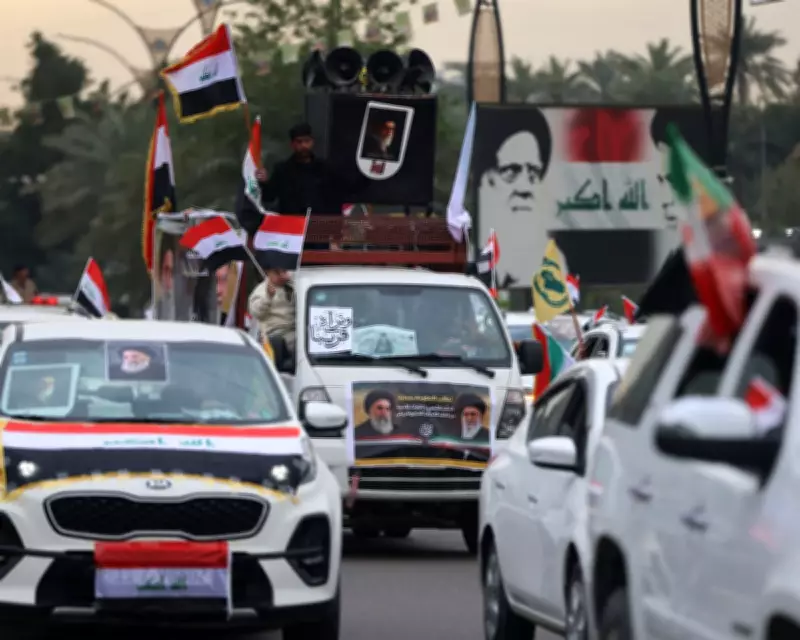
In the heart of Baghdad's Tahrir Square, Iraqis recently waved national flags during a rally in support of Iran, a vivid symbol of the country's torn allegiances. As the US-Israeli war on Iran intensifies, Iraq finds itself at a critical crossroads, grappling with deep-seated divisions that threaten its fragile stability. The conflict has laid bare the emotional and physical scars from America's past attempts to reshape the region, with Iraq bearing the brunt of renewed tensions.
A Nation Divided Between Loyalty and Independence
The war is sharply dividing Iraqi society. On one side are those who view the attacks on Iran as an opportunity to curtail Tehran's longstanding influence over Iraqi politics, which has permeated state institutions, armed forces, and Shia Islamist parties for decades. On the other side stand self-declared loyalists of the Islamic Republic, who remain steadfast in their allegiance. This rift is exacerbated by a precarious power vacuum, following caretaker leader Mohammed Shia al-Sudani's step aside after his coalition's victory in November's parliamentary elections.
Hours after the killing of Iran's supreme leader Ali Khamenei, factions from the Islamic Resistance in Iraq—an umbrella body of Iran-backed armed groups—vowed to drag the US into a protracted war of attrition, aiming to eliminate American presence in the region. This group has claimed responsibility for numerous drone and missile attacks on targets such as the US base in Erbil, Camp Victoria near Baghdad international airport, and US oil company compounds in Basra and northern Iraq, forcing significant oilfield production suspensions.

Escalating Violence and Government Struggles
In response, unclaimed airstrikes, widely attributed to US and Israeli forces, have struck positions across Iraq, including Jurf al-Sakhar south of Baghdad—a stronghold for Kataib Hezbollah, a key pro-Iran faction—and other resistance bases in the south and north. These attacks have killed half a dozen commanders and scores of fighters, with incidents in Mosul showing attack helicopters firing on checkpoints and Iraqi army units hit in the western desert, resulting in casualties.
The conflict's expansion has drawn Iraq further into the fray, with the US embassy in Baghdad's green zone repeatedly attacked and warnings issued about potential assaults by pro-Iran armed groups. Kataib Hezbollah is also suspected in the abduction of a US reporter, Shelly Kittleson, highlighting the growing volatility. Although attack frequency declined after Kataib Hezbollah declared a pause, the group did not extend it, signaling ongoing threats.
The Iraqi government, pursuing an "Iraq first" policy, has attempted to stay out of regional wars post-7 October and project control. Leaders are engaged in a delicate balancing act: denouncing Khamenei's killing and sending condolences while rejecting Tehran's attempts to involve Iraq, calling on security forces to protect diplomatic missions and oilfields, and even firing military and intelligence officers. However, this effort is complicated by pro-Iran groups' membership in the Popular Mobilisation Units (PMU), a sprawling institution theoretically part of the army but operating independently, claiming resistance legitimacy when attacking US targets yet decrying strikes on their bases as violations of sovereignty.
Weak State Institutions and Economic Peril
This contradiction exposes state weakness, with Iraqis cynically joking that while the US, Israel, and Iran attack each other, Iraq is bombed by all sides—including its own people. Despite claims of intensified cooperation between Washington and Baghdad to prevent attacks, the US has blamed the Iraqi government for failing to stop terrorist activities, with the embassy noting that Iran-aligned groups may claim government association. The Pentagon has admitted to strikes against pro-Iran armed groups but denied targeting Iraqi security forces.

Moreover, Iraq faces a looming financial disaster due to the crisis over the Strait of Hormuz and lost oil revenue, which accounts for over 90% of the national budget. Even before the latest escalation, US pressure and sanction threats forced some members of the pro-Iran Shia alliance, the Coordination Framework, to distance themselves from militant factions, fearing economic repercussions that could cripple salary payments and threaten the post-2003 order. This pressure led to the withdrawal of former prime minister Nouri al-Maliki's nomination, following direct US intervention, including from Donald Trump.
Historical Context and Regional Impact
Many resistance faction fighters came of age during the US occupation, with Iran pursuing a dual strategy of cultivating political influence and training a younger generation. In the sectarian warfare post-Arab Spring, Iran rallied allies like Afghan fighters, Iraqi militias, Houthis in Yemen, and Hezbollah, collectively known as the "axis of resistance." This axis suffered a major blow after the 7 October attacks, with Israeli strikes killing Hezbollah leader Hassan Nasrallah, impacting Iraqi factions deeply due to his direct appeal and strategic vision.
An insider close to pro-Iran factions noted that Nasrallah's death affected Iraqi resistance more than Khamenei's, as Hezbollah combined military prowess with political depth, something lacking in Iraqi groups. The war's impact extends beyond drones, shaking Iraqi streets with spontaneous demonstrations in the south after Khamenei's killing and assassinations elsewhere. For Iraqis, images from Iran evoke painful memories of decades of US airstrikes since the 1991 Gulf War, with familiar scenes of destruction, anxiety, and loss.
As Iraq navigates this turbulent period, its leaders' balancing act grows increasingly untenable, with deep rifts threatening to unravel the nation's fragile cohesion amidst escalating conflict and economic peril.





