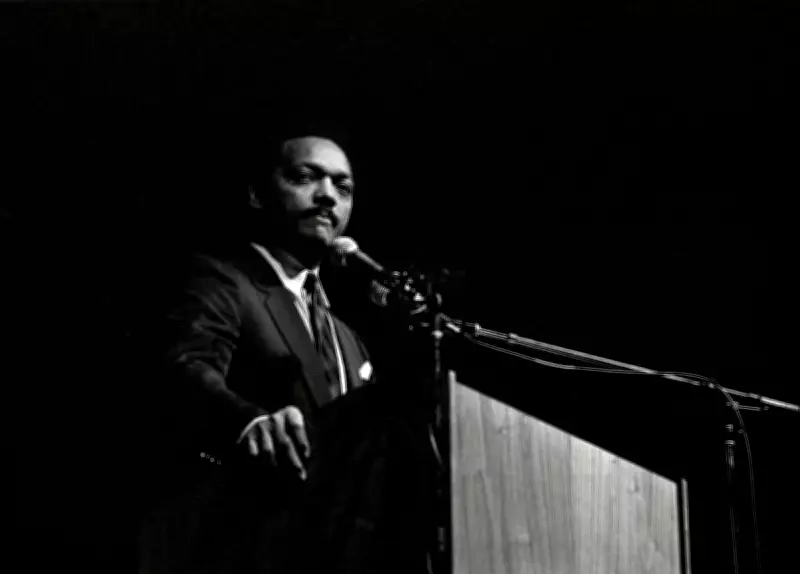
Jesse Jackson's International Legacy: A Global Champion for Justice
When Jesse Jackson passed away at age 84, tributes poured in from Havana to Johannesburg to Ramallah, reflecting his unique status as a non-president mourned worldwide. While his domestic civil rights work bridging Martin Luther King Jr. and Barack Obama received significant attention, Jackson's international activism represented a crucial dimension of his legacy that reshaped global human rights discourse.
Pioneering Palestinian Advocacy in American Politics
Jackson's 1988 push for Palestinian statehood in the Democratic party platform faced fierce resistance, with campaign negotiators warning that even mentioning the "P-word" could destroy the party. Despite this opposition, ten Democratic state parties had already passed resolutions supporting Palestinian self-determination by that time. James Zogby, deputy manager of Jackson's presidential campaign and founder of the Arab American Institute, noted that Jackson was "way ahead of the base" in his understanding of Palestinian issues.
Jackson's 1979 Middle East delegation marked a turning point, as he met with both Israeli officials and Palestine Liberation Organization leaders including Yasser Arafat. He drew careful parallels between the Palestinian struggle and African American experiences under Jim Crow, telling audiences, "We understand the cycle of terror, the cycle of pain." This perspective helped shift the Palestinian cause from a purely nationalist dispute to a human rights issue within African American leadership circles.

Confronting Apartheid in South Africa
Jackson's first visit to South Africa in July 1979 drew massive crowds in Soweto, just two years after Steve Biko's death. During Ronald Reagan's presidency, when US policy leaned toward supporting the apartheid regime, Jackson became a clarion voice for conscience, vigorously pushing for sanctions against what he called a "moral disgrace." His organizing and voter mobilization helped pressure Congress to override Reagan's veto and pass historic anti-apartheid sanctions in 1986.
William Gumede, founder of South Africa's Democracy Works Foundation, recalled that Jackson "stood out as a beacon" during the 1980s when the US government appeared to protect the apartheid regime. Jackson saw clear parallels between South African apartheid and American racial injustice, writing in 2013: "As a young civil rights activist, I knew how raw and ugly and violent the apartheid regime was. They were being jailed, we were being jailed. We were being killed, and they were being massacred."
Diplomatic Breakthroughs and Hostage Negotiations
Perhaps Jackson's most tangible international achievements came through his successful hostage and prisoner negotiations with countries the US considered enemies. He secured releases from Syria (navy lieutenant Robert Goodman), Cuba (48 political prisoners), Iraq (hostages before the Gulf War), and Serbia (three US soldiers). After the Syria mission, Jackson convinced President Reagan to break the "no-talk" policy and personally thank Syrian president Hafez al-Assad, establishing communication that continued throughout Reagan's administration.
Author David Masciotra noted that Jackson's negotiation skills stemmed from his experiences growing up Black in Jim Crow America, where "every day was a negotiation and his life was at stake." This background allowed Jackson to connect with oppressed people globally while maintaining credibility as an American figure who understood "the dark side of the American experience."
A Progressive Vision Ahead of Its Time
Martha Biondi, professor of Black studies and history at Northwestern University, argued that Jackson should be seen as "one of the most prominent figures of the American left in the 20th century and into the 21st century," paving the way not only for Barack Obama but also for progressive figures like Bernie Sanders. Jackson advocated for normalizing relations with Cuba, criticized US military interventions in Nicaragua and Angola, and promoted equitable economic development in the global south.

Barbara Masekela, South African poet and anti-apartheid activist, emphasized Jackson's unique ability to "link the struggles of people all over the world," continuing "the line of solidarity between African populations all over the world." Omar Barghouti, co-founder of the Boycott, Divestment and Sanctions movement, credited Jackson with "catapulting Palestinian liberation into the US mainstream political discourse when hardly any politician dared to."
Enduring Relevance and Unfinished Struggles
More than four decades after his 1988 convention efforts, many of Jackson's policy positions have moved into the center-left consensus. Yet as Zogby recalled from a January 2024 meeting at Jackson's Rainbow Push Coalition, the civil rights leader remained focused on contemporary struggles, urging action regarding Gaza with the words: "Remember the babies. They're dying every day. Do something."
Jackson's global activism demonstrated what Gumede called a "third world mindset" that saw "one struggle, one fight" connecting oppressed people worldwide. His legacy extends beyond domestic civil rights to encompass a vision of international solidarity that continues to influence progressive movements today, proving that true activism knows no borders and that justice struggles are fundamentally interconnected across continents and cultures.