The Remote Island Paradise Caught in Geopolitical Crossfire
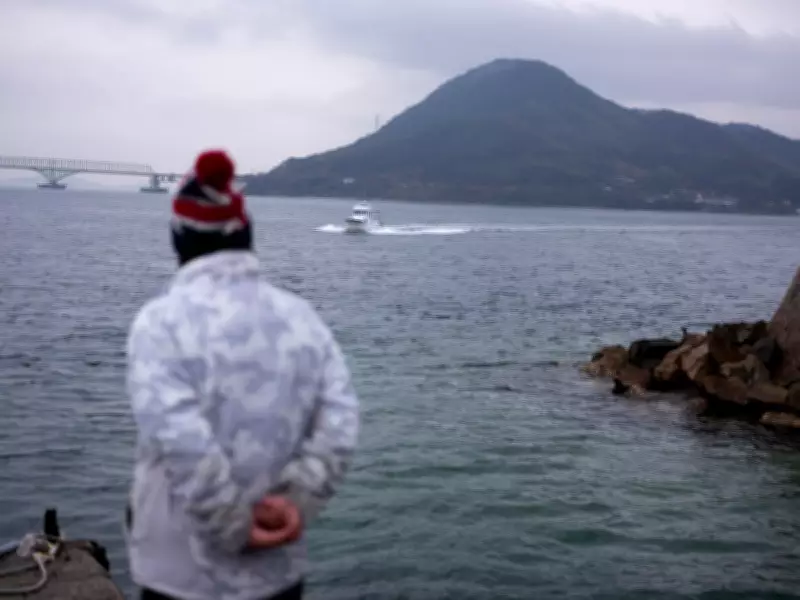
Kasasa Island, a tiny speck in Japan's Seto Inland Sea known locally as "the Hawaii of Japan" for its warm climate and stunning coastline, has become an unlikely symbol of escalating tensions between Tokyo and Beijing. With only seven registered residents, this 700-square-meter island finds itself at the center of a national debate about foreign land ownership near sensitive military installations.
A Community of Seven Faces Uncertain Future
Hideya Yagi, an 80-year-old former construction company president who moved to Kasasa 25 years ago for its fishing opportunities, represents the island's dwindling population. He and his wife Mihoko live alongside just one other couple and an elderly woman, with two additional residents almost always absent. "You can stand on the quayside and just reel the fish in," Yagi says, describing the island's abundant marine life. "And you can eat what you catch straight away."
The Yagis maintain a quiet existence of fishing and gardening, their nearest neighbors often away with front doors left unlocked. But this peaceful isolation has been disrupted by developments that have transformed Kasasa into a national security concern.

Strategic Location Attracts Foreign Investment
Kasasa's secluded location places it just 20 kilometers from the Iwakuni US Marine Corps airbase and 50 kilometers from a Japanese Maritime Self-Defence Force base in Kure. This proximity to military installations has taken on new significance since wealthy Chinese developers purchased and began developing two plots on the island's southeast coast nearly a decade ago.
While the purchases were entirely legal and approved by Japanese regulators, the arrival of mechanical diggers, cement mixers, steel telegraph poles, and high-voltage distribution lines late last year sparked rumors that the land could be used for surveillance purposes. Documents reviewed indicate potential plans ranging from tourism facilities to cruises and restaurants, but the investors' ultimate intentions remain unclear.
Growing National Security Concerns
The Kasasa situation reflects broader trends across Japan. In the 12 months ending March of last year, Chinese investors accounted for nearly half of hundreds of land and real estate acquisitions near locations deemed important for national security, according to public broadcaster NHK. All transactions complied with Japanese law.
Prime Minister Sanae Takaichi has vowed to tighten regulations on land and asset sales, tapping into public unease about foreign influence. The conservative leader's stance comes amid increasingly shaky relations with Beijing, particularly after Takaichi warned that Japan could become militarily involved in any conflict over Taiwan.
China responded with export restrictions on "dual-use" items to major Japanese conglomerates, which Beijing claims supply Japan's military. The Chinese commerce ministry described the measures as curbing Japan's "remilitarization" and nuclear ambitions, while Japan condemned the restrictions as "completely unacceptable."
Local Residents Feel Left in the Dark
"I don't care where our neighbors are from, but we still don't know who these people are and what they want to do here," says Yagi, who has never met the Chinese investors whose plot lies at the opposite end of the island. "Hardly anyone lives here, so new arrivals could do what they like and we would never know."
Mihoko Yagi expresses similar concerns: "I'm worried about what will happen to the island's atmosphere. We're being kept in the dark. I just want to carry on with life as it is, with my husband fishing and me growing fruit and vegetables."
Preservation Efforts and Political Backlash
The Kasasa Island Preservation Association, launched last year, aims to buy back the land, protect the island's environment, and attract new residents to the dozens of empty homes. The group recently repaired the island's only Shinto shrine as part of efforts to revitalize the community, which once numbered 100 people before World War II.

Conservative councillor Takashi Ishikawa from nearby Yamaguchi city claimed Kasasa "could eventually become a Chinese island" and potentially serve as a drone base. "If islands in the Seto Inland Sea are bought up collectively," he warned, "it would be as if Japan were effectively being invaded."
Hideki Miyagawa of the preservation association emphasizes that their concerns aren't about discrimination: "We just want the government to protect the interests of residents and for new residents to follow the rules. It's hard to do that when we don't even know the investors' intentions."
Broader Pattern of Resistance
Kasasa isn't alone in experiencing pushback against foreign investment. In Fukuoka, western Japan, a landowner abandoned plans to build apartments for foreign buyers after resident protests. In Hokkaido, authorities prevented a Chinese national from constructing a villa after they cut down forest without permission.
However, some experts argue that existing laws adequately address illegal development regardless of the property owner's nationality. Hiroshi Matsuo, a professor at Keio University Law School, notes: "Restricting foreigners' ability to acquire property won't solve the problem. There are effective legal measures in place to deal with illegal development, regardless of whether it's by Japanese or foreign nationals."
Matsuo suggests the controversy stems from confusion between land ownership and territorial sovereignty, exacerbated by inaccurate information spread online. "It's right to want a society in which it's normal for foreigners to integrate into local communities," he says. "They and Japanese people must all follow the same rules."
Social Media Adds Fuel to the Fire
On Chinese social media platforms like WeChat and RedNote, some commenters have provocatively discussed the land purchases. One described them as a "good investment strategy: buy land in Japan, stir up Japanese nationalistic sentiment, and then sell it back to the Japanese at a high price." Another suggested planting the Chinese flag after purchasing property, while a third wondered about crowdfunding to "buy the whole of Japan."
As day visitors prepare to leave on the last ferry to the mainland, Yagi maintains his welcoming spirit despite the geopolitical tensions surrounding his island home. "I would love people to come here to fish, eat and drink together and stay overnight," he says. "I don't care which country they're from. I'd just like that to happen before I die."