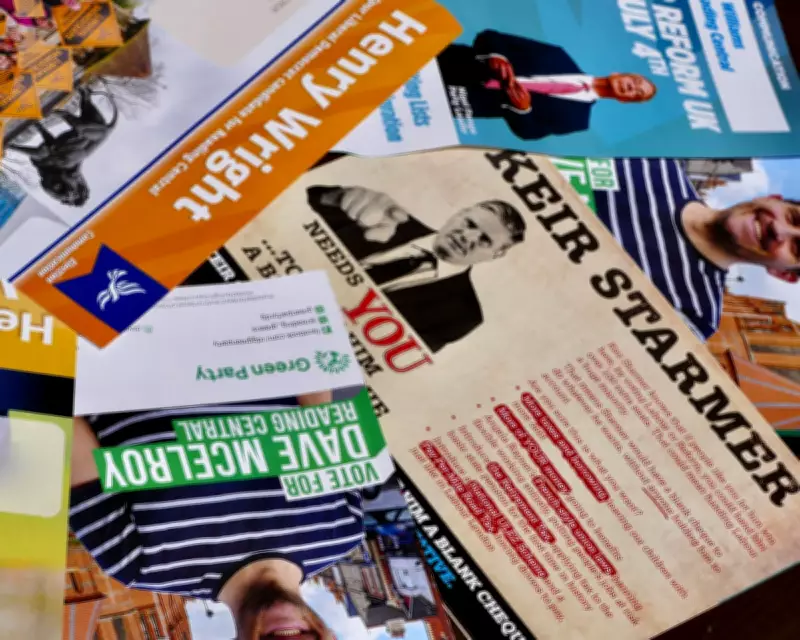
Labour in Crisis: Starmer's Pragmatic Path to Survival
There is no denying that the Labour Party is engulfed in a profound crisis, yet in a strange twist, Prime Minister Keir Starmer might be uniquely equipped to salvage it. As a pragmatist with minimal ideological baggage, Starmer possesses the potential to forge now-essential links with other political parties, a move critical for Labour's future viability.
The Endless Debate: Left vs. Right
Since the earliest hints that Keir Starmer was not the Corbyn-in-a-tie figure his leadership bid suggested, Labour members have been locked in a relentless internal argument. Should Starmer strive harder to include the left flank of the movement, or at the very least, cease efforts to expel them? This same question extends to the general voter base: should party apparatchiks focus less on the threat from Reform and more on the threat from the Greens?
Confusion abounds, from Starmer's controversial "island of strangers" speech to questions about whether Shabana Mahmood was brought in to attack migrants from all angles. Morgan McSweeney's legendary animus towards the left, likened to a man trying to keep a cave cosy by extinguishing a fire, raises further questions about his indispensable role and political alignment.

All these inquiries boil down to a single dilemma: should Starmer attempt to save his skin by feinting left or right? For Labour as a whole, the issues are even more pressing. How can the party appear less aimless, convey a mission beyond mere policy lists, halt its backtracking, and address its deep, cross-spectrum unpopularity? The eternal conflict pits values (left) against victory (right), with the victory camp growing more splenetic whenever Reform gains traction, urging unity to defeat the hard right at all costs.
A Shift in Political Dynamics
Recent intervention from the not-for-profit research group Persuasion UK adds a new layer to this age-old debate. Their findings suggest Labour should worry more about leftwing defectors than rightwing ones, citing greater numbers, stronger feelings on issues like racist cosplay, and the fact that rightwing switchers have already departed. However, this entire discussion belongs to a bygone era.
Labour must accept it is no longer the sole political force in town. Reform has materially altered the landscape, not by unveiling a nation eager for xenophobic malice, but by energising voters—both supporters and those who despise Nigel Farage's complacent, capital-serving agenda. This energy has manifested in byelections like Caerphilly and Gorton and Denton, where beneficiaries varied from Plaid Cymru to the Greens, showcasing galvanised turnout and resolve.
To be part of the opposition against the hard right, Labour must actively oppose it and cease wasting energy positioning itself as the only righteous foe. The party has already lost significant ground, particularly with Muslim voters and others disillusioned by its contradictory stance on Palestinian statehood and protests. These voters cannot be hectored back; Labour must instead make common cause with the parties they have turned to.
The Need for Humility and Alliance
Labour politicians often dismiss the Greens as hapless chancers and the Liberal Democrats as tainted by coalition history, even as Labour itself adopts language and policies reminiscent of David Cameron's era. This approach fails to satisfy voters who align with values of equality, radicalism, and environmental love espoused by these parties.
Labour now requires qualities foreign to its DNA: humility, agility, self-reflection, and compromise. The party must genuinely reopen conversations about electoral reform and proportional representation, moving beyond periodic pretence. As its base looks elsewhere, Labour should stop treating this as infidelity and instead ask what other parties offer that it does not.

Keir Starmer appears trapped and demoralised, understandable given his status as the most unpopular prime minister ever, with ratings that seem to have no floor. Yet, an enormous challenge awaits: transforming a party that views alliance as a blood wedding—any colour so long as it's red—into one that can sing a rainbow. A pragmatist unblinded by passion, untroubled by loyal sentiment to cliques, and undeterred by detail might just meet this moment. Starmer fears bad headlines above all; once he accepts they will always be bad, he could become fearless in forging new paths forward.