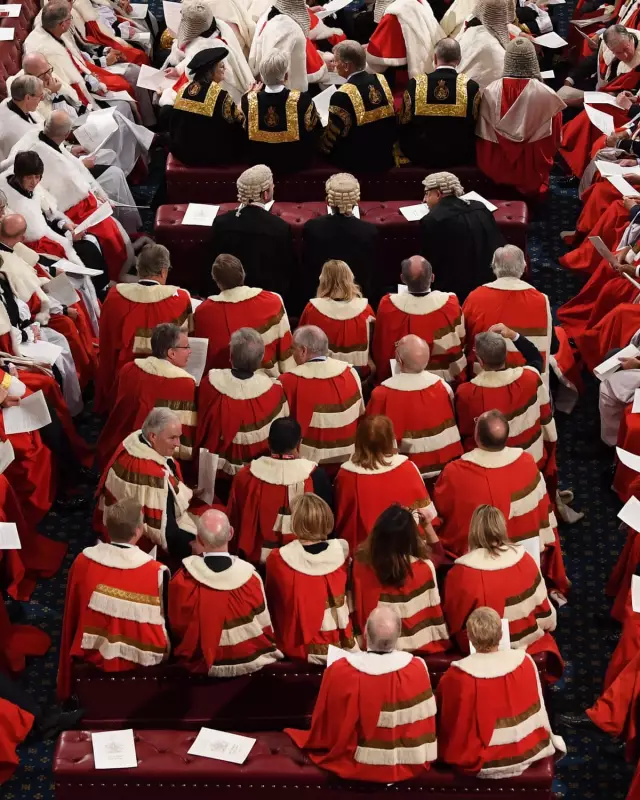
The Labour government, despite its commanding majority in the House of Commons, is facing its toughest opposition from an unexpected quarter: the unelected House of Lords. Labour peers report that the Tory-dominated upper chamber has systematically slowed down virtually every piece of legislation, inflicting a near-record number of defeats on Keir Starmer's administration.
A Deliberate Strategy of Disruption
The atmosphere turned hostile shortly after Labour's election victory. In the Lords canteen, a Labour adviser overheard two Conservative peers fuming about the planned abolition of hereditary peers. They agreed on a deliberate strategy to undermine the government on all legislation, slow debates, and force concessions from the new Lords leader, Angela Smith. Another Labour appointee was told gleefully by a Tory peer: "We are going to grind you down."
This tactic has translated into tangible obstruction. To date, the government has suffered 111 defeats in the Lords, with at least four months of the parliamentary session remaining. The record of 128 defeats, set under Boris Johnson between 2021-22, is within sight. Labour peers state that key manifesto bills—from water regulation and rail nationalisation to the creation of Great British Energy and a football regulator—have all been delayed.

Procedural manoeuvres have intensified the slog. Amendments are being "de-grouped" at late stages into smaller clusters, dragging debates out for hours longer. "Each time it is more or less the same people," one Labour peer noted. "Former Tory MPs, making the same kind of speeches over and over again."
The Breakdown of Conventions and the Hereditary Peers Flashpoint
According to those on the Labour benches, the traditional "usual channels" for managing business have broken down. "The conventions do not apply," a peer explained. "It's essentially a particular group of former Tory MPs who act like they are still in the Commons but actually have more power to cause disruption... they basically don't give a fuck about how the Lords normally operates."
Many pinpoint the catalyst for this shift as Labour's manifesto pledge to abolish the remaining 92 hereditary peers, who are due to leave at the end of the current parliament in May. Half of those facing expulsion sit as Conservatives. The bill to remove them has been met with considerable disruption, including a reported £20,000 dinner in the Lords' Cholmondeley Room to keep peers on-site to vote against it. "There is something quite perverse about claiming that you are defending the hereditary peers because you care just so much about the sanctity of the Lords and then doing all these kind of dirty tricks," a peer remarked.
The resistance has forced Labour to bolster its own numbers in a manner it once criticised. The government has awarded peerages to close allies and former staff, including Sue Gray, Matthew Doyle, and Liz Lloyd, to create more full-time legislators. Despite this, the Conservatives will still hold a numerical advantage with 285 peers to Labour's 234, a margin they can often extend with support from crossbenchers.
Wider Implications and the Call for Radical Reform
The impact extends beyond government bills. The assisted dying bill, a private member's bill, has been subjected to over 1,000 amendments, with seven vocal opponents submitting more than 600 between them. Supporters believe a hardline group is using procedural tactics to talk it out.
This persistent obstruction has galvanised calls for fundamental reform. Paul Nowak, TUC General Secretary, said it felt "absolutely untenable" for unelected peers to hold up clear manifesto commitments from a government with a 170-seat majority. Tom Brake of Unlock Democracy argued the "glacial progress" on bills makes an "incontrovertible case for radical reform of the House of Lords."
Alice Lilly of the Institute for Government noted a longer-term trend of an increasingly assertive Lords. While governments ultimately get their way, she said the disruption raises questions about the state of legislation arriving from the Commons, often rushed and in an imperfect condition.

Labour is now pushing forward with the next phase of its reform agenda. A committee has been established to consider imposing a retirement age of 80 for peers and mandating minimum participation levels. However, with the committee evenly balanced between parties, achieving consensus will be a challenge. As one Labour source conceded, even after the hereditary peers depart, the numerical advantage won't be enough to guarantee smooth passage for the government's programme, signalling that the grind in the Lords is far from over.