Federal prosecutors in the United States are building a landmark case against a man they allege triggered one of the most catastrophic wildfires in Los Angeles history—a so-called 'zombie' fire that resurrected days after being declared extinguished.
The Spark and the Inferno
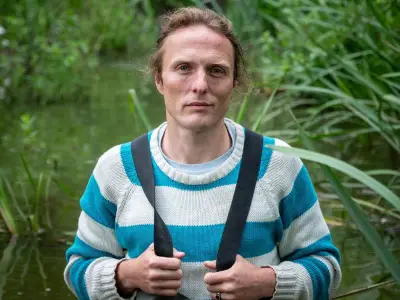
According to a federal complaint, Jonathan Rinderknecht, 29, an occasional Uber driver and former Pacific Palisades resident, was in the neighbourhood in the early hours of New Year's Day 2025. Prosecutors claim he used an open flame, likely a lighter, to ignite a small brush fire. This initial blaze, dubbed the Lachman fire, burned roughly 8 acres (3.2 hectares) before the Los Angeles Fire Department (LAFD) arrived and suppressed it.
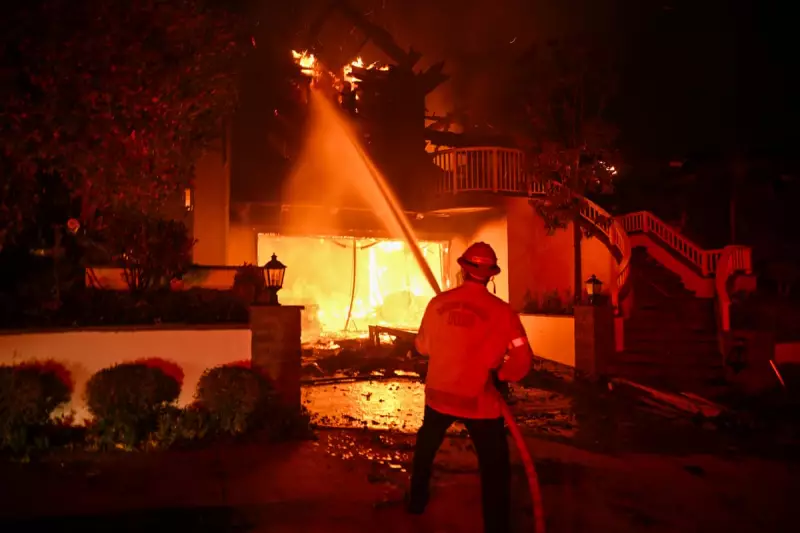
The true disaster struck five days later, on 7 January 2025. Ferocious Santa Ana winds, gusting up to 100mph (161km/h), whipped the Lachman fire's smouldering embers back into a frenzy. Fuelled by tinder-dry conditions, the flames exploded, rapidly transforming into the devastating Palisades fire.

The inferno ultimately claimed 12 lives and destroyed 7,000 structures, etching its name as the most destructive wildfire in Los Angeles's history. It is a textbook example of a 'holdover' or 'zombie' fire—a phenomenon scientists warn is becoming more frequent with a warming climate.
A Legal Battle Over Foreseeability and Fault
The central question for the court, according to legal experts, is one of foreseeability. Aya Gruber, a criminal law professor at the University of Southern California, explained the trial will hinge on whether Rinderknecht could have predicted his actions would lead to such catastrophic consequences.
"Even if [the initial Lachman fire] was a modest fire, was it foreseeable that this turn of events would happen?" Gruber posed. She noted that under California's volatile environmental conditions, small fires can easily spiral out of control.
However, the defence strategy, led by attorney Steven Haney, shifts blame towards the fire department's response. Haney has argued his client is being "scapegoated," pointing out that Rinderknecht called 911 multiple times to report the initial fire and even offered to help firefighters. He contends the duty to fully extinguish the Lachman fire rested with the LAFD.
This argument gained traction after investigations by the Los Angeles Times revealed firefighters had concerns the Lachman fire was not fully contained before they were ordered to leave. The paper also found the LAFD's official after-action report was heavily edited across seven drafts to soften criticism of leadership. The department's new chief, Jaime Moore, later admitted these allegations were true.
Building the Case: From Embers to Evidence
Federal investigators constructed their case using a combination of traditional forensic methods and digital evidence. Wayne Miller, a retired ATF special agent, explained how arson investigators meticulously trace burn patterns back to a fire's point of origin, sometimes narrowing it down to a few square feet.
In this instance, the Lachman fire's start point was under 24-hour camera surveillance, providing crucial data. The complaint methodically ruled out other causes: it was nighttime, so sunlight refraction was impossible; there were no reports of fireworks, lightning, or faulty electrical infrastructure; and weather conditions made a discarded cigarette an unlikely source.
Prosecutors also compiled a digital profile of the suspect. The complaint cites Uber passengers who described Rinderknecht as "agitated and angry" that night. Cellphone data showed he listened to a song by French rapper Josman about "despair and bitterness" moments before the fire began; its music video features a character lighting fires.
Perhaps most damningly, evidence revealed Rinderknecht had used ChatGPT months earlier to generate images fixated on fire and destruction, including a burning city and a forest aflame with fleeing people.

Prosecutors have characterised Rinderknecht as "reckless," stating his actions caused "one of the worst fires Los Angeles has ever seen." He faces three felony charges and a potential prison sentence of between five and 45 years.
Jonathan Rinderknecht has pleaded not guilty. His trial is scheduled to begin on 21 April 2026. The outcome will not only decide one man's fate but could also set a significant legal precedent for assigning blame in the complex and increasingly common tragedy of the 'zombie' wildfire.