Mandelson Resigns from Labour Following Epstein Document Release
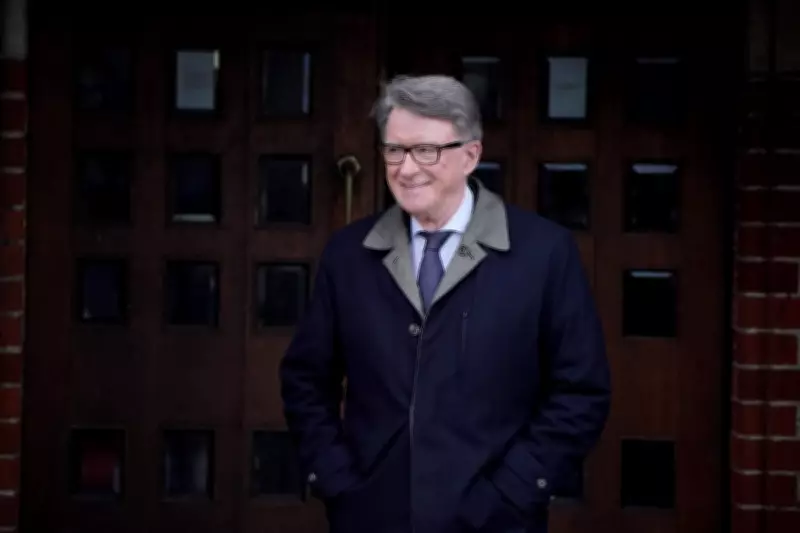
Lord Peter Mandelson has announced a dramatic career shift, resigning from the Labour Party after four decades at its highest levels. This decision comes in the wake of last week's substantial release of documents concerning his relationship with the convicted sex offender Jeffrey Epstein.
Epstein Files Trigger Political Fallout and Investigations
The resignation follows the publication of three million documents by United States officials, which detailed extensive communications between Mandelson and Epstein. Among the revelations were emails discussing JPMorgan chief executive Jamie Dimon, with Mandelson suggesting Dimon should "mildly threaten" the UK Treasury regarding bank bonus taxation.
These confidential Downing Street communications have now become the focus of a Whitehall-led investigation. Additionally, Mandelson has been reported to police authorities in connection with the matter.

'Comeback King' Acknowledges 'Bad Luck' and Regret
Speaking exclusively to The Times, Mandelson described his departure from Labour as representing a "sea change" in his professional trajectory. The politician, often dubbed the 'comeback King' for his numerous returns to frontline politics, admitted: "I've had a lot of bad luck, no doubt some of it of my own making."
He expressed deep regret about the historical emails, stating: "Hiding under a rock would be a disproportionate response to a handful of misguided historical emails, which I deeply regret sending." Despite this, Mandelson credited Epstein with providing "guidance" during his transition from politics to high finance, acknowledging he may have been "naive" in regarding Epstein as "a good-faith actor."
Calls for Lords Removal and Political Criticism
The document release has prompted Labour leader Sir Keir Starmer to declare that Mandelson should neither remain in the House of Lords nor continue using his title. Mandelson, who currently sits as a non-affiliated peer following his resignation from the Labour whip, responded with criticism of the current government.
He told The Times that the administration's "U-turns are becoming a really bad look" and accused the Prime Minister of failing to "follow through and win the argument." Mandelson also commented on blocked by-election candidate Andy Burnham, labelling him "a good Blairite" with "considerable potential."
Defence Spending and EU Rejoining Concerns
In a notable departure from his previous positions, Mandelson - who recently served as the government's choice for British Ambassador to the United States before being dismissed in September - expressed scepticism about defence spending targets. He stated unequivocally that "3 per cent of UK GDP on defence isn't going to happen unless things are substantially cut elsewhere."
Perhaps most strikingly, the former European Commissioner and self-described "arch-remainer" has reversed his position on European Union membership. Mandelson warned that rejoining the EU currently represents "a non-starter for British business," predicting that "the EU will only have us back as supplicants" with "huge" costs and "onerous" terms that would reduce Britain to "a regulatory satellite of the EU."
Future as Political 'Outsider'
Despite the controversies and investigations, Mandelson outlined his future ambitions, telling The Times he now intends to "contribute ideas that enable Britain to strengthen and to work for all, in every part of the country" from outside formal party structures. This represents a significant repositioning for a figure who has occupied central roles in British politics for four decades, including serving as Business Secretary under Gordon Brown and holding multiple cabinet positions under Tony Blair.
The Epstein document release continues to reverberate through political circles, with Mandelson's resignation marking one of its most immediate and significant consequences in British politics.