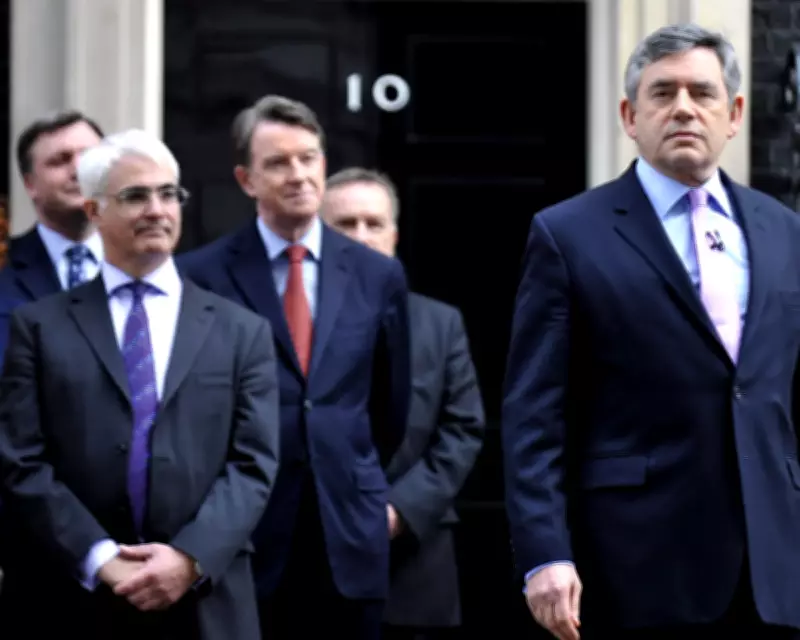
The release of the Jeffrey Epstein files has cast a stark new light on a pivotal moment in British political history, revealing extraordinary details about Labour's internal dynamics during the 2008-2009 financial crisis. For veterans of that tumultuous period, the documents expose a profound betrayal that continues to resonate in today's economic landscape.
A Whiff of Familiarity in Historical Collusion
Labour insiders who navigated the treacherous waters of the banking crisis detected immediate familiarity when reading Peter Mandelson's 2009 correspondence. The then business secretary's emails to Epstein revealed he was "trying hard" to change government policy on a bankers' bonus tax while appearing to recommend fresh lobbying efforts by JP Morgan's Jamie Dimon directly to Chancellor Alistair Darling.
This represented an extraordinary breach of trust within the Labour government at a time when extraordinary sums of taxpayer money were being pumped into ailing financial institutions to prevent complete systemic collapse. The public fury about bank bosses driving the economy to disaster while enriching themselves created a highly charged political atmosphere.

The Treasury's Righteous Anger
Senior figures from Darling's Treasury expressed outrage and disgust at Mandelson's behaviour, with one recalling that the late chancellor would have been "shaking with rage" had he known of this disloyalty. "There was a lot of anger in the Treasury at the time about the bankers," they remembered, emphasising the fragile nature of the situation as the government battled to stabilise the financial system.
Despite intense pressure, Darling implemented a one-off 50% supertax on bonuses above £25,000. In his memoir, Darling recalled Dimon calling him "very, very angry" about the plan, suggesting JP Morgan might reconsider buying UK debt and building a new London office. The chancellor stood firm, pointing out that debt purchases represented good business deals regardless of political disagreements.
Parallels in Contemporary Policy
More than sixteen years later, under a different Labour government in a transformed economic era, the fundamental tension between progressive policies and financial sector power remains strikingly evident. The same Jamie Dimon who lobbied against Darling's bonus tax recently issued an upbeat statement welcoming Rachel Reeves's budget and announcing plans for a new UK headquarters after she confirmed there would be no bank windfall tax.
Dimon cited "the UK government's priority of economic growth" as critical to JP Morgan's decision, highlighting how Labour's current approach prioritises maintaining positive relations with financial institutions. This represents a marked departure from the more confrontational stance taken during the crisis years.
The Windfall Tax Debate Revisited
Carsten Jung, author of an Institute for Public Policy Research paper calling for an £8 billion annual tax on banks, suggested Labour's anxiety about being perceived as "anti-business" has obstructed sensible economic proposals. "We would do well putting a bit less emphasis on business sentiment and a bit more emphasis on economics," he argued, pointing to how the IPPR's proposals affected share prices when published last summer.
As Reeves prepared her critical second budget, with financial sector lobbying intensifying against bank taxes, Labour's business envoy Varun Chandra attended a party hosted by Dimon in New York. Goldman Sachs boss David Solomon reportedly used a meeting with Reeves to personally push against taxation measures, illustrating the ongoing access and influence financial executives maintain.
Continuity in Regulatory Approaches
The Epstein emails revealed Mandelson not only opposing the bonus tax but also aligning with banks resisting post-crisis re-regulation designed to prevent future collapses. Today, this struggle continues as Labour champions City deregulation to boost economic growth, with the Bank of England recently announcing it would reduce banks' capital requirements for the first time since the crisis.

Faiza Shaheen of Tax Justice UK, a former leftwing Labour candidate, observed: "I think they're impressed by those sorts of executives, and they've been very wary about being anti-business or anti-growth, which for them is the same thing." She added with resignation: "It feels like we're back in the 90s: didn't we learn that lesson?"
Resisting Corporate Pressure
Reeves's allies reject suggestions that she yields easily to corporate lobbying. One senior government figure pointed to her insistence that the apprenticeship levy be spent on younger workers despite intense business pressure for greater flexibility. "These people lobby very hard indeed and it needs resisting," they emphasised, suggesting a more nuanced approach to corporate relations than critics acknowledge.
The historical revelations and contemporary parallels highlight enduring tensions within Labour's approach to finance, regulation, and economic growth. As the party navigates complex relationships with powerful financial institutions, the ghost of 2009 continues to influence policy decisions and political calculations in Westminster.