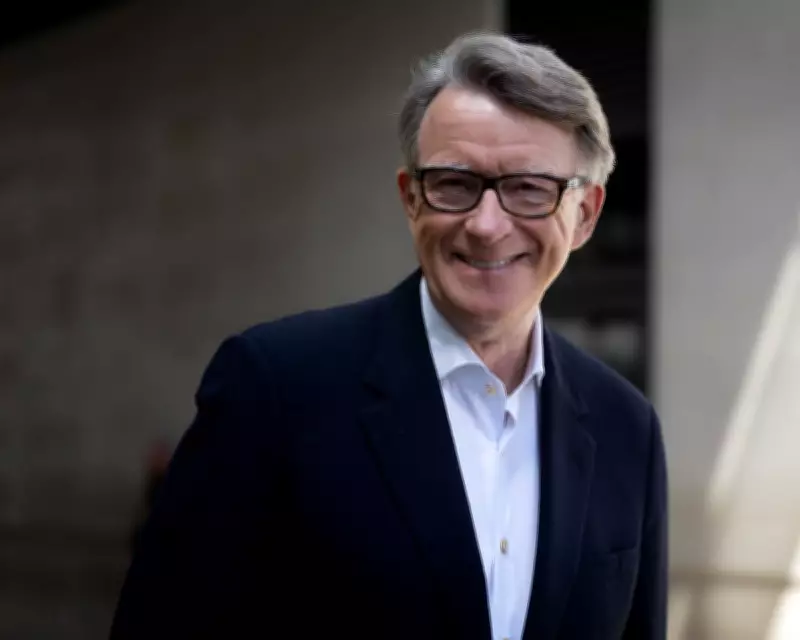
The Strategic Return of a Controversial Figure
In the months leading up to the 2024 general election, as the Labour Party under Keir Starmer grappled with uncertainty about securing victory, a familiar yet contentious presence began to re-emerge within its corridors of power. Peter Mandelson, the veteran Labour peer and architect of New Labour, was observed frequently visiting the leader of the opposition's Westminster office, offering unsolicited advice and seeking involvement in campaign strategy.
Internal Resistance and Persistent Lobbying
According to former Labour officials and multiple insiders, Mandelson's return was met with mixed reactions. While some welcomed his experience from election-winning campaigns, others maintained deliberate distance. Sue Gray, then Starmer's chief of staff with a background in government ethics, was particularly resistant. "She kept trying to push him away," revealed one source. "I think by that point, he was definitely pestering for a role and wanting a role. She could probably see that all of this would happen."
Mandelson's approach was described as persistent and strategic. "He didn't have a desk but he would dip in and out on big issues; he was always there for advice," recalled a former official. "He would be in and out of the Loto office, picking people off individually, 'We need to chat and do this', sort of thing."

The Epstein Controversy and Diplomatic Fallout
The full implications of Mandelson's return became dramatically apparent following recent revelations about his relationship with Jeffrey Epstein. Documents released by the US Department of Justice suggested Mandelson had shared market-sensitive information with the convicted sex offender during the financial crisis. This contradicted his earlier claims during vetting for his appointment as British ambassador to Washington, where he reportedly portrayed Epstein as "someone he barely knew."
Prime Minister Starmer, whose hands appeared to shake at the Commons dispatch box this week, publicly apologised for "having believed Mandelson's lies" and accused him of having "betrayed our country." The revelations have prompted serious questions about how Starmer could have considered Mandelson appropriate for such a sensitive diplomatic role, given his history of resignations from cabinet and known association with Epstein.
Political Calculations and Desperation for Victory
Insiders suggest Mandelson's return was facilitated not just by his own persistence, but by what one described as "a desperation at the heart of the Starmer project: they wanted to win and didn't know how." Simon Fletcher, a former senior adviser to multiple Labour leaders including Starmer, noted that Mandelson's association with the Blair era provided "a frisson" that the leadership calculated would be beneficial despite potential backlash.
"Mandelson brings with him a clear political analysis, however wrong, whereas the leadership lacked one," Fletcher observed. "So it is a conscious choice to head down a very specific political road."
Financial Connections and Internal Networks
Another factor in Mandelson's rehabilitation appears to have been his connections to business and fundraising networks. At a time when Labour was seeking financial support, Mandelson was noted to have "a hotline to industry." He was reportedly in regular contact with figures from Labour Together, the thinktank and fundraising organisation that contributed substantial sums to candidates in 2024.
The relationship between Mandelson and Morgan McSweeney, Starmer's chief of staff, has also drawn scrutiny. Introduced by peer Roger Liddle, their political orientations appear fundamentally different—with Mandelson representing pro-European internationalism and McSweeney associated with more domestically-focused, Brexit-influenced approaches.
Parliamentary Fallout and Internal Divisions
The Epstein revelations have exposed significant fractures within Labour. Wes Streeting, the health secretary who had social connections with Mandelson, has publicly distanced himself. Meanwhile, figures from the party's left, such as former shadow chancellor John McDonnell, see Mandelson as emblematic of everything wrong with Starmer's leadership direction.

Many Labour MPs express frustration at what one described as the leadership's "uselessness" in handling the situation. There is particular concern about the realisation that Mandelson was brought in because, as one party source put it, Starmer "doesn't have any answers and clarity"—and Mandelson appeared to, "even if wrong." The source added: "Basically, they were beguiled by him."
The episode continues to raise fundamental questions about judgment, vetting processes, and the political calculations that allowed a figure with such controversial associations to regain influence at the highest levels of British politics.