Religious Leaders Condemn Michigan Synagogue Attack – But Moving Forward Together Proves Challenging
Jewish and Arab American leaders across Detroit and the United States have strongly condemned the 12 March terrorist attack on Temple Israel synagogue in West Bloomfield Township, Michigan. The leaders largely aimed to lower tensions against the backdrop of the ongoing US and Israeli military campaign in Iran, which has created a complex environment for community healing.
The Attack and Its Context
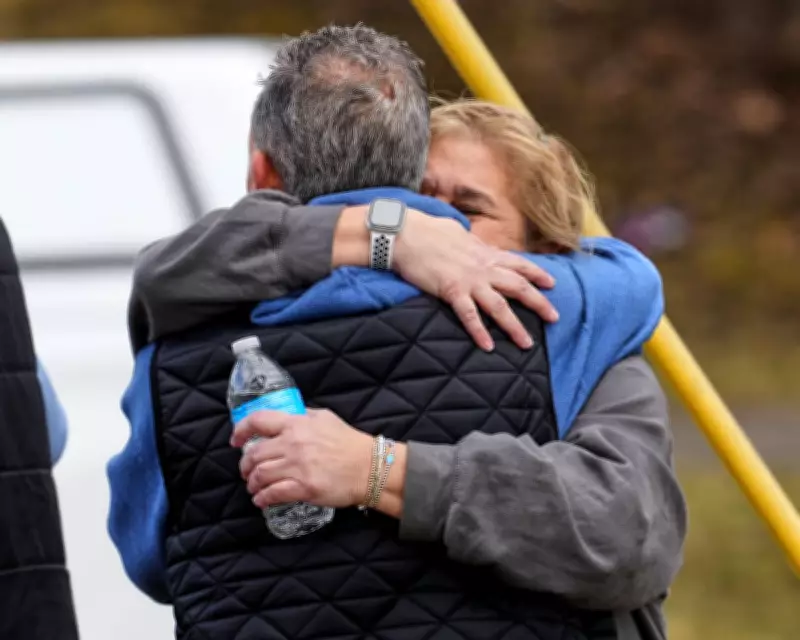
The Lebanese American suspect, Ayman Ghazali, a 41-year-old shawarma restaurant employee, appears to have carried out the attack in retribution for the Israel Defense Forces killing of four of his relatives, including two small children, in an airstrike on their home during Israel's ongoing invasion of Lebanon. Ghazali reportedly drove his truck through the doors of the Temple Israel synagogue and into a hallway, where he allegedly shot himself fatally after being confronted by security. Explosives were found inside the truck, which caught fire. Community leaders expressed relief that there was only a minor injury beyond Ghazali's own death.
Temple Israel is located in West Bloomfield Township, a wealthy community just a few miles north of Dearborn, which serves as the center of the region's Lebanese American population. The synagogue has hosted IDF soldiers, an IDF recruiter, held prayers for the IDF, and partnered with the Friends of the IDF organization that fundraises to support the Israeli military.

Community Reactions and Tensions
Congregation T'chiyah Rabbi Alana Alpert emphasized that everyone "deserves to walk safely down the streets of our neighborhoods and through the doors of our holy spaces." She warned that "anytime someone blames or conflates all Jewish people – including kids at their school – with the state or government of Israel, that is dangerous and antisemitic, and it leads directly to violence against us."
In Dearborn and adjacent Dearborn Heights, many residents were shocked that a well-known community member from the popular Hamido sandwich shop carried out the attack. The area has experienced regular Islamophobic attacks and vitriol from rightwing groups in recent decades. Arab American mayors, imams, and other leaders from across the region expressed support for Jewish residents despite the complexities.
Bilal Baydoun, a former city of Dearborn spokesperson, noted that "Jewish and Arab communities have always co-existed here in southeast Michigan, and the emphatic statements of solidarity I'm seeing from Arab American leaders of all faiths do not surprise me, given greater Detroit's strong interfaith tradition."
Political Dimensions and Broader Conflict
The attack has unfolded against the backdrop of Israel's military actions in Lebanon, where the IDF has forcibly displaced more than 800,000 people in southern Lebanon in recent weeks as it seeks to eliminate Hezbollah. Much of the Lebanese American diaspora in southeast Michigan has roots in this region, creating additional layers of complexity.
Jewish Voice for Peace Detroit's Lex Eisenberg expressed being "broken-hearted in the wake of a horrible attack" while noting that "the Israeli government's atrocities make all people, including Jews, less safe." Eisenberg added that "the Israeli government carries out wars and genocide against families and children, and then falsely claims these war crimes are done in the name of Jews. This leads to still more anti-semitism."
Rabbis for Peace founder Alissa Wise described such an attack on Jews stemming from Middle East violence as her "worst fear." She questioned: "How do we hold this complexity in a world like this and in a time like this?"
Political Controversies and Public Statements
One notable exception to calls for civility came from pro-Israel Michigan state representative Noah Arbit, who criticized Abdul El-Sayed, a former Detroit health official running for US Senate. El-Sayed has been critical of Israel's attacks in Gaza and called for halting all foreign military aid, including to Israel.

After the attack, El-Sayed wrote on social media that he was "horrified and heartbroken" and later stated in a video that Ghazali's actions, Israeli strikes on Lebanon, and the Iran war are part of a cycle of violence that must end. He emphasized that "one can have righteous anger with the state of Israel while expressing solidarity with the Jewish people, including Jewish people in Israel."
Arbit responded sharply on social media, writing: "Amazed by the crocodile tears from someone who's done more than most to stoke & inflame hatred against Jews."
Path Forward and Hope for Dialogue
Despite the tensions, many community leaders stressed there is little animosity among Arab American and Jewish residents in Michigan, and they emphasized that Israel's actions do not justify violence in their communities. Dearborn imam Hassan Qazwini told the Detroit Free Press: "The unjustified Israeli attack on civilians in Iran and Lebanon gives no blank check to anyone attacking synagogues, civilians and peaceful communities."
Wise expressed hope that the tragedy might bring groups together, noting that many pro-Israel, mainstream synagogues have "strong red lines" against speaking with antiwar or pro-Palestinian Jewish groups. "Sometimes fear and grief and pain can open our hearts," she said. "And I hope that can be the case if it will force people who have been unwilling to sit at the same table to do so."
The Jewish Federation of Detroit stated in a media release: "We remain steadfast in our commitment to vigilance and security, even as we continue to live proud, vibrant Jewish lives – at our temples and synagogues, in our schools, and throughout our Jewish organizations." The organization did not respond to additional requests for comment.
As Michigan communities grapple with this tragedy, the broader context of international conflict continues to shape local responses, making the path toward healing and unity particularly challenging in this polarized environment.