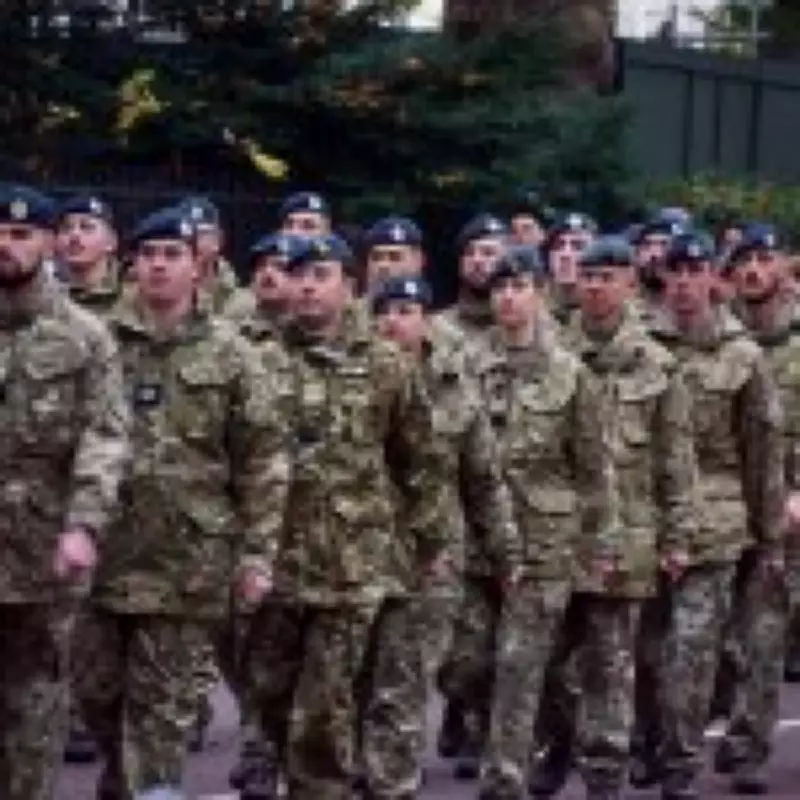
Loading up their plates with a second helping of Sunday roast a few days ago, my two eldest sons, Eddie, 22, and Sammy, 17, continued their full-throated debate. They were arguing about what would happen if conscription via National Service were introduced in the UK – which of them would fare better, what rank they felt befit them, all the attempts at one-upmanship you’d expect from siblings. National Service has been a headline-grabbing topic for the Conservative Party since they first mooted it in May 2024 – and in the last 24 hours it’s become more incendiary than ever, thanks to comments from Lord George Robertson, a former Nato secretary general.
Lord Robertson’s Call for National Service
Lord Robertson waded into the debate on Monday, urging the PM and British Government to consider mandatory civil defence – also known as National Service. When asked about it, he replied: ‘I think there is a case for that. It might go against the grain in terms of the way in which we think of ourselves. But I think given the nature of the threats that we now face, both in a civil as well as a military context, I think there would be a case for putting that forward.’
As a woman who gave birth to two ‘would be’ conscriptees, I couldn’t agree more. I taught my two boys to tie their shoes, ride their bikes and spell their names. I’ve taken out hundreds of their splinters and kissed their many bloody knees and scrapes better. Their wellbeing is always my primary concern. And as part of my work as a journalist, I’ve interviewed countless mums, sisters, wives and even children who have lost their fathers, sons, brothers and dads in conflict zones from Bosnia and Iraq to Afghanistan. I’ve held hands, passed tissues for tears and seen shrines in semi-detached homes all over the country dedicated to the men who made the ultimate sacrifice.

The Military’s Current State
My main reason is the most important for national security – the fact the British military is currently toothless. In 1990 there were 153,000 regular soldiers and the total armed forces numbered around 306,000. Fast forward to 2026, and the Army has 73,790 soldiers, with total armed forces numbering around 136,960. There are real and present threats and dangers on a global scale and the UK hasn’t really even got the bus fare to get to the fight, let alone take part in it. If we as a nation want to uphold the active role we’ve held for centuries in shaping the geopolitical future of the planet, something needs to change.
Sweden employs a system known as total defence duty, whereby, in heightened state of alert, all residents aged 16 to 70 can be called upon to serve. This occurs either by conscription, civilian service duty (in, for example, rescue services, childcare and healthcare) or general compulsory national service, which applies to those not eligible for military or civilian service, and involves performing tasks that are important for national defense. Lord Robertson is speaking with an agenda of boosting the country’s defence numbers – and justifiably so.
Addressing Youth Unemployment
But while there’s plenty to debate on what that National Service might look like and the ways it can support our armed forces, there’s also an opportunity for it to solve a huge societal problem. Which brings me to the second reason I support conscription. I’m raising two young men who are frankly disillusioned with the UK and its broken economy. They’re living in a world where unemployment figures for those between 16 and 24 are the highest they’ve been in a decade. Nearly 1 million young people are classified as NEET (Not in Education, Employment, or Training). Even more worryingly, 45 percent of 24-year-olds who are NEET have never held a job.

My sons have both said to me, more than once, that things are exponentially harder for their generation than it was for mine – and they’re right. There are thousands of applicants for every graduate position and the average number of applicants for any job is around 280. My two boys job-share as a kitchen porter in a local pub but they only got their positions there after around 25 applications each to other jobs. It’s hard not to see the distinct problems of a depleted military and youth unemployment and think how they could solve each other – and create a better environment, and more positive prospects, for those who are currently struggling so much.
Belonging and Discipline
So many people see the suggestion of National Service as simply kicking a hard-done-by generation while they’re down. It’s been implied that it’s being used as a carrot to entice older voters, for whom conscription would not apply. But this truly doesn’t have to be the case. My partner served for 12 years in peace-keeping and conflict zones, from Northern Ireland to Afghanistan and Iraq. He joined up at 16, and the training he received forms part of the fabric of who he is. Not only can he iron a shirt better than anyone else I know, he has an instilled sense of discipline, responsibility, integrity, loyalty, and he’s so bloody cheerful in the face of adversity it sometimes makes me want to swing for him.
We need all of those qualities for our young people – and the society we’re bringing them up in simply isn’t delivering that. It used to be that hard work could carve out opportunities, but there’s a disenfranchisement I see that I never remember having when I was young. I talk to my sons about getting on the property ladder one day, but the only reason I could when I was in my twenties was because of self certification mortgages that no longer exist.
I’ve seen firsthand the identity crisis many young boys are facing, and how, for too many, it’s resulting in toxic masculinity or depression, anxiety and even suicide. But I can’t help but notice there’s only one currency that really matters for the young men who traipse in and out of my kitchen, eating me out of house and home – and that’s belonging.
I can tell this from something as simple as a haircut. Like the military, my sons and their friendship groups often have exactly the same hair cut: the rugby lot favour the mullet and the footy lot – which Sammy is part of – prefer a short back and sides and longer on top. They’re tribally adolescent, and these social connections give them that feeling of acceptance and alignment that fosters their emotional growth. The military – and National Service specifically – can give young people that sense of belonging, teaching them discipline and responsibility all while giving them real life skills they can bring back into the UK economy. They deserve nothing less.