Labour MP Naz Shah Reveals Traumatic Past: From Murder Arrest to Political Triumph
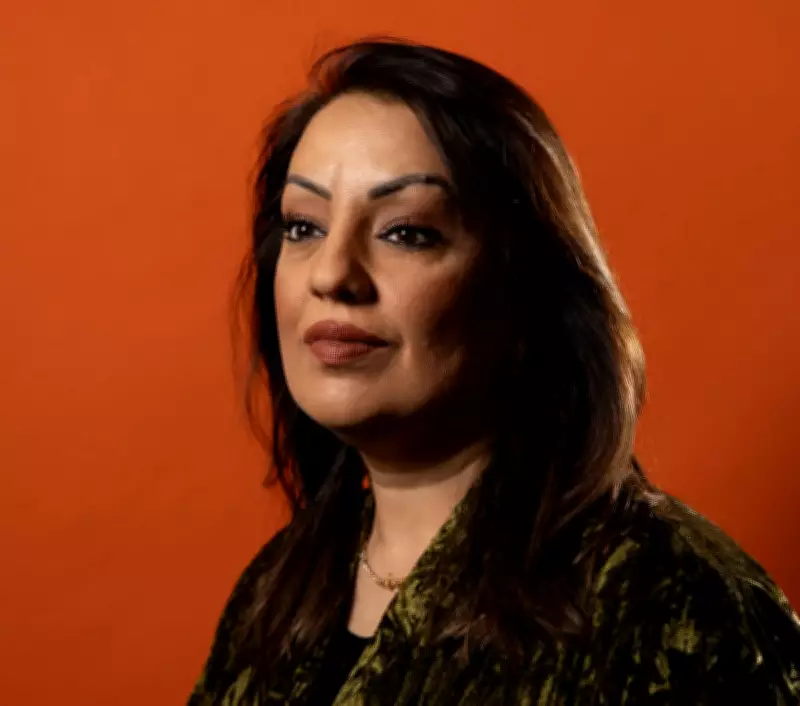
Labour MP Naz Shah has shared the harrowing details of her traumatic past, including being arrested for murder at just 18 years old alongside her mother. In a deeply personal interview, the Bradford West representative discusses her journey from a sheltered teenager to a celebrated politician, revealing how these experiences shaped her future and political career.
The Arrest That Changed Everything
Naz Shah found herself in police custody at 18, accused of murdering a man she considered an uncle. "I'll be honest with you, I had fun. It was the most excitement I'd ever had in my flipping life," Shah recalls with startling candor. "I was this really sheltered kid who'd been arrested. And I was like, they've got it wrong, so in my head it was all going to be over soon."
The MP describes wearing the white forensic suit with unexpected humor: "I was saying, 'Ooh, I look foxy in this, don't I? Can you imagine taking me on a date in this?' I was having a right laugh with the police officers. Honestly, I was so naive."

A Family Tragedy Unfolds
The case centered around the death of "Uncle" Azam in April 1992. An autopsy revealed he had been poisoned with arsenic. Shah and her mother, Zoora, who spoke little English, had cooked the previous night's supper. They were arrested and taken to different police stations. Shah was released, but Zoora admitted making the dessert that contained the arsenic. After a month-long trial, she was convicted of Azam's murder in December 1993 and sentenced to 20 years in jail.
The initial excitement Shah felt at the police station didn't last. She tried to kill herself twice following her mother's conviction. "Looking back, I think that was probably a cry for help," she reflects now.
From Despair to Determination
Despite leaving school at 12, being forced into an arranged marriage at 15, and having to bring up her two younger siblings after her mother was jailed, Shah became a celebrated campaigner, held down high-powered jobs and has been a member of parliament for 11 years. "It's an interesting life I've had," she says with characteristic understatement.
Her story has always been central to her relationship with the community. Before running against George Galloway in Bradford West in 2015, she published a blog about her family's history: if she didn't own her story, it was ripe for exploitation. Now she's telling it in a profoundly personal way through her memoir, Honoured.
The Concept of Izzat and Its Consequences
The book's title reflects the Islamic concept of izzat, Arabic for honor. "In my culture, a family without izzat is worthless," Shah explains. The day her father walked out when she was six, they lost it – and her mother's attempt to regain it had terrible repercussions.
Shah's father was a wife-beating, heroin-dealing man who traded in her mother for a younger model. Zoora, still only 24 and working part-time as a cleaner, was determined to restore izzat to the family. She thought she could do this by selling her wedding jewelry to put a deposit down on a £10,000 house. But without a full-time job, she couldn't get a mortgage.
Enter Uncle Azam
This is when Uncle Azam came into the story. He was neither a real uncle nor a real friend, but he appeared to be both. "He brought fruit over for us, so he seemed like a knight in shining armor. But he was exploiting a vulnerable young woman," Shah says.
Azam, who was married, told Zoora he would register the house in his name, she would make payments via him, and when she had paid off the mortgage he would transfer the property to her. But it didn't work out that way. The first time he took Zoora to her new home, he raped her. And so it continued.
The Truth Emerges
For years, Shah insisted on her mother's innocence. Then campaigner Pragna Patel from Southall Black Sisters sat her down: "You know your mum killed him, girls. She has admitted it."

Zoora had finally revealed that Azam had raped her repeatedly and when he was in prison he had sent his friends to rape her. When she told him she was going to expose the truth, he threatened something even worse. "He told Mum, 'Remember the grass is always greener with that daughter of yours.' I realized she had sent me to Pakistan to keep me from his clutches."
Shah's perspective shifted dramatically. "She served 14 years for killing someone who was destroying her and threatening her daughter. But she did kill somebody. There's no grey area there. The grey area is she was a woman who was destitute and driven to kill the man who had abused her for years."
Political Awakening and Career
Shah's experiences politicized her profoundly. "What about this wouldn't politicise me? I felt the sheer injustice of what happened," she says. She went from packing crisps to becoming a social worker and eventually a commissioning manager for public health, responsible for a £5m budget.
In 2014, she was invited to address the "Galloway problem" in Bradford West. George Galloway had won the seat for Respect in 2012. Labour had decided to opt for an all-women shortlist. Shah told organizers, "I could chew him up and spit him out." She did exactly that, winning the seat in 2015.
Controversies and Growth
Shah faced suspension from Labour in 2016 when social media posts from 2014 resurfaced, one featuring a graphic that superimposed Israel on to a map of the US. "When I got suspended, my understanding of antisemitism wasn't what it is today," she admits. "It was genuine ignorance."
She has since educated herself on the issue and expresses gratitude to those who helped her understand. "I then understood it as the other side of the coin to Islamophobia."
Current Political Landscape
Shah offers a mixed assessment of her Labour government. "We've got a challenge. We're not good at communicating the brilliant things we have done," she says. While pleased with achievements like free childcare, she criticizes "own goals like the winter fuel allowance" and the party's handling of issues like the two-child benefits cap.
On migration, she says: "My constituents are pissed with illegal immigration. The idea that it's not a thing that affects people of migrant heritage or of colour just isn't true. But we need to do more telling of the positive migrant story; their contribution to the economy. If we didn't have migrants, the NHS would collapse tomorrow."
Finding Her Calling
Despite the challenges, Shah adores her job. "I promise you I feel like I've found my calling. I love what I do. I love it with a passion," she says. "I'm not politically ambitious for position and power. I don't want to be a minister. I hold my power in a much more authentic way as a backbencher."
She still marvels at her journey from forced marriage at 15 to representing her community for 11 years. When asked when she felt she recovered her izzat, her eyes light up: "In my eyes I never lost it. Because izzat for me is standing against inequality and injustice, and I've done that all my life."
Now 52, Shah has been diagnosed with post-traumatic stress disorder and says writing her memoir was part of her healing process. "I had healing to do, and writing it brought up a lot of issues," she reveals. "In the end, I had to write it to get everything out of my system and show people you can get through the hardest of times."
Her story stands as a testament to resilience, transformation, and the power of owning one's narrative against all odds.