Nepal's Youth-Led Uprising Claims 77 Lives, Topples Prime Minister
In September 2025, Nepal witnessed a dramatic youth-led uprising that resulted in the deaths of seventy-seven protesters and ultimately forced the resignation of Prime Minister KP Sharma Oli. The violent protests, which spanned two intense days, shook the foundations of Nepal's political system and left families across the country grieving for lost loved ones.
The Protests That Changed a Nation
The demonstrations began on September 8th, 2025, with thousands of young Nepalis taking to the streets of Kathmandu. Protesters threw stones that partially covered roads in front of parliament buildings, while riot police pushed back against the swelling crowds. By September 9th, the situation had escalated dramatically as demonstrators stormed the Singha Durbar office complex, which houses the prime minister's office and other key government ministries.
Flames rose from the burning Singha Durbar complex during a curfew imposed after the youth-led protests, while the presidential building, Sheetal Niwas, was ransacked and burned by protesters. A damaged statue of a lion at the entrance to the presidential building stood as a stark symbol of the political upheaval that had gripped the nation.

Families Mourn Their Lost Loved Ones
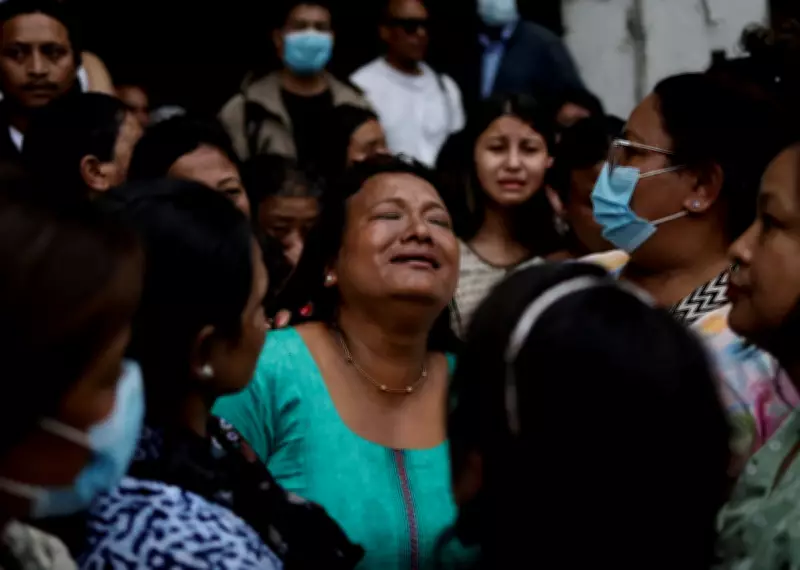
Among the seventy-seven killed was Binod Maharjan, whose sister Bina Awale mourned during his cremation at Pashupatinath temple in Kathmandu on September 16th. "My son said he would return home and eat the meal he had left behind," said Lata Maya Maharjan, Binod's mother. "He never came back." Binod had abruptly left home on September 8th, leaving behind his breakfast of rice and lentils after feeding pigeons on the terrace as he did most mornings.
The family only discovered he had joined the protests when Binod's elder brother received a phone call from one of his siblings' childhood friends and rushed to Kathmandu's Everest hospital. Portraits of those who died during the protests now adorn the gates of parliament buildings in Kathmandu, serving as permanent reminders of the human cost of political change.
Seeking Justice Through Political Engagement
Rachana Khatiwada, mother of Rashik Khatiwada who was shot dead during the protests, has transformed her grief into political action. After years of political indifference, Khatiwada joined the Rastriya Swatantra party, motivated by her desire to seek justice for her son and other families affected by the violence. "What have past leaders done for this country over the last three decades?" she asked, highlighting the frustration that fueled the protests.
Khatiwada now bears a wrist tattoo in her son's memory and speaks passionately about the need for political accountability. Her journey reflects a broader trend among affected families who are no longer willing to remain passive in the face of political failure.
Compensation and Continuing Struggles
An interim government has provided compensation to families of forty-two of the seventy-seven killed, declaring them martyrs of the movement. Parbati Subedi, wife of Dev Kumar Subedi who was shot dead during the protests, received 1.5 million Nepalese rupees (approximately £7,650) in compensation. "I believe this protest happened because people wanted change in Nepal and change in our leaders," Subedi said. "Those in power forgot about families like ours, for whom putting two meals on the table is a daily struggle."
Subedi now accompanies her daughter Saloni and nephews to school before heading to work in Lalitpur, navigating life without her husband while maintaining hope for a better political future. Her story echoes those of countless other families who continue their daily routines while carrying the weight of their losses.
A Nation's Hope for Meaningful Change
The youth-led protests that toppled Prime Minister KP Sharma Oli represented a watershed moment in Nepal's political history. On September 16th, 2025, tribute rallies filled Kathmandu's streets with coffins carrying the bodies of those killed, while families gathered to mourn their loved ones. The protests exposed deep frustrations with Nepal's political establishment and sparked conversations about governance, accountability, and the price of change.

As Lata Maya Maharjan climbs the stairs next to paintings made by her son that cover her house walls, and as families across Nepal continue their daily prayers with floral offerings for their lost loved ones, the hope for genuine political transformation remains alive. The uprising that claimed seventy-seven lives has created both profound grief and determined optimism among those who believe Nepal's political system must fundamentally change to serve all its citizens.