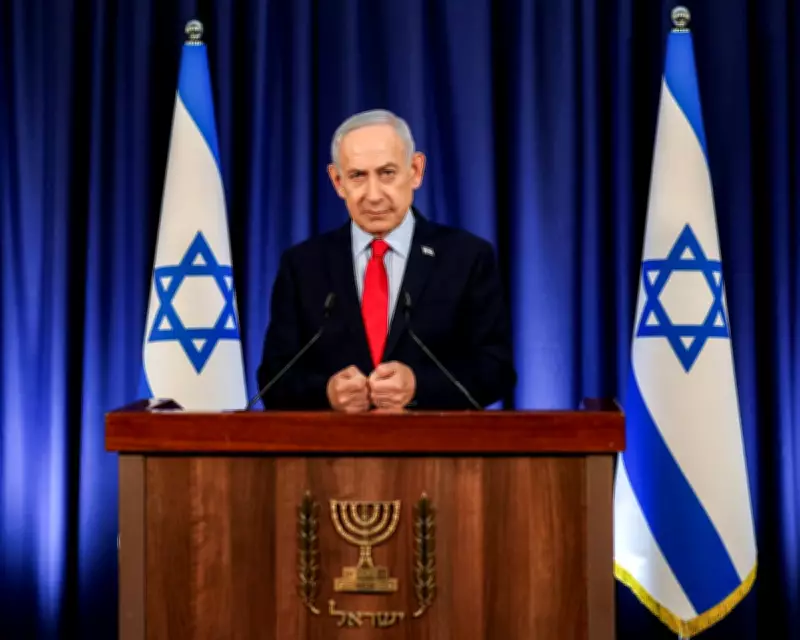
Netanyahu's Record of Unfulfilled Promises and High Costs for Israel
The Israeli prime minister, Benjamin Netanyahu, has long positioned himself as a stalwart defender of his nation's security, yet a closer examination reveals a legacy marked by profound failures and staggering human and political costs. As elections loom later this year, the Israeli public faces a critical reckoning with his leadership, which has delivered little beyond hollow assurances of "total victory."
A Pattern of Empty Boasts and Security Lapses
Netanyahu's tenure has been characterized by a series of unkept promises that have left Israel more vulnerable and isolated. On his watch, the country endured the worst terrorist attack in its history on October 7, 2023, when Hamas militants breached a poorly guarded border fence from Gaza, resulting in widespread civilian casualties. This catastrophic security failure alone should have precipitated his political downfall in most democratic systems, yet he remains in power, continuing to tout his credentials as "Mr. Security."
Subsequent military campaigns have further exposed the emptiness of his rhetoric. Despite vowing to eradicate Hamas through a brutal bombardment that claimed approximately 70,000 lives, the group retains control over unoccupied areas of Gaza. Similarly, claims of neutralizing Hezbollah in Lebanon proved premature, as the militia quickly resumed rocket attacks on northern Israel, forcing residents to flee once again. These episodes underscore a recurring theme: Netanyahu's aggressive tactics yield only temporary respites, failing to address underlying political and diplomatic challenges.

International Fallout and Domestic Discontent
From a global perspective, Netanyahu's actions have drawn widespread condemnation, with accusations of war crimes and a role in the destruction of Gaza tarnishing Israel's international reputation. Domestically, however, he has cultivated a base of support that views him as a necessary hawk in a hostile region. This dichotomy is set to play out in upcoming elections, where Israeli voters will judge his record based on tangible outcomes rather than ideological posturing.
The recent conflict with Iran exemplifies his flawed approach. After declaring a "historic victory" in 2023 that supposedly neutralized Iran's nuclear threat, Tehran reemerged months later with enhanced capabilities, including a stockpile of enriched uranium and a formidable missile arsenal. Netanyahu's strategy of relentless military strikes has, paradoxically, strengthened Iran's position, enabling it to exert economic pressure through control of strategic waterways like the Strait of Hormuz.
The Monstrous Price of Netanyahu-ism
Beyond the immediate loss of life in conflicts across Gaza, Lebanon, and Israel itself, Netanyahu's policies have inflicted long-term damage on Israel's global standing. His government's passage of discriminatory legislation, such as a bill imposing the death penalty selectively on Palestinians, has fueled accusations of racism and further isolated the nation. Meanwhile, Israeli citizens have endured sleepless nights in bomb shelters and pandemic-style lockdowns, highlighting the personal toll of his security failures.
As political analyst Amos Harel notes, Netanyahu's boasts of "total victory" have been exposed as empty promises across multiple fronts. Opposition figures argue that his reliance on force alone neglects crucial diplomatic opportunities, such as engaging with the Lebanese government to counter Hezbollah from within. This myopic focus on military solutions has prevented Israel from forging alliances and achieving sustainable security.
A Crossroads for Israeli Voters
With elections approaching, polls suggest Netanyahu could be replaced by right-wing figures advocating a more effective execution of his hardline policies. However, a broader critique is emerging: that decades of Netanyahu-ism have pursued the wrong strategy entirely. True security, critics contend, requires accommodation with neighbors, particularly the Palestinians, rather than perpetual conflict.

As Israelis assess Netanyahu's legacy, they must weigh the monstrous costs—in lives, international prestige, and domestic stability—against a record of abject failure. The voting public holds the key to whether Israel will continue down this path or seek a new direction grounded in diplomacy and lasting peace.