Newsom's Controversial Israel Remarks Spark Political Firestorm
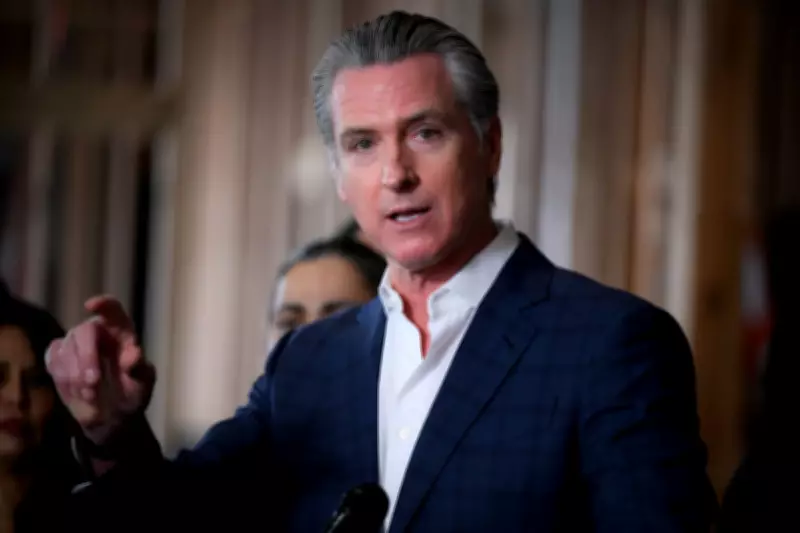
California Governor Gavin Newsom has ignited significant political controversy by comparing Israel to "an apartheid state" during his ongoing book promotion tour, while simultaneously criticizing former President Donald Trump's decision to partner with Israel in military strikes against Iran. The Democratic governor, widely considered a frontrunner for the 2028 presidential nomination, made these explosive comments during an appearance in Los Angeles on Tuesday, March 2, 2026.
Book Tour Becomes Foreign Policy Platform
While promoting his memoir Young Man in a Hurry: A Memoir of Discovery, Newsom was asked by event moderator Jon Favreau, host of the popular Pod Save America podcast, whether the United States should reconsider its military partnership with Israel. The governor responded with unusually direct criticism of Israeli leadership and policies.
"It breaks my heart, because the current leadership in Israel is walking us down that path, where I don't think you have a choice about that consideration," Newsom stated during the Los Angeles event. He elaborated on his concerns about the regional conflict, noting the involvement of various proxy forces and what he described as "all the grift and the corruption that also marks a huge part of this."

Specific Criticism of Netanyahu and Trump
Newsom specifically targeted Israeli Prime Minister Benjamin Netanyahu, known as Bibi, citing New York Times opinion writer Thomas Friedman's recent analysis suggesting the war could propel Netanyahu to an election victory that would fuel extremism in Israel against US interests.
"The issue of Bibi is interesting because he's got his own domestic issues," Newsom explained. "He's trying to stay out of jail. He's got an election coming up. He's potentially on the ropes. He's got folks on the hardline that want to annex the West Bank. Friedman and others are talking about it appropriately, [as] sort of an apartheid state."
This is not the first time Newsom has criticized Netanyahu or Trump's foreign policy decisions during his book tour. Just days earlier, during a press conference in Hayward, California, Newsom condemned Trump's decision to strike Iran, accusing the former president of "doubling down on stupid" during his State of the Union address to Congress.
Nuanced Position on Israel-Palestine Conflict
Despite his harsh criticism of Israeli leadership, Newsom attempted to maintain a nuanced position during a January conversation with conservative podcaster Ben Shapiro. "I'm crystal clear in my love for Israel, and my condemnation of Bibi, and there's a distinction," he stated at that time.
The governor acknowledged that images from Israel's war in Gaza might lead some to believe Israel had committed genocide there, though he said he did not share that opinion. However, he did characterize Israel's military actions as "disproportionate" and expressed concerns about Netanyahu's rhetoric regarding Palestinian people.
Broader Implications for US Foreign Policy
Newsom's comments come at a sensitive time in US-Israel relations and represent a significant departure from traditional Democratic Party rhetoric on the Middle East. His willingness to use the term "apartheid" in reference to Israel places him among a small but growing number of prominent US politicians willing to employ such language.
The governor's criticism extends beyond Israel to encompass broader concerns about US foreign policy under the Trump administration. He suggested that Trump's eagerness to engage the US military in Iran stemmed from "weakness masquerading as strength," questioning the strategic wisdom of military intervention at a time when domestic affordability issues remain at crisis levels.
These remarks are likely to have significant political ramifications as Newsom positions himself for potential presidential ambitions, testing the boundaries of acceptable discourse on Israel within the Democratic Party while establishing his foreign policy credentials ahead of the 2028 election cycle.