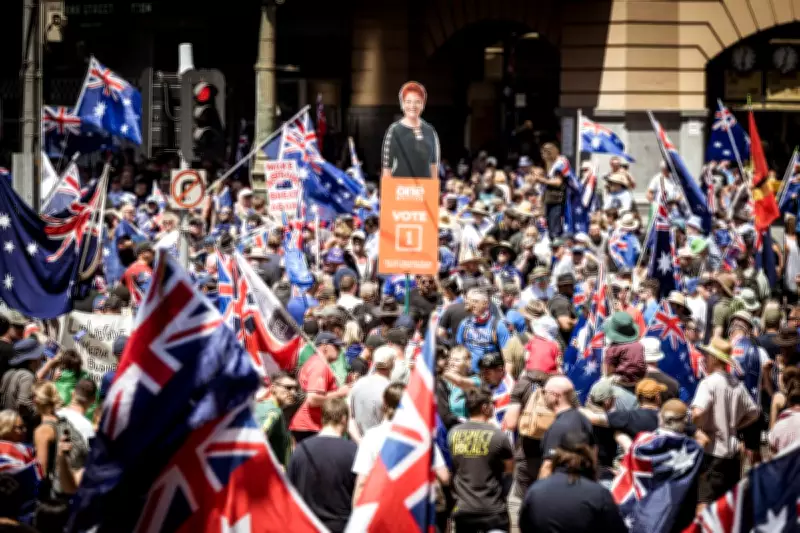
One Nation's Meteoric Rise from Political Fringe to Mainstream Contender
Political analysts are observing a significant shift in Australia's political landscape as Pauline Hanson's One Nation party transforms from a fringe movement into a palatable option for disillusioned voters. With many Australians expressing frustration with traditional major parties, Hanson's right-wing populist platform is attracting unprecedented support levels that could reshape electoral dynamics.
From Fringe to Frontline: The Electoral Transformation
Just nine months after the federal election, One Nation has achieved what many considered improbable - positioning itself as a genuine electoral opponent to established parties. The latest Guardian Essential poll reveals startling numbers: One Nation's primary vote has reached 22%, tripling its 2025 election result and sitting just three percentage points below the Coalition. This surge represents more than temporary dissatisfaction; it signals a fundamental realignment in Australian politics.
Peter Lewis, director of Essential Media, emphasises that while this support partly reflects voter frustration rather than firm voting intentions for the 2028 election, "the rise in support for One Nation is not trivial." He connects this trend to global patterns, noting similar populist movements gaining traction in the UK, Europe, and the United States as citizens reject mainstream parties' perceived failures in managing global capitalism.

The Disillusionment Driving Voter Migration
Kos Samaras, former Labor strategist turned pollster with Redbridge Group, identifies a crucial demographic shift. "Over time, particularly over the last decade, they have started to experience financial stress and a decline of living standards," Samaras explains about traditional Coalition voters. "They have now given up on the Coalition, which was the party they used to support because they thought they managed the economy better for them. They are now just voting on cultural grievances and One Nation is absolutely the vehicle for that."
The polling data confirms this analysis shows 23% of 2025 Coalition voters now intend to support One Nation, while 8% of former Labor voters have made the same switch. This represents a significant erosion of traditional party bases, particularly affecting the Coalition's right flank.
Breaking Stereotypes: One Nation's Expanding Base
Contrary to conventional wisdom about right-wing populist support, One Nation is demonstrating surprising demographic reach:
- Polling higher than the Coalition with female voters (23% to 21%)
- Performing considerably better among 35-54 year-olds (26% to 19%)
- Maintaining strength outside capital cities among non-university educated, middle-to-low income earners
This expansion occurs despite no moderation of Hanson's controversial positions, as evidenced by her recent Senate burqa stunt. The party's platform remains focused on two core issues: ending what it terms "mass migration" and abandoning net zero targets along with the Paris climate agreement.
Binary Politics: The Appeal of Clear Positions
Barnaby Joyce, the former Nationals leader who defected to One Nation in December, attributes the party's appeal to its unambiguous stances. "We're very much more succinct, deliberate and on some issues more binary," Joyce states, contrasting One Nation's approach with what he sees as the major parties' compromised positions. This clarity resonates with voters frustrated by political nuance, particularly following events like the Bondi massacre.
The party claims extraordinary growth, boasting a 600% membership increase since the election and establishing branches in all 150 federal electorates, though actual numbers remain undisclosed.
Electoral Implications: Seats in Play
With One Nation achieving record polling numbers, electoral analysts are examining potential seat gains. While psephologist Kevin Bonham cautions that predictions of 30+ seats are unrealistic given preference challenges, he acknowledges that national support above 20% translates to over 35% in certain rural and regional areas.
Seats potentially vulnerable to One Nation challenges include:

- Queensland LNP-held seats: Wright, Flynn, Capricornia, Hinkler, Wide Bay, and Dawson
- Labor-held Blair outside Brisbane
- New South Wales seats: Hunter (where One Nation finished second in 2025) and Paterson
Success in just the Queensland seats could eliminate over a third of Nationals' lower house representation, explaining the party's recent rightward shift on issues including climate policy.
Internal Dynamics and Future Prospects
One Nation's Canberra operations have historically suffered from disorganisation and disunity, potentially limiting its ability to consolidate gains. However, the current surge represents a genuine threat to established political structures. Colin Boyce, Flynn MP and Nationals leadership contender, recently warned that splitting from the Liberals would expose the party to a "right-flank onslaught" from One Nation.
With Hanson's chief-of-staff James Ashby promising a "significant announcement" ahead of parliament's return that will "shock people," and speculation about further defections from traditional parties, One Nation stands at a critical juncture. The party could either descend into the chaos that has previously hampered its growth or fundamentally reshape Australia's political landscape for years to come.