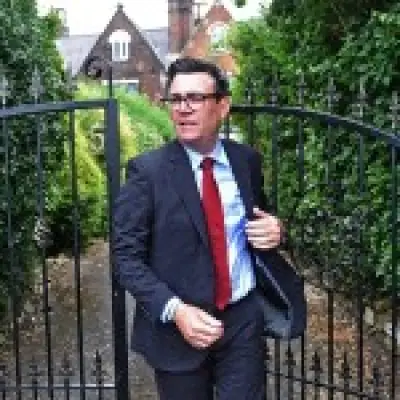
Former Labour Minister Phil Woolas Passes Away at 66 Following Brain Cancer Diagnosis
The political world is mourning the loss of Phil Woolas, the former Labour minister and Member of Parliament who has died at the age of 66 after a prolonged battle with brain cancer. His family and close friends confirmed the sad news in an official statement released on Saturday, marking the end of a significant chapter in British political history.
A Political Career Spanning New Labour's Entire Government
Phil Woolas entered Parliament during Labour's historic landslide victory in the 1997 general election, securing the constituency of Oldham East and Saddleworth. Remarkably, he maintained his Westminster position throughout New Labour's entire thirteen-year tenure in power, serving under Prime Ministers Tony Blair and Gordon Brown. During this period, Woolas held several important ministerial roles that shaped national policy.
His government positions included Minister of State for Local Government, Minister for the Environment, and Minister for Borders and Immigration, with each role building upon the previous as Labour navigated complex domestic and international challenges. Woolas remained in these positions until the party's eventual fall from power in 2010, making him one of the longest-serving ministers of that era.

Early Political Activism and Professional Background
Woolas's political journey began remarkably early when he joined the Labour Party at just sixteen years old. During his youth, he demonstrated his commitment to social justice by becoming an active member of the Anti-Nazi League, an organization dedicated to combating racism and fascism in British society. His leadership abilities became evident during his university years when he served as President of the National Union of Students from 1984 to 1986, a position that has launched numerous political careers including that of current Labour Health Secretary Wes Streeting.
Before entering Parliament, Woolas built a substantial career in television journalism, working as a producer for prestigious programs including BBC Newsnight and Channel 4 News. He further developed his communication skills as Head of Communications at the trade union GMB, where he honed his ability to articulate complex policy positions to diverse audiences.
Controversial Policies and Post-Political Career
During his final ministerial position overseeing immigration, Woolas faced significant criticism for his proposal regarding Gurkha soldiers from Nepal who had served in the British Army. His initial plan would have required these soldiers to meet stringent conditions, including twenty years of military service, before being allowed to settle in Britain. This policy sparked a high-profile campaign led by actress Joanna Lumley and other public figures, ultimately forcing the government to reverse course and grant settlement rights to Gurkhas who had served four or more years.
Although Woolas retained his parliamentary seat in the 2010 general election that brought the Conservative-Liberal Democrat coalition to power, he lost it months later when a court ruled he had made false statements against a Liberal Democrat opponent during the campaign. Labour managed to retain the constituency in the subsequent by-election, but Woolas's direct political career had effectively ended.
Charitable Work and Personal Legacy
Following his departure from frontline politics, Woolas established his own political and risk consultancy firm in 2011, applying his extensive government experience to the private sector. However, his most enduring legacy may be his charitable work with the Ace Centre, an Oldham-based organization he chaired for more than twenty-five years.
Under his leadership, the Ace Centre transformed from a local charity into a national leader in assistive technology for severely disabled people with communication difficulties. His family's statement emphasized this commitment, noting how he helped expand the organization's reach and impact across the country.

The family statement also revealed that Woolas had been battling glioblastoma, an aggressive form of brain cancer, for more than a year before his passing. He leaves behind his wife Tracey, his sons Josh and Jed, a new grandson, and numerous friends and former colleagues who remember his dedication to public service and charitable causes.
Phil Woolas's career embodied the trajectory of New Labour from its historic 1997 victory through its thirteen years in government, with his ministerial roles touching on some of the most significant policy areas of that era. His journey from teenage party member to government minister, and later to charity leader and political consultant, reflects the multifaceted nature of modern political life in Britain.