Plaid Cymru Set to Make History in Welsh Politics as UK Union Faces Unprecedented Challenge
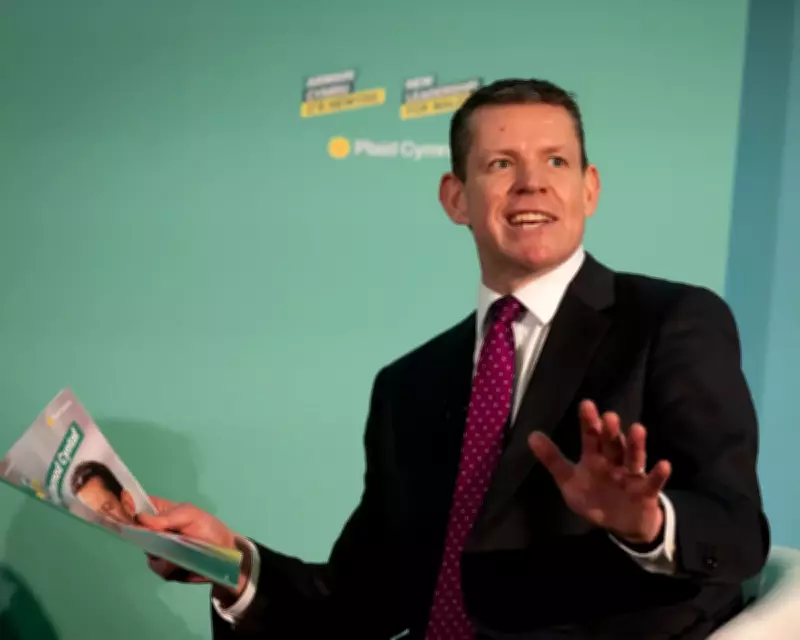
The political landscape of the United Kingdom is undergoing a profound transformation, with Wales potentially witnessing a historic shift in power. According to current polling data, Plaid Cymru, under the leadership of Rhun ap Iorwerth, is on course to emerge as the largest party in the Senedd following the May elections. This development would mark the first time since the establishment of devolution that Labour does not hold the top position in Wales, signaling a significant realignment in Welsh political dynamics.
A Coordinated Challenge to Westminster from Multiple Fronts
The potential victory of Plaid Cymru in Wales forms part of a broader pattern across the devolved nations. In Scotland, the Scottish National Party (SNP) has demonstrated remarkable resilience despite recent internal challenges, maintaining a comfortable lead in polls for the Scottish Parliament. Meanwhile, Northern Ireland, while not facing elections until next year, could similarly see leadership committed to constitutional change. This convergence creates the unprecedented possibility that by May 8th, Scotland, Wales, and Northern Ireland might simultaneously have first ministers who advocate for their nations' departure from the United Kingdom.
John Swinney, leader of the SNP, recently described this scenario as "absolutely seismic" during his party's spring conference. However, it is crucial to note that this alignment does not necessarily indicate an immediate push for independence referendums. Both Plaid Cymru and the SNP have adopted strategically cautious approaches to their independence ambitions.

Strategic Caution and Political Calculations
In Wales, support for independence has historically plateaued around 30% of the population. Recognizing this reality, Rhun ap Iorwerth has explicitly ruled out holding an independence referendum during his first term should Plaid Cymru achieve power. Instead, his strategy appears focused on leveraging Westminster concessions to bolster his party's popularity, while using any lack of cooperation from London to strengthen the case for future separation.
The SNP under John Swinney has similarly tempered its immediate ambitions, linking calls for a second independence referendum to achieving an outright majority in the Scottish Parliament—a threshold not met since 2011. This cautious positioning reflects the party's ongoing recovery from a turbulent period marked by leadership resignations, coalition collapse with the Greens, and serious financial scandal involving former chief executive Peter Murrell.
Labour's Missteps and the Centrifugal Forces on the Union
The resurgence of nationalist parties across the UK has been significantly fueled by the perceived failures of Sir Keir Starmer's Labour government. Despite winning a decisive victory in the July 2024 general election that ended fifteen years of Conservative rule, Labour has struggled to maintain its political momentum. The party's inability to present a compelling social democratic alternative has allowed both the SNP and Plaid Cymru to position themselves to Labour's left on key issues.
Compounding these challenges, a recently leaked memo to cabinet ministers revealed a troubling approach to intergovernmental relations. The document advised ministers against being "overly deferential or laissez-faire" when dealing with Welsh and Scottish counterparts—language critics have described as high-handed and reminiscent of the Johnson era. This approach appears fundamentally misguided at a time when constructive collaboration between progressive forces across the UK is more essential than ever.
The Broader Political Context and Future Implications
The potential rise of Nigel Farage and his political movement adds another layer of complexity to this evolving situation. The prospect of a Farage-led government could further galvanize independence movements beyond England's borders, as nationalist parties position themselves as bulwarks against what they characterize as authoritarian English nationalism.

As the May elections approach, the fundamental question facing the United Kingdom is whether its constitutional framework can accommodate these centrifugal forces. The traditional dynamic of centralized Westminster power confronting devolved administrations appears increasingly unsustainable. Without genuine partnership and respect between London, Edinburgh, and Cardiff, the very foundations of the union may face unprecedented strain in the coming years.
The coming months will reveal whether Plaid Cymru can translate its polling advantage into electoral victory, and whether the UK's political structures can adapt to these new realities. What remains clear is that the politics of the union have entered a particularly fragile phase, with consequences that will resonate far beyond the borders of any single nation.