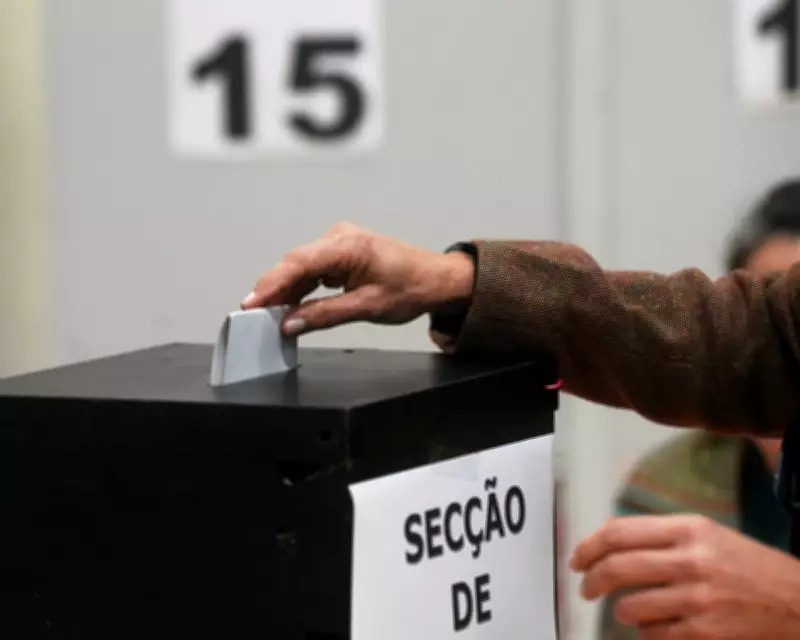
Portuguese voters headed to polling stations on a mostly overcast Sunday to cast their ballots in a decisive presidential runoff election that pits the centre-left Socialist candidate against a rising far-right populist challenger.
Seguro Heavily Favoured in Head-to-Head Contest
Recent opinion polls strongly indicate that António José Seguro, the longstanding Socialist politician, will secure approximately twice as many votes as his opponent André Ventura in this second-round contest. The runoff became necessary after none of the eleven candidates in last month's first round managed to capture the required majority of more than fifty percent of the vote.
Seguro has strategically positioned himself as a moderate candidate who promises cooperation with Portugal's current centre-right minority government. This approach stands in stark contrast to Ventura's anti-establishment rhetoric and frequent anti-immigrant tirades that have characterised his campaign.

Mainstream Political Unity Against Populist Tide
The centre-left candidate has successfully garnered support from mainstream politicians across both the left and right political spectrum who share a common goal of halting what they perceive as a dangerous populist tide. This unusual political alignment reflects growing concern about the rapid ascent of Ventura's Chega (Enough) party within Portuguese politics.
Making it through to this presidential runoff already represents a significant milestone for Ventura and his political movement. Founded less than seven years ago, Chega has experienced remarkable growth during a period of wider European political shifts toward right-wing populism.
Presidential Powers and Political Context
While the Portuguese presidency is largely a figurehead position with no direct executive power, the head of state traditionally serves as a mediator above the political fray, working to defuse tensions and resolve disputes between different branches of government.
The president nevertheless wields considerable influence through specific constitutional powers, including the ability to veto legislation passed by parliament. Although such vetoes can be overturned by lawmakers, the president also possesses what Portuguese political commentators describe as an "atomic bomb" power: the authority to dissolve parliament and call early elections.
Immigration as Central Campaign Issue
André Ventura, known for his eloquent and theatrical political style, has rejected traditional political accommodation in favour of a more combative approach. His campaign has prominently targeted what he characterises as excessive immigration, with foreign workers becoming increasingly visible throughout Portugal in recent years.
During the election campaign, Ventura's team erected billboards across the country bearing messages such as "This isn't Bangladesh" and "Immigrants shouldn't be allowed to live on welfare." These provocative statements reflect his party's hardline stance on immigration policy.
Political Landscape and Voter Turnout
Polling stations opened at eight o'clock in the morning and remained accessible for twelve hours, with Portuguese broadcasters expected to publish exit polls immediately after closing time. Most official results were anticipated by eleven o'clock in the evening local time, with approximately eleven million Portuguese citizens eligible to participate in the democratic process.
The presidential election occurs against a backdrop of recent political instability in Portugal. The country held its third general election in just three years during May, representing the worst bout of political uncertainty Portugal has experienced in decades. Stabilising the political situation therefore represents a crucial challenge for whoever emerges victorious in this presidential contest.
Looking Ahead to March Transition
The successful candidate will assume office in March, replacing the outgoing centre-right president Marcelo Rebelo de Sousa, who has completed the constitutional limit of two consecutive five-year terms. This presidential transition occurs as Chega has established itself as the second-largest party in Portugal's parliament following the general election held on the eighteenth of May.

The runoff election outcome will provide important insights into the depth of public support for Ventura's brash political style and his party's platform, while simultaneously testing the resilience of Portugal's mainstream political establishment against the rising tide of European populism.